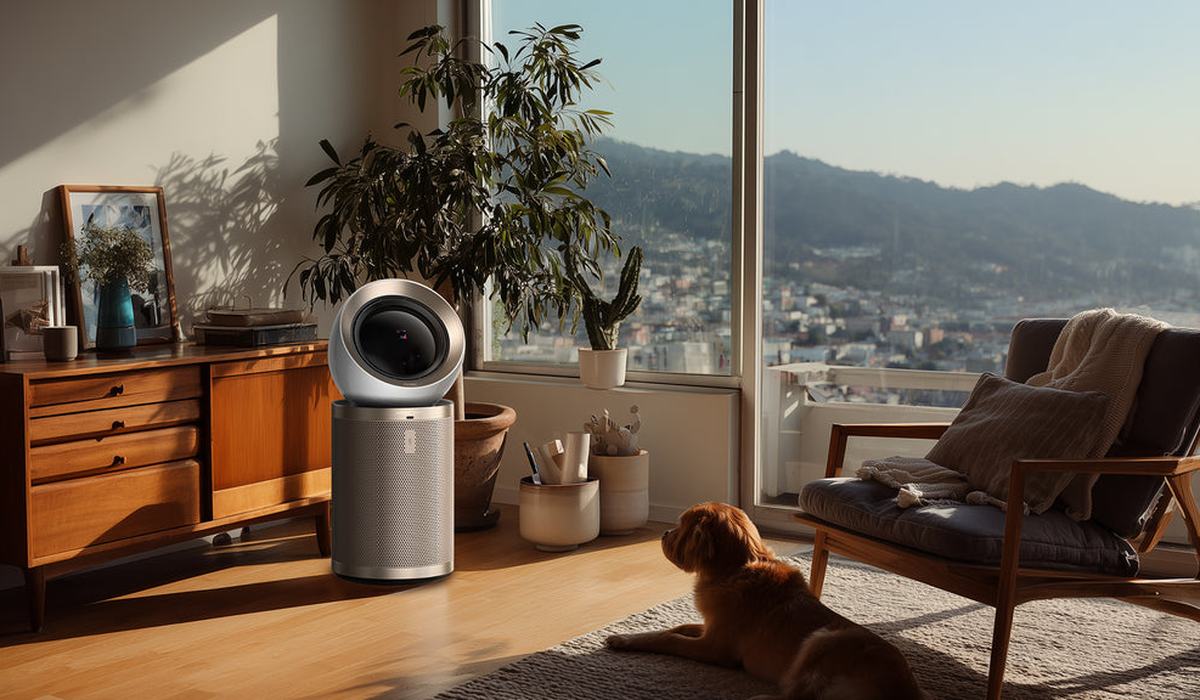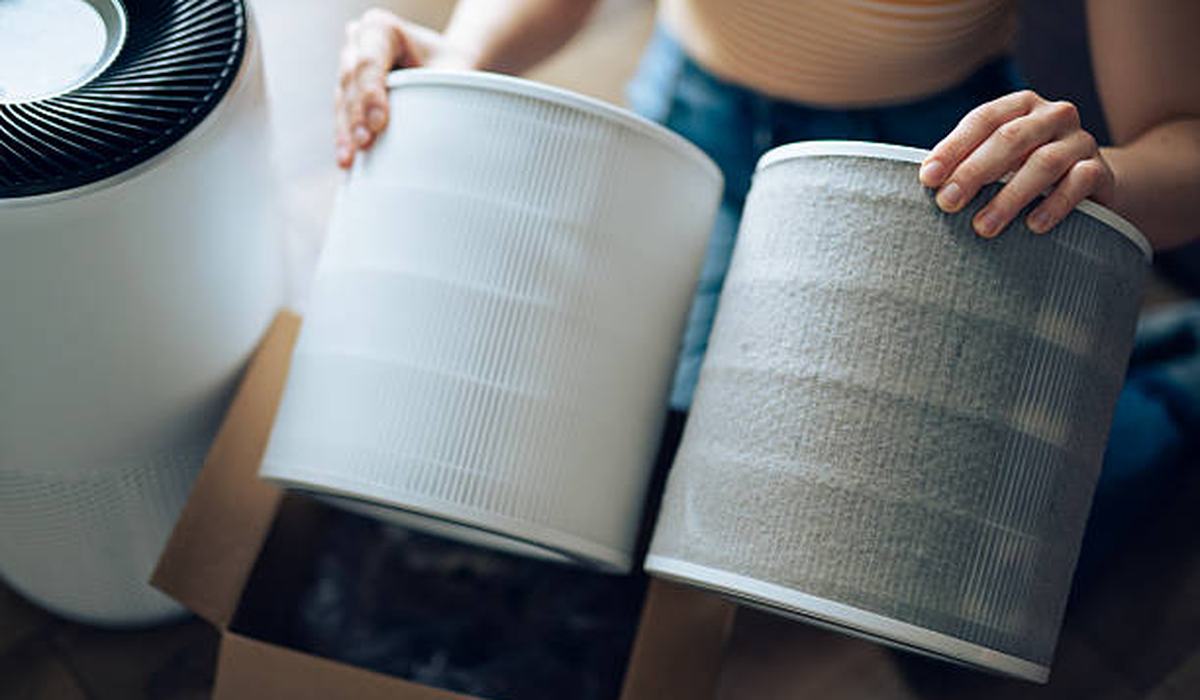
Every air purifier spec sheet lists a decibel range, usually something like '24–50 dB'. But unless you know what those numbers sound like, they are meaningless. This guide translates decibels into real-world sounds and explains why the low number matters most.
The short version: the low number is what you live with, and the high number is what you hear for a few minutes after cooking.
- Under 25 dB: whisper-quiet — fine for a bedroom.
- 25–35 dB: soft hum — fine for a living room.
- 35–45 dB: noticeable — like a quiet conversation.
- 45–55 dB: loud — like a fridge running hard.
- Over 55 dB: you will turn it down — only for short bursts.
On this page
The decibel scale
Decibels are logarithmic, which means they do not add up the way you expect. An increase of 10 dB is roughly a doubling of perceived loudness. So a purifier at 34 dB is about twice as loud to your ear as one at 24 dB, even though the number only went up by 10.
| Change | Perceived change |
|---|---|
| +3 dB | Slightly louder |
| +10 dB | About twice as loud |
| +20 dB | About four times as loud |
| −10 dB | About half as loud |
What each level sounds like
| Level | Sounds like | Good for |
|---|---|---|
| 20 dB | Rustling leaves | Bedroom, silent room |
| 30 dB | Whisper | Bedroom, office |
| 40 dB | Quiet conversation | Living room |
| 50 dB | Refrigerator hum | Kitchen, daytime |
| 60 dB | Normal conversation | Short bursts only |
| 70 dB | Vacuum cleaner | You will turn it down |
A purifier rated at 24 dB might be measured from three feet away, while another is measured from ten feet. Compare the low-speed rating and, where possible, read owner reviews that mention night-time noise.
Why the low number matters
You will run your purifier on low most of the time, especially at night. The high setting is for clearing smoke or cooking odours quickly, and you will only use it for a few minutes. So the low-speed decibel rating is the number that decides whether you actually keep the unit running.
A purifier that is too loud on low gets switched off, and a purifier that is off cleans nothing. Quiet is not a luxury feature — it is what makes the unit useful.
Choosing a quiet unit
- Look for the low-speed rating, not the range.
- Under 25 dB for a bedroom, under 35 dB for a living room.
- Check for a dimmable or off display — light is as disruptive as sound.
- Prefer a larger unit on low over a small unit on high.
- Read owner reviews that mention night-time noise.
- Consider auto mode, which keeps the fan low unless it senses particles.
Air purifier noise is measured in decibels, and the low-speed rating is the one that matters. Under 25 dB is bedroom-quiet; under 35 dB is fine for a living room. Remember that +10 dB is roughly twice as loud, so a small difference in the number is a big difference in your ears.
Frequently asked questions
Quiet purifiers
If noise is your priority, these purifiers run under 25 dB on low.