On this page
Size the unit before you shop
The single biggest mistake in a large room is buying a purifier rated for a bedroom. A unit that is undersized runs at full fan speed forever, which is loud, expensive, and still does not clean the air.
Use the AHAM 4.8 rule: a purifier should clean the room's air volume 4.8 times per hour to be effective. In practice that means matching the CADR (Clean Air Delivery Rate, in cubic feet per minute) to the room size:
| Room size | Minimum CADR (smoke) | Typical unit class |
|---|---|---|
| Up to 200 sq ft | 120+ | Small / bedroom |
| 200–400 sq ft | 200+ | Medium |
| 400–600 sq ft | 300+ | Large |
| 600–900 sq ft | 400+ | Open-plan / XL |
| 900+ sq ft | 500+ | Two units, or a whole-home unit |
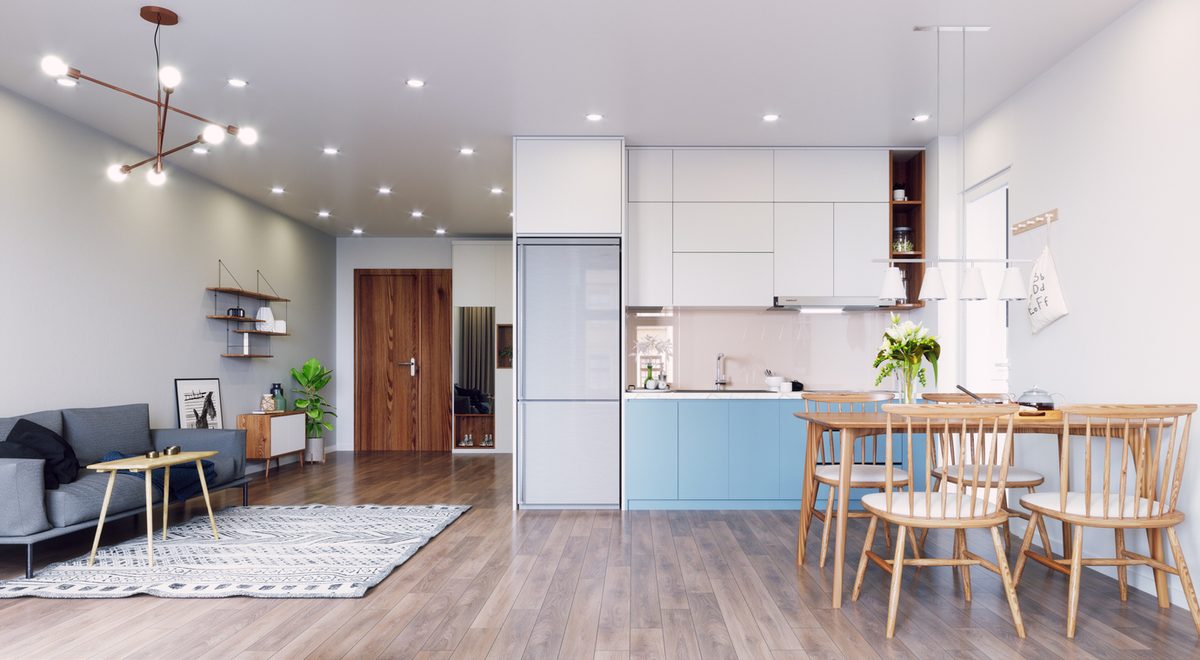
Measure the room, not the apartment. An open-plan living-and-kitchen space of 500 sq ft needs a large unit even though the apartment is small — because the air has nowhere to hide.
Our picks for large rooms
Best overall value: Levoit Core 600S
The 600S is the value benchmark for large rooms. It delivers a smoke CADR around 410, which clears a 500 sq ft space comfortably, and it does it at a price that undercuts the premium brands by half. The trade-off is a plastic build and a filter that needs replacing roughly yearly.
Levoit Core 600S
A 410-CADR unit that clears a 500 sq ft room in about 20 minutes. Best CADR per dollar in the large-room class.
Check Price on Amazon →Best for open-plan apartments: Coway Airmega ProX
If your living room, kitchen and dining area are one space, the ProX is the unit that keeps up. Its dual-intake design moves a very high volume of air, and the washable pre-filter saves money in a home with pets or cooking fumes.
Coway Airmega ProX
Dual-intake design for very large or open-plan spaces. Washable pre-filter cuts long-term filter cost.
Check Price on Amazon →Best for quiet bedrooms: Blueair Blue Pure 211i Max
Blueair's electrostatic-plus-mechanical design moves a lot of air at a low noise level. On its night setting it is quiet enough to sleep beside, which matters in a studio where the bedroom is the living room.
Blueair Blue Pure 211i Max
Very quiet for its airflow. A good choice when the purifier has to sit in the room you sleep in.
Check Price on Amazon →Comparison table
| Model | Smoke CADR | Max room | Noise (low) | Filter cost/yr | Best for |
|---|---|---|---|---|---|
| Levoit Core 600S | ~410 | ~500 sq ft | 24 dB | ~$50 | Value |
| Coway Airmega ProX | ~500 | ~650 sq ft | 22 dB | ~$70 | Open-plan |
| Blueair 211i Max | ~350 | ~450 sq ft | ~20 dB | ~$60 | Quiet bedrooms |
| Winix 5500-2 | ~240 | ~360 sq ft | 27 dB | ~$40 | Budget large-ish |
CADR per dollar is the only spec that matters
Marketing pages quote room size, which is a derived number. The real spec is CADR, and the real value is CADR divided by price. A $300 unit with a 400 CADR is a better buy than a $500 unit with a 350 CADR, unless the cheaper one is too loud to run.
Two more numbers to check before you buy:
- Filter cost per year. A cheap unit with a $90 annual filter is not cheap. Add three years of filters to the purchase price before comparing.
- Noise at the speed you will actually use. Every unit is quiet on low. The question is how loud it is at the speed needed to clean your room — usually medium or high.
Noise and placement
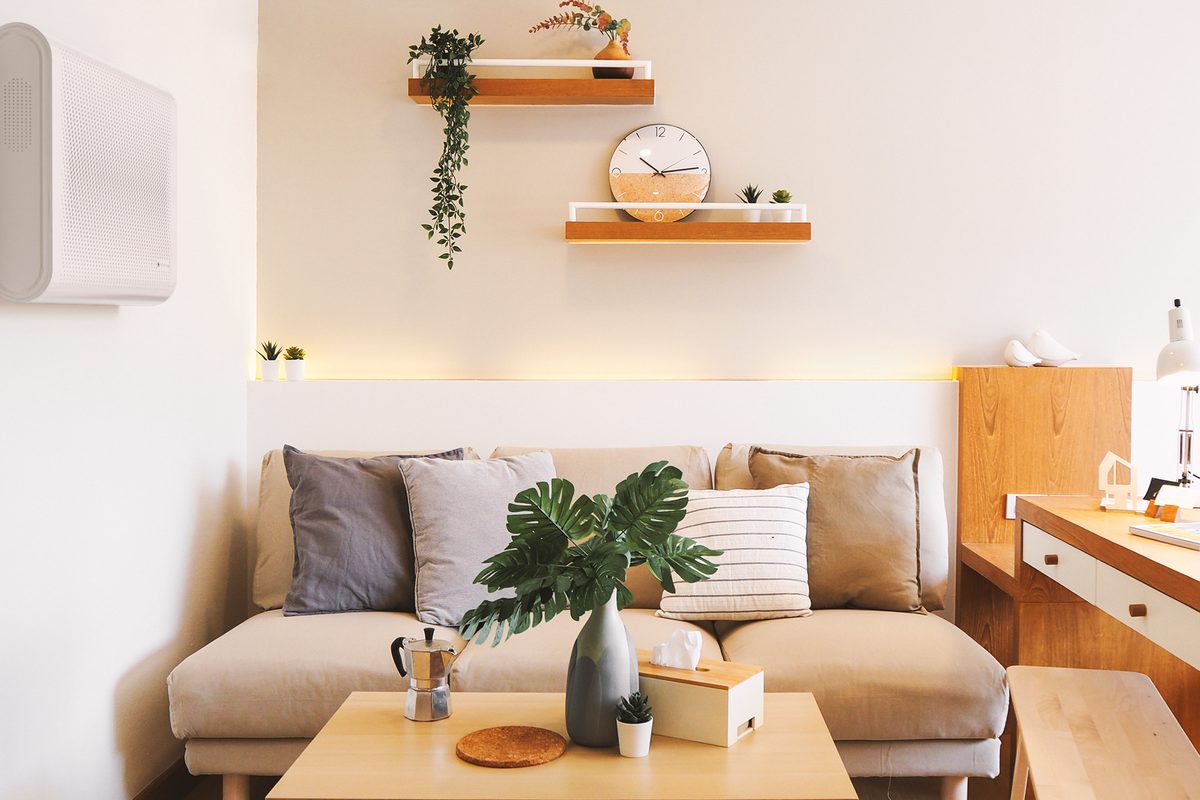
Placement changes performance more than most people expect. A purifier pushed into a corner recirculates its own exhaust and loses a large fraction of its effective CADR.
- Keep at least 12 inches of clearance on all sides, especially the intake.
- Place it where air naturally flows — near a doorway or in the middle of the room, not behind a sofa.
- In a studio, run it on high while you are out and on low overnight.
- Do not put it directly against a wall or under a shelf.
Three mistakes that waste a large-room purifier
Buying the right unit is half the job. These three mistakes make even a good purifier underperform.
- Running it on low in a large room. A large room needs the unit on medium or high to hit its rated CADR. On low, it is a very expensive fan.
- Pushing it into a corner. A purifier recirculates its own exhaust when it is boxed in, losing a large fraction of its effective CADR. Give it 12 inches of clearance.
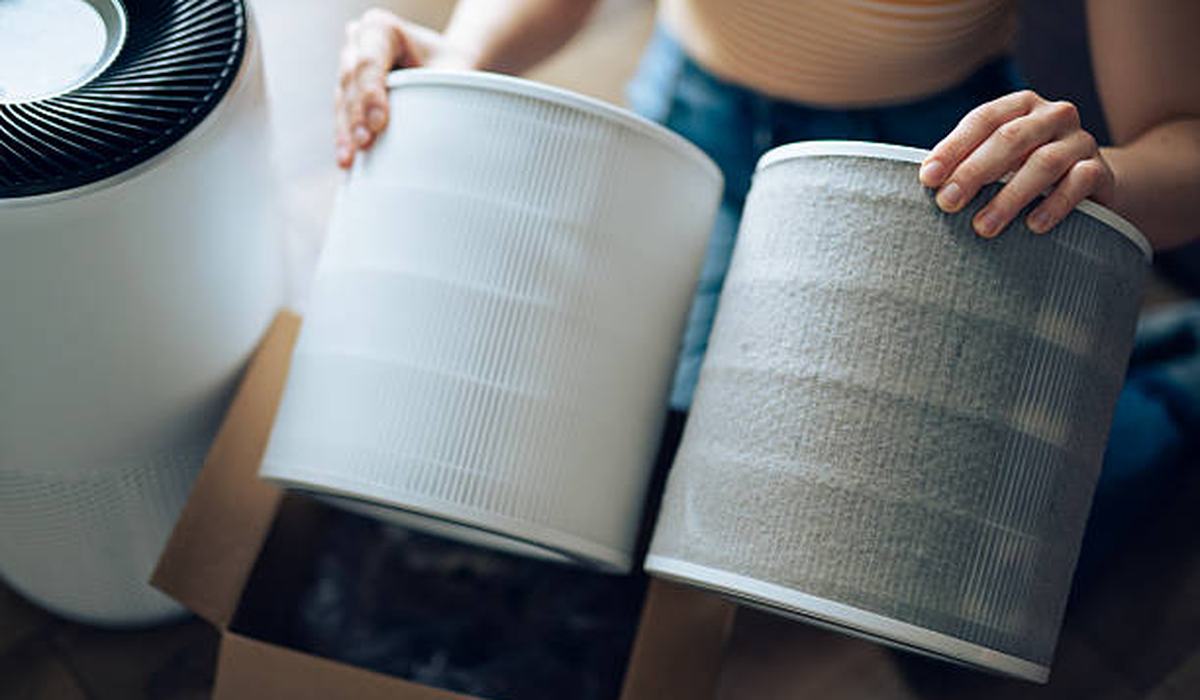
- Ignoring the filter. A clogged HEPA filter drops CADR sharply. Replace it on schedule, not when the unit starts smelling.
The open-plan apartment problem
An open-plan apartment is the hardest case for a purifier, because the air volume is large and there are no doors to contain it. Cooking smells from the kitchen reach the bedroom in minutes.
The fix is not more purifiers — it is one correctly sized unit placed where the air actually moves. Put it between the kitchen and the living area, not in a corner of the bedroom, and run it on medium continuously rather than high intermittently.
| Space | Recommended approach |
|---|---|
| Studio, under 400 sq ft | One large unit, placed centrally |
| Open-plan 400–700 sq ft | One XL unit, between kitchen and living area |
| Open-plan 700+ sq ft | One XL unit plus a small unit in the bedroom |
| Separate rooms | One unit per room, sized individually |
Sizing a purifier for a large room
The single most common mistake is buying a purifier rated for the room's floor area rather than its air volume. A large room with a high ceiling holds far more air than the same floor area with a standard ceiling.
| Room size | Ceiling | Air volume | CADR to aim for |
|---|---|---|---|
| 400 sq ft | 8 ft | 3,200 cu ft | 320 CFM |
| 400 sq ft | 10 ft | 4,000 cu ft | 400 CFM |
| 600 sq ft | 8 ft | 4,800 cu ft | 480 CFM |
| 600 sq ft | 10 ft | 6,000 cu ft | 600 CFM |
Multiply the floor area by the ceiling height to get the air volume, then divide by 60 to get the airflow you need for one air change per hour. For a large room you want four to five air changes per hour, so multiply that figure by four or five.
Where to put it in a large room
Placement matters as much as size. A large-room purifier in the wrong spot cleans a corner and nothing else.
- Against a long wall, not a corner. Air needs to circulate around the unit.
- Between the source and the seating. If the source is a kitchen or a window, put the purifier between it and where you sit.
- Off the floor if possible. Particles settle, but odours and gases rise. A unit on a low table catches more.
- Not behind furniture. A sofa in front of the intake cuts effective CADR sharply.
Living with the noise
A large-room purifier on high is loud — often 50–60 dB, which is a conversation at close range. The practical approach is to run it on high when the room is empty and drop it to medium when you are in it. A unit with a genuine low setting under 30 dB is worth paying more for, because it is the setting you will actually use overnight.
Frequently asked questions
What size air purifier do I need for a large room?
Is a bigger air purifier always better?
How long does it take an air purifier to clean a large room?
Do I need one purifier or two for an open-plan apartment?
Does a large-room purifier use a lot of electricity?
Related guides
Best Air Purifier for Small Apartments
Seven purifiers tested for noise, cost and real CADR.