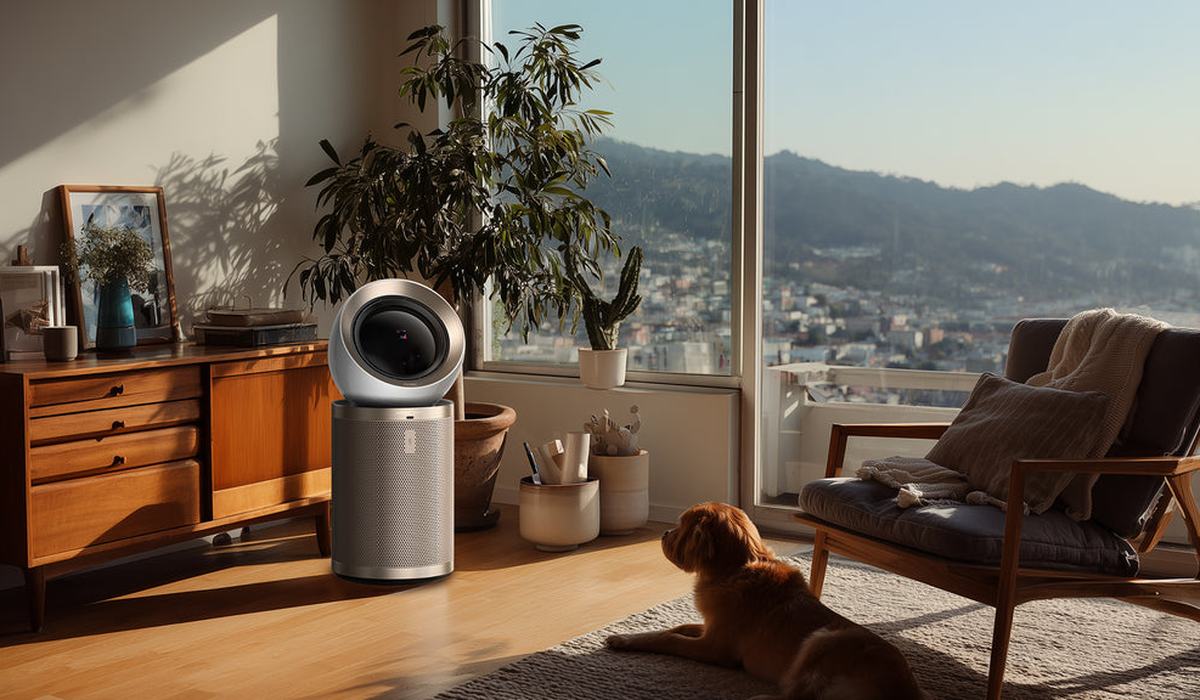
If you share an apartment with a cat or a dog, the thing that makes you sneeze is not the hair you can see — it is dander, the microscopic skin flakes pets shed constantly. Dander is roughly 2.5 to 10 microns, which means it stays airborne for hours and settles on every surface. A vacuum helps, but it cannot remove what is still floating in the air.
That is the job of an air purifier, and for pets the specification that matters most is a true HEPA filter paired with enough clean-air delivery for the room. Carbon matters too, because pet odour is a gas, not a particle.
- Best overall for pets: a true-HEPA purifier with a washable carbon pre-filter and a CADR above 130 CFM.
- Best for cat allergies: a unit with a sealed HEPA system so dander cannot bypass the filter.
- Best for odour: a purifier with a thick carbon layer, not a thin dusting of carbon on the pre-filter.
- Best for a small bedroom: a quiet unit under 25 dB on low, so it can run all night.
- Skip: anything marketed as an 'ionizer' or 'ozone generator' — ozone is a lung irritant and does not remove dander.
On this page
Why dander is the real problem
Pet hair is visible and easy to vacuum. Dander is not. It is shed skin, and it carries the proteins that trigger allergic reactions in roughly 10 to 20 percent of people. Because it is light, it circulates through a room every time the HVAC runs or a door opens, and it can take hours to settle.
A HEPA filter rated H13 or better captures 99.95 percent of particles at 0.3 microns, which comfortably includes dander. The catch is that the purifier has to move enough air through that filter to cycle the room's volume several times an hour. A tiny purifier with a great filter but a weak fan will not keep up in a living room.
| Particle | Typical size | Captured by HEPA? | Captured by carbon? |
|---|---|---|---|
| Pet dander | 2.5–10 microns | Yes | No |
| Pet hair | 50–100 microns | Yes (pre-filter) | No |
| Pet odour (VOCs) | Gas molecules | No | Yes |
| Pollen tracked in | 10–100 microns | Yes | No |
| Dust mite allergen | 1–10 microns | Yes | No |
The specs that matter for pets
| Spec | Target for a pet apartment | Why |
|---|---|---|
| Filter type | True HEPA (H13+) | Captures dander, not just hair |
| CADR | 130+ CFM for a bedroom, 200+ for a living room | Determines how fast the air is cleaned |
| Carbon | Washable pre-filter + carbon layer | Handles pet odour, extends HEPA life |
| Noise on low | Under 25 dB | So it can run overnight in a bedroom |
| Sealed system | Yes | Stops dander bypassing the filter |
| Auto mode | Yes | Ramps up when the pet is active |
| Filter cost | Under $40/year | Pets shorten filter life — budget for it |
Some 'pet odour' devices deliberately produce ozone. Ozone is a respiratory irritant, and health agencies advise against breathing it. A carbon filter removes odour safely; ozone does not belong in a home with pets or people.
The 5 best picks
| Model | Best for | CADR | Noise (low) | Approx price |
|---|---|---|---|---|
| Levoit Core 300S | Best small-apartment value | ~141 CFM | 24 dB | ~$100 |
| Coway AP-1512HH | Best overall for pets | ~240 CFM | 24 dB | ~$90 |
| Winix 5500-2 | Best for odour | ~240 CFM | 27 dB | ~$160 |
| Levoit Vital 200S | Best for larger rooms | ~200 CFM | 24 dB | ~$180 |
| Blueair Blue Pure 211+ | Best for heavy shedding | ~350 CFM | 31 dB | ~$300 |
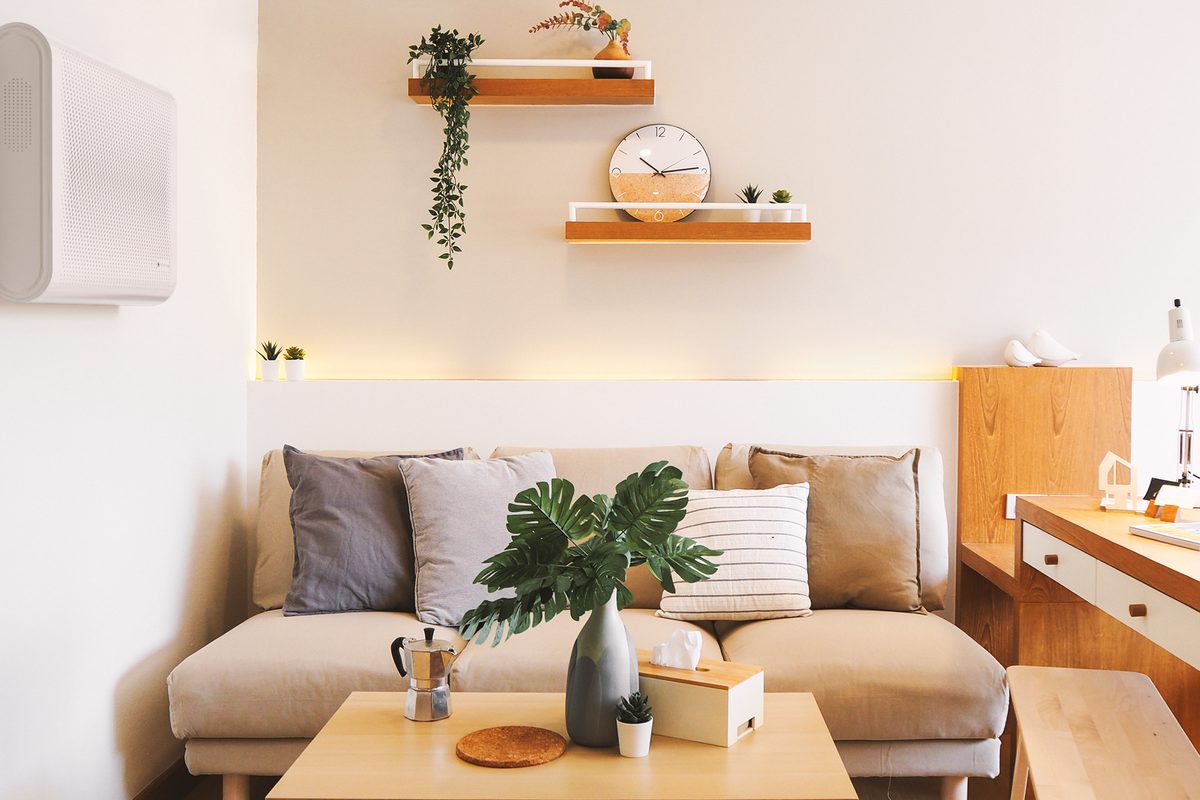
Coway AP-1512HH — best overall for pets
A long-standing favourite for a reason: real HEPA filtration, a carbon pre-filter for odour, and enough airflow to keep a living room clear even with a shedding dog.
Check Price on Amazon →
Levoit Core 300S — best small-apartment value
Small enough for a nightstand, quiet enough to sleep beside, and cheap enough to run one in each room. The right pick for a studio or one-bedroom with a cat.
Check Price on Amazon →
Winix 5500-2 — best for pet odour
The washable carbon filter is the differentiator: it handles litter-box and wet-dog odour far better than a thin carbon sheet, and you rinse it instead of replacing it monthly.
Check Price on Amazon →Where to place it in an apartment
- Near the pet, not near you. Put the purifier where the dander is generated — beside the cat tree or the dog bed — so it captures particles at the source.
- Give it clearance. Leave 12 to 18 inches on all sides. A purifier pushed against a wall cannot draw air properly.
- One per room beats one big unit. Dander does not travel far through a closed door. Two small purifiers outperform one large one in a two-room apartment.
- Run it 24/7 on low. Air cleaning is cumulative. A purifier that runs all day at low speed removes more total dander than one that runs an hour at high speed.
- Keep it off the floor if you can. Dander settles, but it also circulates. A unit on a low table catches more airborne particles than one on the carpet.
Filter maintenance with pets
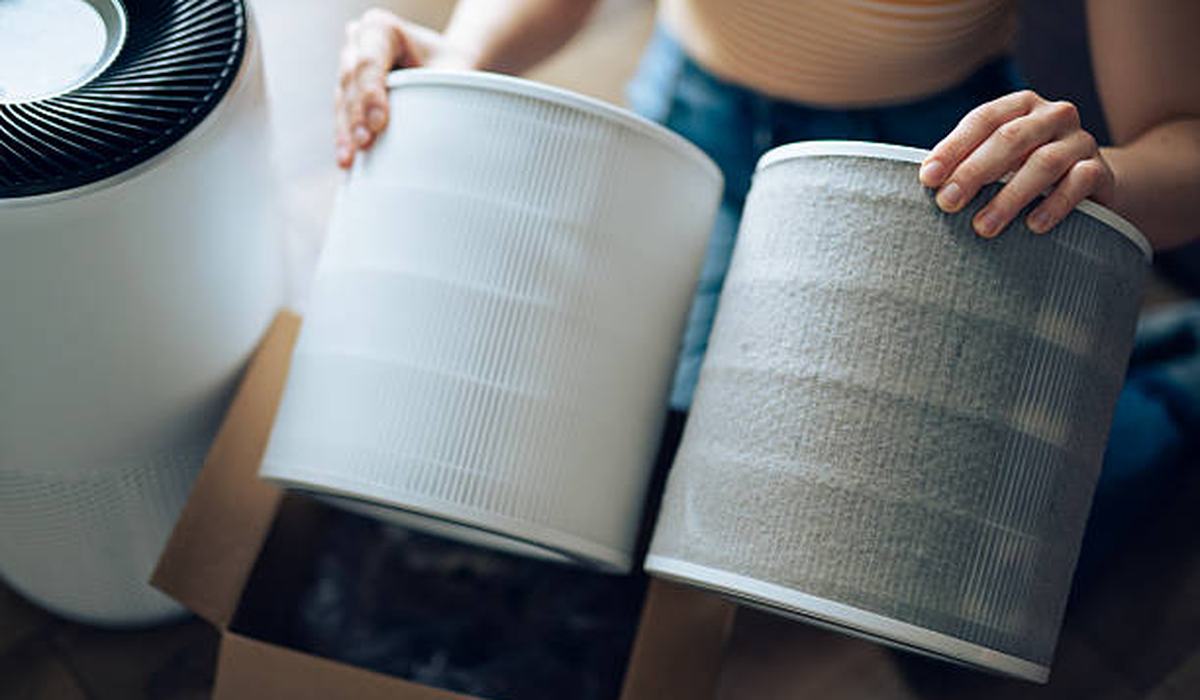
Pets shorten filter life, and that is the single biggest running cost of owning a purifier. A HEPA filter that lasts a year in a pet-free home may need replacing in six to nine months with a heavy shedder. The pre-filter is your defence: a washable pre-filter catches hair before it reaches the HEPA media, and rinsing it every two to four weeks can double the life of the expensive filter behind it.
| Filter | Clean/replace | With pets |
|---|---|---|
| Washable pre-filter | Rinse every 2–4 weeks | Every 1–2 weeks |
| Carbon filter | Replace every 3–6 months | Every 2–3 months |
| HEPA filter | Replace every 6–12 months | Every 6–9 months |
| Sensor lens | Wipe monthly | Wipe monthly |
For a pet apartment, buy a true-HEPA purifier with a washable carbon pre-filter and a CADR of at least 130 CFM per room. Place it near the pet, run it 24/7 on low, and rinse the pre-filter often. That combination removes dander and odour far more effectively than any single expensive unit.