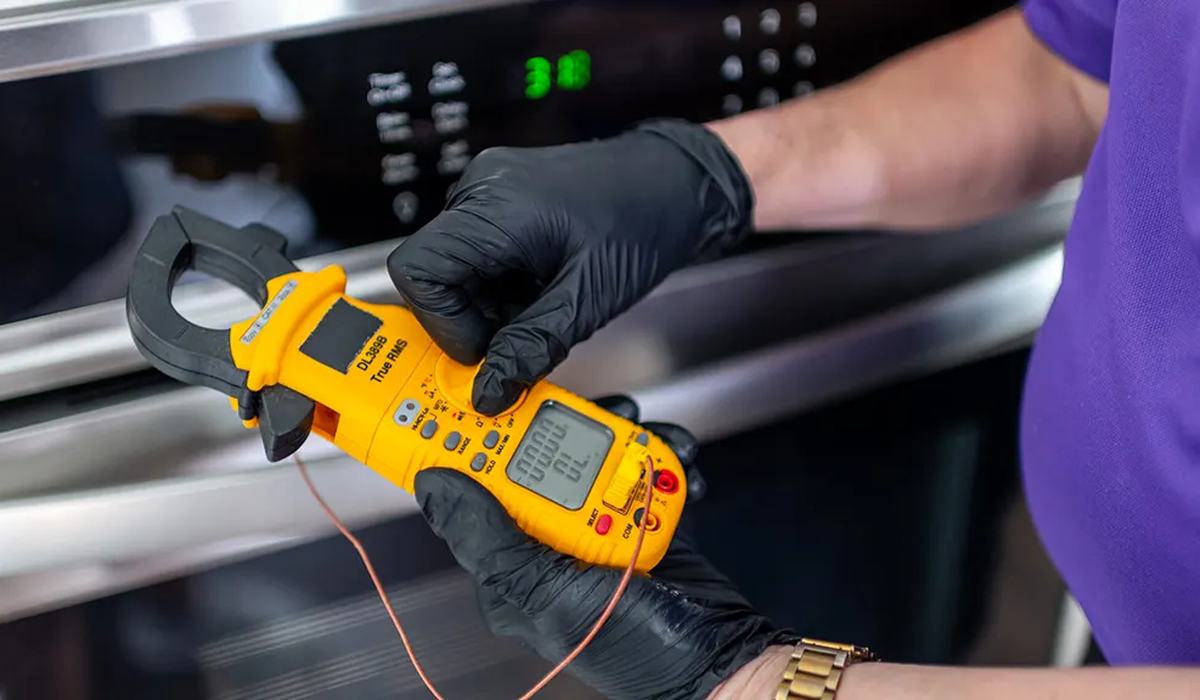
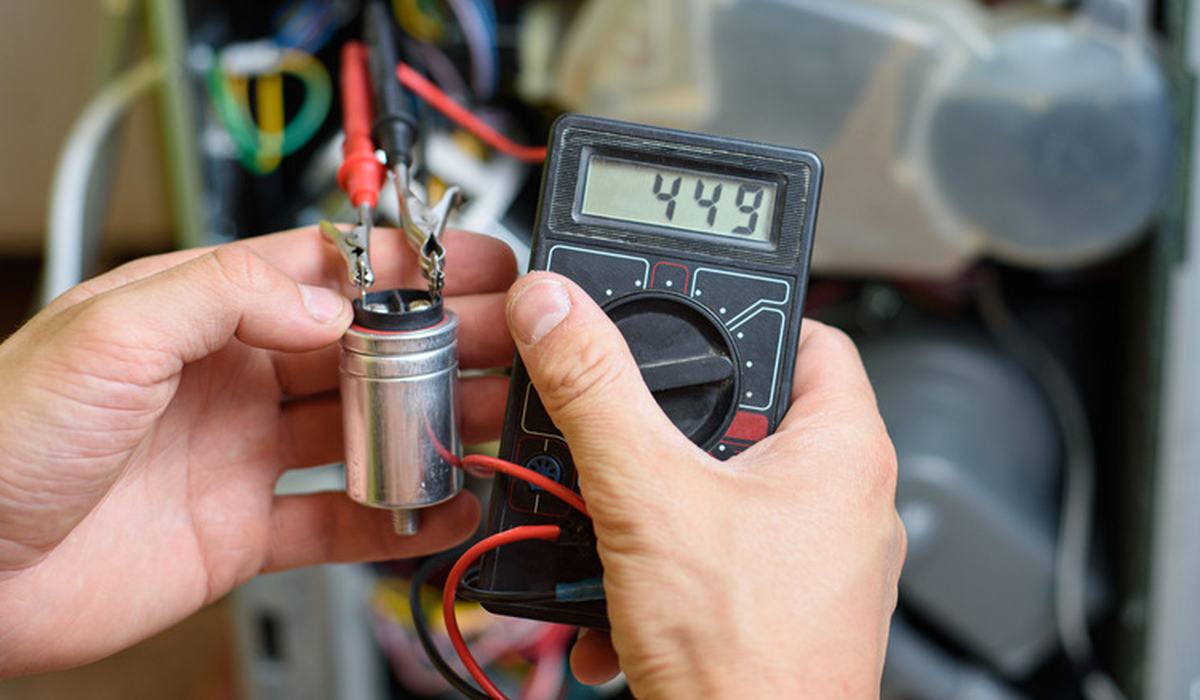
A non-contact voltage tester is the first tool you reach for before touching any wire. It senses the electric field around a live conductor and beeps, without you having to make contact. It costs under $40 and it is the single most important safety tool in appliance repair.
This guide explains how they work, what to look for, and three testers worth owning.
- How it works: senses the electric field around a live wire.
- Must-have: a self-test and a clear audible alert.
- Best overall: a dual-range tester with a built-in flashlight.
- Best premium: a rugged tester from a trusted brand.
- Always test the tester on a known-live outlet first.
How they work
A non-contact tester has an antenna in its tip that detects the oscillating electric field around a live conductor. When you bring the tip near a live wire, the field induces a small current in the antenna and the tester beeps and lights up. No contact is needed, which is what makes it safe.
| Situation | Reading | Meaning |
|---|---|---|
| Near a live wire | Beep + light | Voltage present |
| Near a dead wire | Silent | No voltage detected |
| Near a cable in a wall | Beep | Live cable behind the surface |
| Near a switch | Beep on one side | Live feed present |
| Near a ground wire | Silent | No voltage, as expected |
Features that matter
| Feature | Why it matters |
|---|---|
| Self-test | Confirms the tester works before use |
| Audible alert | You may not see the light in a dark bay |
| Dual range | Detects low and high voltage |
| Flashlight | Lights the area you are testing |
| CAT rating | Safety for mains work |
| Battery indicator | A dead tester reads dead |
The most dangerous failure is a tester with a dead battery. It stays silent on a live wire, and you think the circuit is off. Always press the self-test button, and test on a known-live outlet before trusting a silent reading.
The 3 best picks
| Model | Range | Features | Approx price |
|---|---|---|---|
| Klein NCVT-3P | 12–1000V | Dual range, flashlight | ~$30 |
| Fluke 1AC-A1 II | 90–1000V | Rugged, reliable | ~$45 |
| Klein NCVT-1P | 50–1000V | Basic, compact | ~$20 |
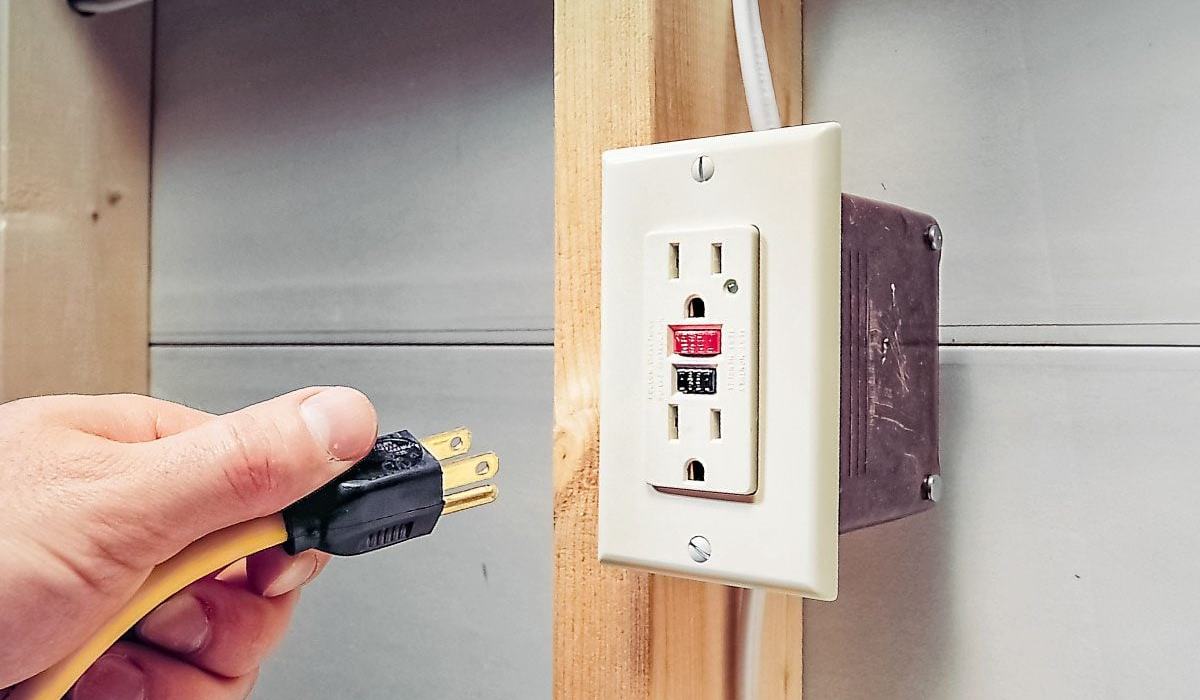
Klein NCVT-3P — best overall
Dual sensitivity range, a built-in flashlight for dark appliance bays, and a self-test. The tester most appliance techs carry.
Check Price on Amazon →Fluke 1AC-A1 II — best premium
The tester professionals trust for reliability. Rugged, simple, and it just works. Worth it if you use it daily.
Check Price on Amazon →Klein NCVT-1P — best budget
A compact, basic tester under $25. It lacks the flashlight and dual range, but it does the core job well.
Check Price on Amazon →Using one safely
- Self-test first — press the button and confirm it beeps.
- Test on a known-live outlet before trusting a silent reading.
- Hold it by the body, not the tip.
- Move slowly along the wire to find the live section.
- Re-test after — a tester that failed silently is a hazard.
- Never rely on one tester alone for a life-safety decision.
A non-contact voltage tester is the cheapest safety tool you can own. Buy one with a self-test and an audible alert, test it on a known-live outlet before each use, and never rely on a single tester for a life-safety check. The Klein NCVT-3P is the best all-rounder.
Frequently asked questions
Choosing between the top two
| Consideration | Klein NCVT-3P | Fluke 1AC-A1-II |
|---|---|---|
| Sensitivity ranges | Two, selectable | Single, wide |
| Built-in torch | Yes | No |
| Battery | 2 x AAA | 2 x AAA |
| Ruggedness | Good | Excellent |
| Price | ~$30 | ~$45 |
| Best for | Apartment repairs | Frequent trade use |
Both are reliable and both will keep you safe. The Klein wins on features: two sensitivity ranges let you tell a genuine live conductor from a false positive caused by a neighbouring cable, and the torch is genuinely useful in a dark cabinet. The Fluke wins on consistency and build, which matters if you use it daily.
For a household doing occasional appliance work, the Klein with the dual range is the more useful purchase. The second range is not a gimmick: false positives are the main way a tester misleads you, and being able to drop to a lower sensitivity is the fix.
What a voltage tester can and cannot tell you
A non-contact tester answers one question reliably: is there voltage present near this point. That makes it valuable as a safety check before you touch anything, and useless as a diagnostic instrument, because it cannot tell you how much voltage or whether a circuit is complete.
The two failure modes are opposite. On the sensitive end, a cheap tester chirps near a wire that is merely bundled alongside a live one, giving false alarms that train you to ignore it. On the insensitive end, a tester fails to respond through thick insulation or inside a metal box, which is far more dangerous because it produces false confidence.
| Tester behaviour | What it means | Risk level |
|---|---|---|
| Chirps with no live wire nearby | Over-sensitive, coupling pick-up | Annoying, not dangerous |
| Silent on a live wire | Under-sensitive or dead battery | Dangerous, false negative |
| Chirps and varies with distance | Working correctly | Normal |
| Constant tone, no variation | Possible fault or interference | Verify with a multimeter |
Always confirm a tester is working before you trust a silent reading. The standard practice is to test it on a known live circuit first, then test your target, then test the known live circuit again — a live-dead-live check. That sequence catches a dead battery or a failed tester before you rely on it.
For anything you are about to touch, a non-contact tester is a first check, not the final word. Follow it with a multimeter measurement across the terminals, because a tester only ever proves presence, never absence.