Refrigerator water filters are a small part with a big markup, and the market is full of aftermarket copies that may or may not fit. Choosing well comes down to three things: the correct part number, the right certification, and whether OEM is worth the premium for your brand.
This guide covers all three, plus the replacement schedule most people get wrong.
- Find your part number first — it is on the old filter or in the manual.
- Look for NSF/ANSI 42 and 53 certification on any filter you buy.
- OEM is safest for warranty and fit; quality aftermarket is fine for most brands.
- Replace every 6 months or every 200 gallons, whichever comes first.
- Avoid unbranded filters with no certification — they may not filter at all.
Finding the right filter
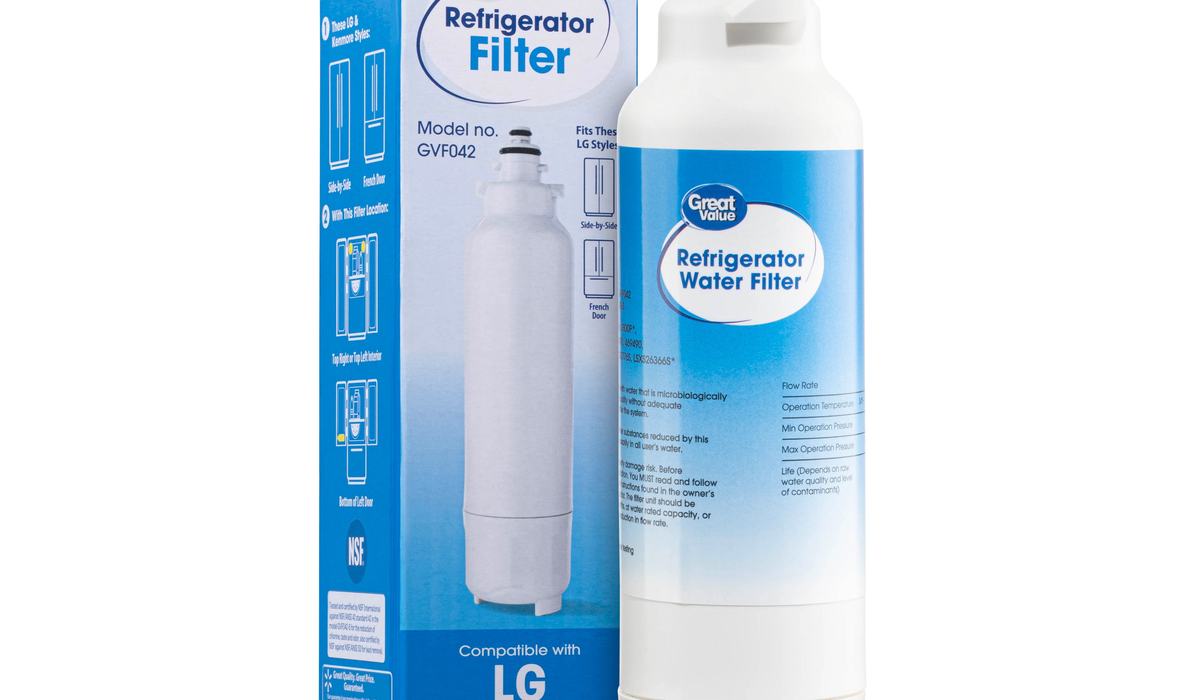
Every refrigerator water filter has a part number, usually printed on the filter itself and in the owner's manual. Common examples include Samsung HAF-CIN, LG LT1000P, Whirlpool EveryDrop, and GE MWF. Search that exact number, not just your fridge model.
| Brand | Common filter | Replacement interval |
|---|---|---|
| Samsung | HAF-CIN / HAF-QIN | 6 months |
| LG | LT1000P / LT700P | 6 months |
| Whirlpool | EveryDrop 1–5 | 6 months |
| GE | MWF / XWFE | 6 months |
| Frigidaire | PureSource 2/3 | 6 months |
OEM vs aftermarket
OEM filters are made by the appliance brand and cost more. Aftermarket filters are made by third parties and cost less. The trade-off is fit, filtration quality and warranty.
| OEM | Quality aftermarket | Unbranded | |
|---|---|---|---|
| Fit | Guaranteed | Usually good | Hit or miss |
| Certification | Always | Often | Rarely |
| Price | $40–$60 | $15–$30 | $8–$15 |
| Warranty | Safe | Usually safe | May void |
| Filtration | Verified | Verified if certified | Unverified |
For most brands, a certified aftermarket filter is a reasonable saving. For Samsung and LG, whose filters have proprietary connectors, OEM or a well-reviewed aftermarket equivalent is safer. Never buy an unbranded filter with no certification — you have no way to know it filters anything.
A water filter that fits but is not NSF-certified may pass water straight through without removing contaminants. The certification is the only proof that it does what it claims.
Certification matters
Look for two certifications on the packaging: NSF/ANSI 42 for aesthetic effects (taste, odour, chlorine) and NSF/ANSI 53 for health effects (lead, cysts, some VOCs). A filter with both is doing real work. A filter with neither is a plastic tube.
- NSF/ANSI 42 — taste, odour, chlorine reduction.
- NSF/ANSI 53 — health contaminants like lead and cysts.
- NSF/ANSI 401 — emerging contaminants (bonus).
- Check the certification body — it should be a recognised lab, not a self-declared claim.
Replacement schedule
Most manufacturers recommend every six months or every 200 gallons. The filter's job is to trap contaminants, and once it is saturated it stops working — and can even release what it captured. Many fridges have a filter indicator light; when it turns red or amber, replace the filter.
| Usage | Replace every |
|---|---|
| Average household | 6 months |
| Heavy use (large family) | 4–5 months |
| Light use (one person) | 6–9 months |
| Any use, after a boil-water notice | Immediately |
Find your exact part number, buy a filter with NSF/ANSI 42 and 53 certification, and replace it every six months. OEM is safest for warranty; certified aftermarket is a fine saving for most brands. Never buy an uncertified filter.
Frequently asked questions
Replacement filters
Match your model number to get the right filter the first time.