A frost-free refrigerator periodically runs a defrost cycle: a heater warms the evaporator coil to melt the frost that accumulates on it, and the meltwater drains away. Three components run that cycle — the heater, the defrost thermostat (or terminator) and the timer or control board.
When any one of them fails, frost accumulates until the coil is a solid block of ice, airflow stops, and the fridge compartment warms while the freezer still feels cold. Replacing the wrong one of the three wastes money; testing all three takes twenty minutes.
| Part | Job | Common failure mode |
|---|---|---|
| Defrost heater | Melts frost off the coil | Open circuit |
| Defrost thermostat | Ends the cycle at a set temperature | Open or out of calibration |
| Defrost timer / board | Starts the cycle on schedule | Timer stalls or board fault |
| Drain heater | Keeps the drain from freezing | Open circuit — water pools |
| Drain tube | Carries meltwater away | Blocked with debris |
Test all three instruments in order. The heater is the most common failure and the easiest to test.
On this page
Symptoms of a defrost fault
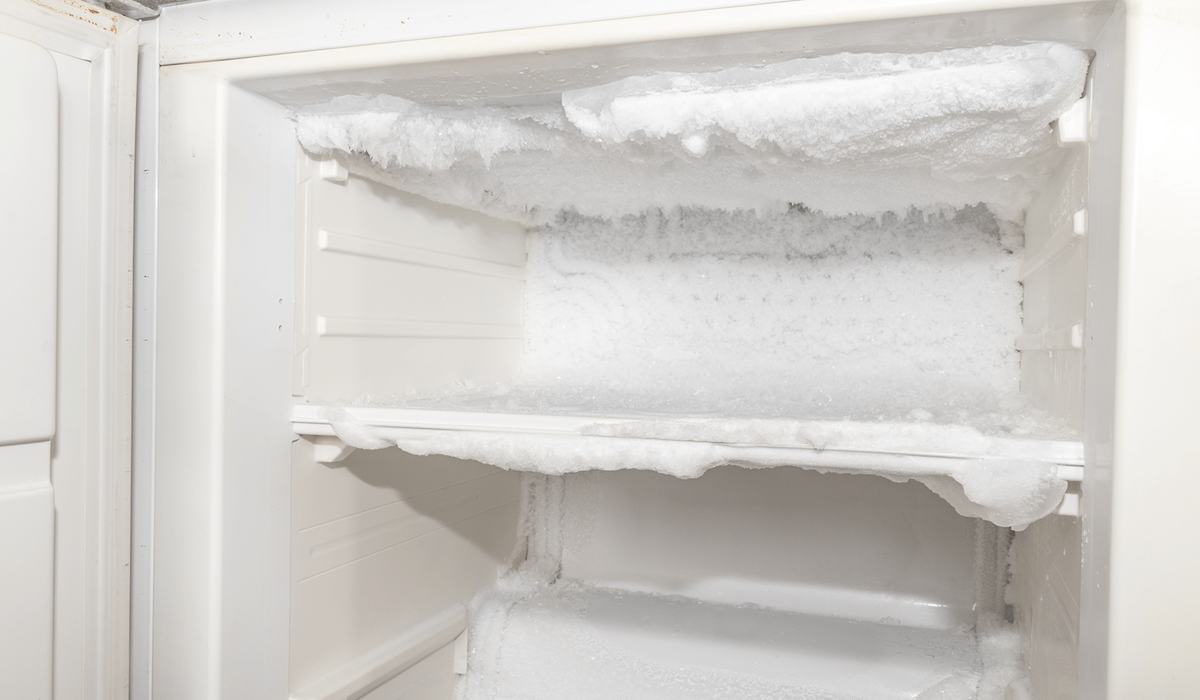
- Heavy frost or a solid ice block on the evaporator coil behind the freezer panel.
- Fridge compartment warm, freezer still cold — the classic pattern, because airflow is blocked by ice.
- Water on the floor or under the crisper drawers, from a blocked or frozen drain.
- Food freezing in the fridge compartment in some models, as ice distorts the airflow pattern.
- The compressor runs long or continuously.
- Ice visible around the evaporator fan blade, sometimes stalling it.
- The problem returns after you manually defrost — which is the definitive sign that the defrost system is not running.
Unplug the fridge for 24 hours with the doors open to melt everything, then restart it. If it works perfectly for a week or two and then ices up again, the defrost system is confirmed as the fault. If it never works, the problem is elsewhere.
How the cycle works
- The timer or board ends the cooling cycle and starts a defrost cycle — typically every 8–12 hours of compressor run time.
- The compressor stops and the defrost heater energises.
- The heater warms the evaporator coil until the frost melts.
- The defrost thermostat opens when the coil reaches its set temperature, ending the heating phase.
- A short drip period lets the meltwater drain away.
- The compressor restarts and the cycle repeats.
Testing the three parts
| Part | How to test | Good result | Bad result |
|---|---|---|---|
| Defrost heater | Resistance across its terminals | Low non-zero resistance | Open (OL) |
| Defrost thermostat | Continuity cold; open when warm | Continuity cold | No continuity cold |
| Defrost timer | Turn the cam manually | Advances through defrost | Will not advance |
| Drain heater | Resistance across terminals | Low non-zero resistance | Open (OL) |
| Drain tube | Visual and a pour test | Water flows away | Blocked |
- Unplug the fridge and empty the freezer.
- Remove the freezer rear panel to expose the coil, the heater and the thermostat.
- Melt any ice with warm water and towels so you can access the components — do not chip at the coil with anything sharp.
- Test the heater first: measure resistance across its terminals. Open means replace it.
- Test the defrost thermostat: it should show continuity when cold and open when warm.
- Test the timer or board: on a mechanical timer, advance the cam manually and confirm the defrost cycle engages.
- Test the drain heater if your model has one, the same way as the main heater.
- Check the drain tube by pouring a little water into the drain trough and watching it flow away.
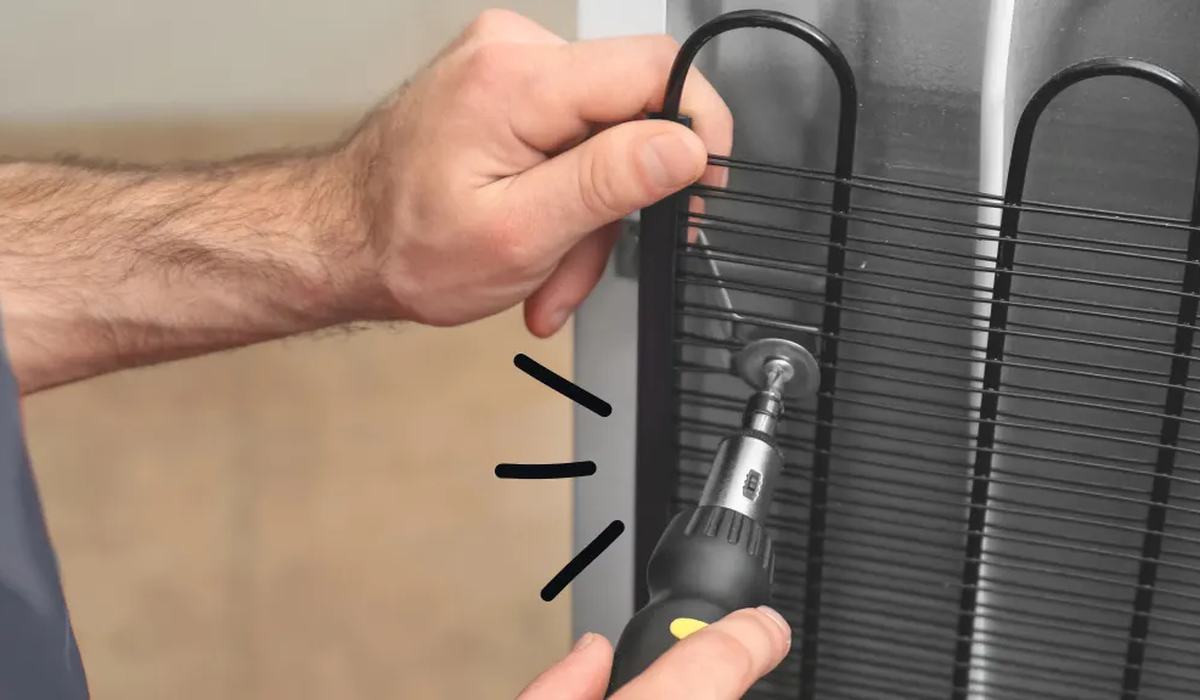
The evaporator coil is thin aluminium tubing carrying refrigerant. A screwdriver, knife or chisel will puncture it — and a punctured coil means a sealed-system repair that costs more than the fridge is worth. Melt ice with warm water and patience, never with a tool.
Replacing the failed part
- Order by model number — defrost heaters differ in length, wattage and mounting.
- Unplug the fridge and photograph the wiring.
- Disconnect the heater leads and note their routing.
- Release the heater from its clips or brackets, handling it carefully — the glass or metal element is brittle.
- Fit the new heater in the same position, seated in all its clips.
- Replace the thermostat if it is original and the fridge is old, since it is inexpensive and failure-prone.
- Reconnect the wiring exactly as photographed.
- Refit the panel and restore power.
- Force a defrost cycle if the model allows, and watch for meltwater draining away.
Do not forget the drain
A defrost repair that ignores the drain will be followed by water on the kitchen floor. The meltwater trough and tube are frequently blocked with debris, and in cold models the drain heater is what stops the water refreezing in the tube.
- Clear the trough of debris and food particles.
- Flush the drain tube with warm water and check it flows freely.
- Replace a failed drain heater, or water will refreeze in the tube and back up.
- Check the drain pan at the bottom for cracks or a blocked outlet.
- Confirm the drain exits correctly — a tube that has slipped out of the pan wets the floor.
After the repair
- Watch the first defrost cycle. You should hear the compressor stop, then frost melting, then water draining.
- Check for water under the fridge afterwards — leakage means the drain is still blocked.
- Give it 24 hours and check temperatures with a thermometer in both compartments.
- Re-inspect the coil after a week for any return of frost; a light film is normal, a block is not.
- If icing returns, the part you did not replace is the next suspect — usually the timer or board.
Defrost heater — the most common failed part
Test it first with a multimeter: an open circuit confirms the fault. Order by model number and handle the element carefully when fitting.
Check Price on Amazon →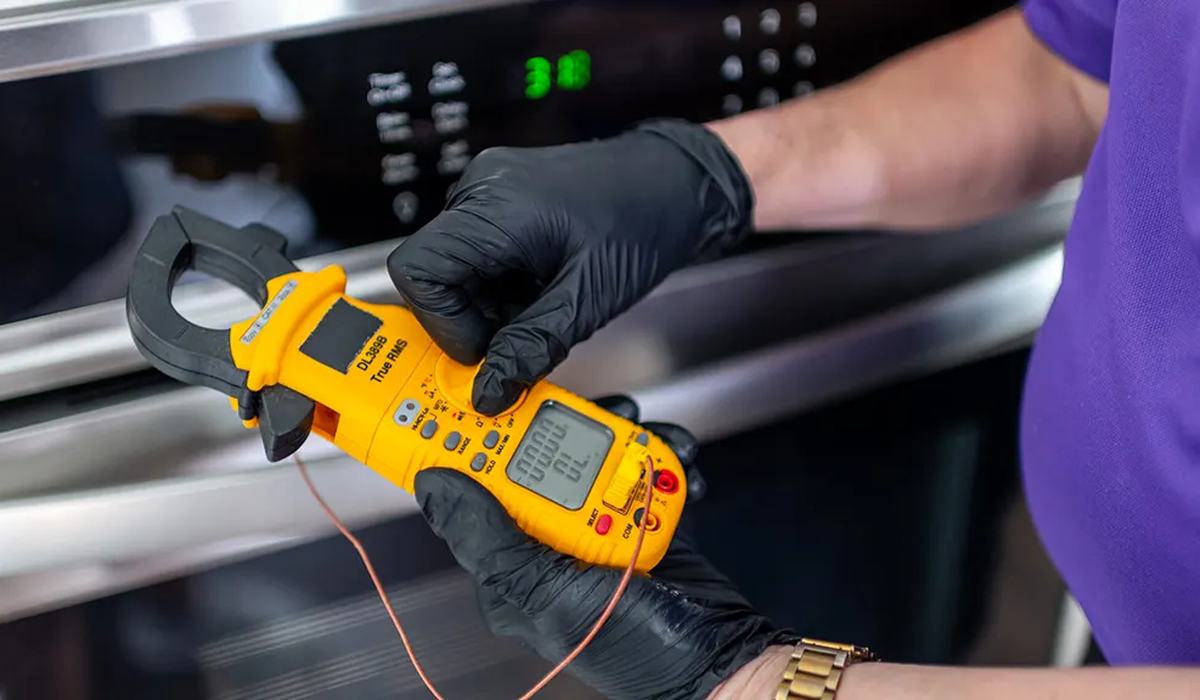
A multimeter — test all three parts
The heater, thermostat and timer each fail in their own way. Twenty minutes of testing saves buying two unnecessary parts.
Check Price on Amazon →A frost-free fridge that ices up has a defrost fault. Test the heater for resistance, the thermostat for continuity when cold, and the timer for advancing. Replace the part that failed, clear the drain, and never chip ice off the coil.