New paint, engineered wood, laminate flooring, new cabinets and even new furniture all release volatile organic compounds as they cure. The sharp, chemical “new” smell is off-gassing, and it is fastest in the first weeks and months — and faster still in warm, humid weather.
Formaldehyde is the VOC people worry about most, and reasonably so: it is classified as a human carcinogen and is common in pressed-wood glues and resins. The good news is that the fix is mostly free — ventilation — and a purifier is a useful supplement, not the main event. This guide explains what actually works.
On this page
What actually removes VOCs
There are three approaches, and they are not equal.
- Ventilation dilutes VOCs by replacing indoor air with outdoor air. It is the most effective and cheapest method, and it is what you should do first and most.
- Adsorption — activated carbon physically traps VOC molecules as air passes through it. This works, but only in proportion to how much carbon there is.
- Oxidation — some purifiers use chemical reactions to break VOCs down. Research has found these vary widely in effectiveness and can themselves produce byproducts, including formaldehyde.
How much carbon you need
Carbon capacity is measured in weight, and it is the single number that separates a purifier that helps from one that does not.
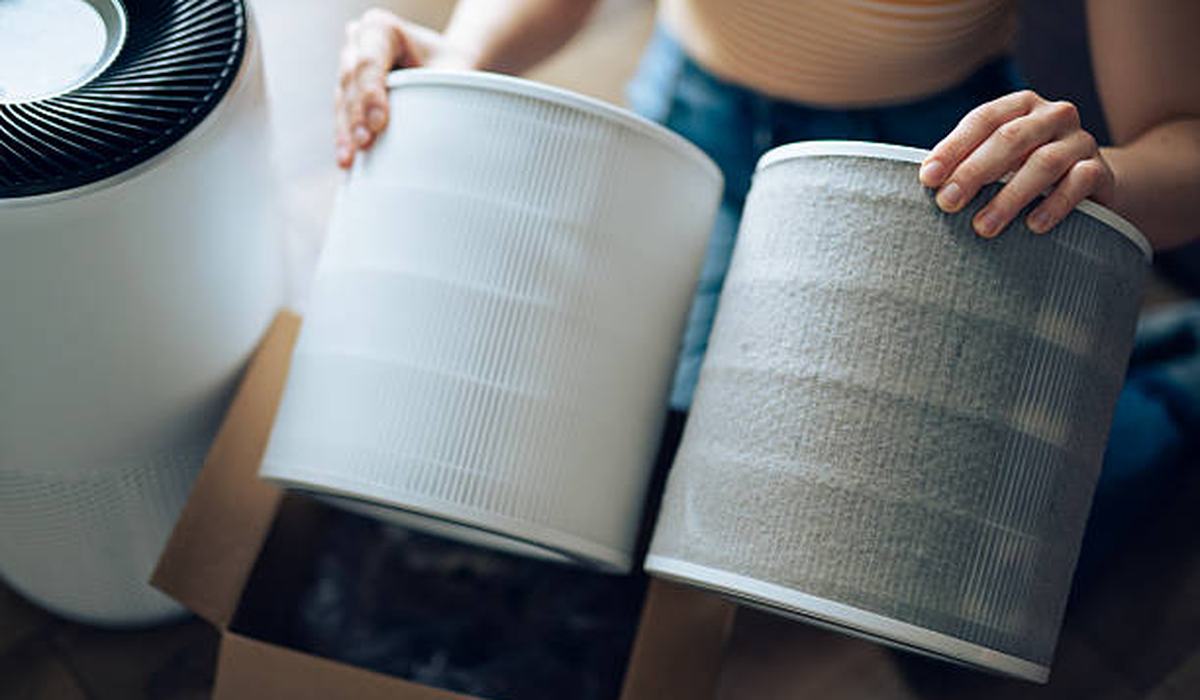
- Under 1 lb: a thin pad bonded to fabric. Fine for a faint cooking smell, useless against off-gassing.
- 2 lb: the practical minimum for a portable purifier dealing with a mild source.
- 5 lb or more: what you want against a strong source such as fresh paint, new cabinets or a gut renovation.
- 15 lb+: the serious end — units like the Austin Air HealthMate, which use pounds of granular carbon and zeolite.
If a purifier advertises “activated carbon” without stating a weight, assume it is the thin-pad kind. That is not a criticism of the purifier — it is just not built for VOCs.
The purifiers worth considering
1. Austin Air HealthMate Plus — best for formaldehyde

Austin Air HealthMate Plus
Up to 15 lb of activated carbon and zeolite across 60 sq ft of media, with additional media targeted at formaldehyde and a wider range of gases.
Check Price on Amazon →The HealthMate Plus is configured specifically for environments with higher chemical loads, and formaldehyde elimination is part of its design brief. If you have just moved into a newly built or renovated apartment and the smell is strong, this is the class of unit that makes a measurable difference. It is expensive and heavy, but it is the honest answer.
2. Winix 5500-2 — best affordable carbon
Winix 5500-2
A washable carbon pre-filter that handles VOCs and odours far better than the thin pads on cheaper units.
Check Price on Amazon →For a mild off-gassing smell — a new sofa, a repainted room — the Winix is the sensible buy. Its washable carbon filter is a genuine step above the thin pads, and it costs a fraction of the Austin Air. It will not match 15 lb of carbon, but for a small source it is enough.
3. Levoit Core 400S — best for monitoring
Levoit Core 400S
App control and a live PM2.5 display. Useful for tracking whether a room is improving over the first weeks.
Check Price on Amazon →The 400S is not a VOC specialist — its carbon layer is modest. But its live particle readout is genuinely useful during a renovation, when dust and off-gassing peak together. Treat it as a monitor-plus-filter, not a formaldehyde solution.
What to avoid
- Ozone generators. Ozone is a lung irritant and is not a safe way to “clean” occupied air. Avoid them entirely.
- Purifiers with no stated carbon weight. If the carbon is not quantified, it is a pad, not a filter.
- Relying on a purifier alone. Without ventilation, VOCs keep building. The purifier cannot outrun a sealed, freshly painted room.
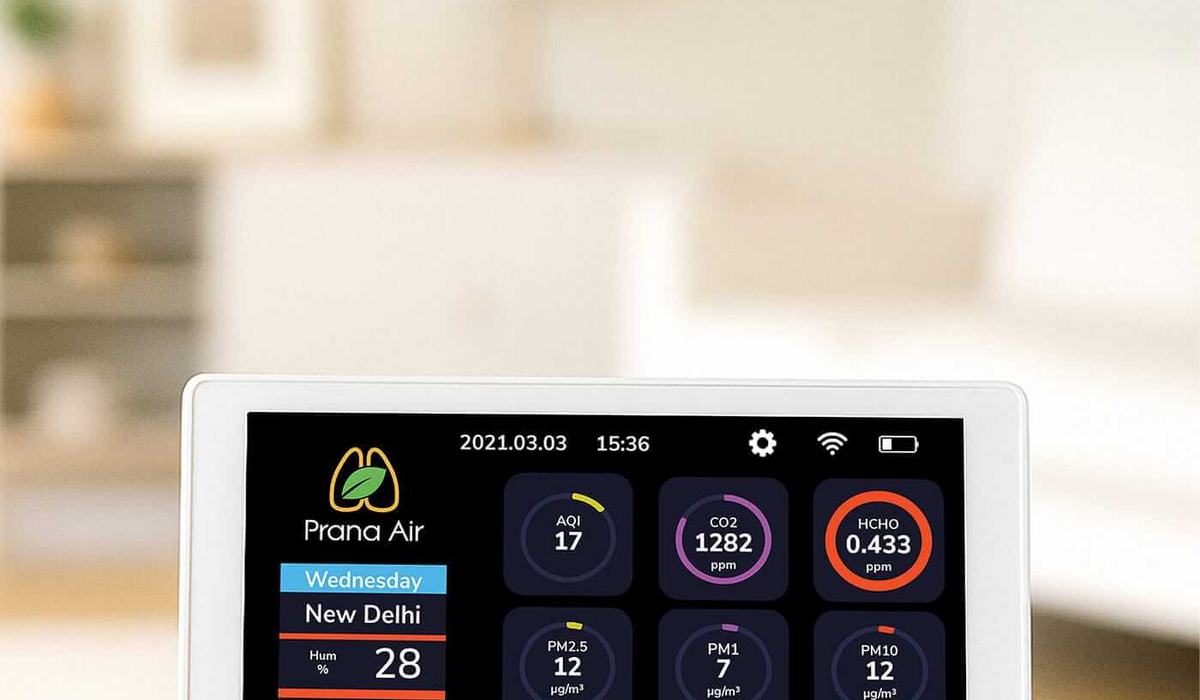
- Fake formaldehyde testers. Cheap consumer meters are unreliable. Your nose and a period of serious ventilation are better guides.
A realistic timeline for a new apartment
Off-gassing is not a switch you flip. It follows a curve: strongest in the first weeks, then tapering off over months. Knowing the shape of that curve tells you how hard to ventilate and when you can relax.
- Weeks 1–4: the peak. Ventilate aggressively — windows open whenever you are home, extractor fans running, and the purifier on high.
- Months 2–3: still significant, especially from new cabinets and flooring. Keep ventilating daily and run the purifier on medium.
- Months 4–12: a low, slow release. Ventilate when you can and keep the carbon filter in the system.
- After a year: most new-build off-gassing has slowed, but a warm, humid summer can briefly raise it again.
Heat and humidity speed up off-gassing, which is why a new apartment smells stronger in summer than in winter. If you move in during a hot spell, expect the first month to be the worst and ventilate accordingly.
Frequently asked questions
Do air purifiers remove formaldehyde?
How long does a new apartment off-gas?
Is ventilation or a purifier better for VOCs?
Are ozone generators safe?
How much activated carbon do I need?
Related guides