Mold spores are everywhere in apartment air — the question is how many, and whether the moisture that keeps producing them is under control. A purifier removes the spores that are already floating, but it does nothing about the leak, the damp wall or the bathroom with no extractor fan that keeps making more.
That is why the honest answer is a two-part one: fix the moisture first, then run a correctly sized HEPA purifier to pull the remaining spores and the musty odour out of the air. This guide covers both, and the six purifiers worth considering for a small, damp apartment.
On this page
The 6 best picks at a glance
| Model | Best for | Coverage | Carbon | Price | Verdict |
|---|---|---|---|---|---|
| Coway Airmega 250 | Most damp apartments | 930 sq ft (30 min) | Washable + carbon | ~$270 | Best overall |
| Winix 5500-2 | Musty odours | 360 sq ft | Washable carbon | ~$159 | Best for odour |
| Levoit Core 300 | Small bedrooms | 219 sq ft | Thin carbon pad | ~$99 | Best budget |
| Levoit Core 400S | Smart monitoring | 403 sq ft | Carbon + HEPA | ~$189 | Best smart |
| IQAir HealthPro Plus | Serious filtration | 1,125 sq ft | V5-Cell + HyperHEPA | ~$900 | Best premium |
| GermGuardian AC4825 | Tightest budget | 153 sq ft | Thin carbon | ~$89 | Cheapest |
Why mold needs more than a purifier
A purifier can only clean the air that passes through it. Mold spores are released continuously by any damp surface — a window frame, a bathroom ceiling, the back of a wardrobe against an outside wall. If the moisture source stays, the purifier is running to stand still.
So the order of operations matters. Deal with the water first, then let the purifier handle what is left in the air.
- Find the moisture. A cheap hygrometer will tell you whether a room is above 60% relative humidity. Above that, mold grows.
- Ventilate and dehumidify. Run a bathroom extractor, open windows after cooking and showering, and use a dehumidifier in the worst room. Target 40–50% humidity.
- Clean the visible mold. A purifier does not remove mold from surfaces. Wipe it with an appropriate cleaner and fix the leak behind it.
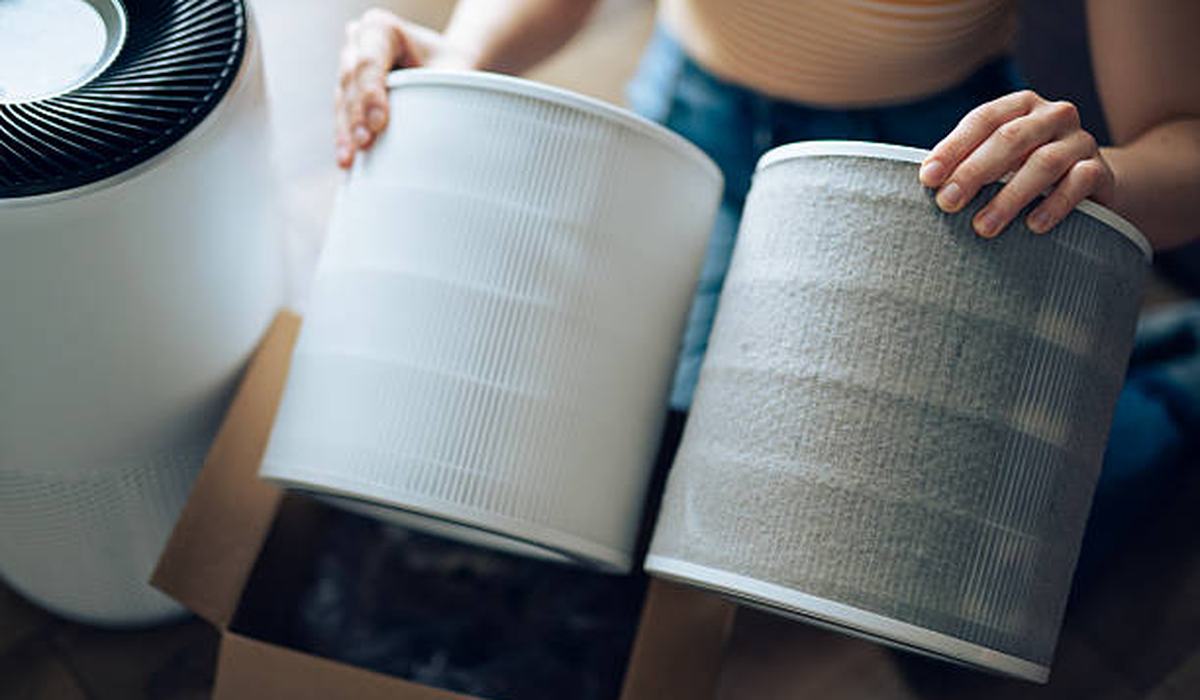
- Then filter the air. A HEPA stage captures spores down to 0.3 microns; a carbon stage handles the musty smell that spores and their VOCs leave behind.
The reviews
1. Coway Airmega 250 — best overall for a damp apartment
Coway Airmega 250
A washable pre-filter, activated carbon and a true HEPA stage, with CADR figures of 249 smoke / 261 dust / 230 pollen. Quiet enough for a bedroom.
Check Price on Amazon →The Airmega 250 is the pick we would make for a damp apartment because it combines a genuinely washable pre-filter — which catches the larger debris and some surface spores before they load the HEPA — with a real carbon layer for the musty smell. It is a low-gimmick design that is easy to live with.
Who it is not for: very small rooms where its footprint is awkward, or anyone who wants to spend under $200.
2. Winix 5500-2 — best for musty odours
Winix 5500-2
360 sq ft coverage with a washable carbon filter — the best unit we have tested for persistent odours and cooking smells.
Check Price on Amazon →If the complaint is the smell rather than the spores, the Winix is the better buy. Its washable carbon pre-filter handles VOCs and odours far better than the thin carbon pads on cheaper units, and it is one of the few sub-$200 purifiers with a carbon stage worth the name.
3. Levoit Core 300 — best budget pick for a small bedroom
Levoit Core 300
219 sq ft coverage, 24 dB on low, HEPA plus a thin carbon pad. The quietest unit at this price and the filter is cheap to replace.
Check Price on Amazon →For a single damp bedroom, the Core 300 captures spores well and is quiet enough to sleep next to. Its carbon layer is thin, so it will not do much for a strong musty smell — pair it with a dehumidifier and it is a solid, cheap combination.
4. Levoit Core 400S — best if you want to monitor the air
Levoit Core 400S
403 sq ft coverage, Wi-Fi and app control, auto mode with a live PM2.5 display. Useful for watching whether a room is improving.
Check Price on Amazon →The 400S shows live particle readings and lets you schedule it. If you are trying to prove that a damp room is getting better, that feedback is genuinely useful — though remember it measures particles, not humidity, so you still need a separate hygrometer.
5. IQAir HealthPro Plus — best premium filtration
IQAir HealthPro Plus
HyperHEPA filtration plus a V5-Cell gas and odour stage, positioned for rooms up to 1,125 sq ft. The most serious unit here.
Check Price on Amazon →The HealthPro Plus is what you buy when air quality is a health priority and budget is secondary. Its HyperHEPA stage captures particles finer than standard HEPA, and the V5-Cell handles gases and odours. It is large, heavy and expensive to run — measure your space before committing.
6. GermGuardian AC4825 — cheapest that still works
GermGuardian AC4825
153 sq ft coverage. Fine for a small bedroom on a tight budget, but you will want to upgrade for a living room.
Check Price on Amazon →The AC4825 is the entry point. It captures spores in a small room and costs very little, but its coverage is limited and its carbon layer is thin. Treat it as a bedroom unit, not a whole-apartment solution.
How to size a purifier for a damp room
The most common mistake is buying a purifier that is too small, then running it flat-out where it is loudest and least efficient. Use the two-thirds rule.
Also check the noise rating at the speed you will actually use, and the cost of replacement filters. A purifier you stop running because it is too loud, or too expensive to re-filter, is not cleaning anything.
The part a purifier cannot do
An air purifier removes spores that are already airborne. It does nothing about the moisture feeding the mould, and it cannot clean a surface. That means a purifier is the third step, not the first — and buying one without fixing the moisture is the most common wasted purchase in this whole category.
Step one: find and stop the moisture
Mould needs sustained humidity above roughly 60%. Until that is handled, spores keep being produced and any purifier simply runs constantly against an endless supply. The fix is usually ventilation, a dehumidifier, or both — see reducing humidity in an apartment and preventing mould.
Step two: remove the surface growth
Visible mould must be physically removed, not filtered. On hard surfaces a detergent solution and a cloth do the job; on porous materials like ceiling plaster or soft furnishings it may need replacement. A purifier will not remove a colony on a window frame.
Step three: filter what the disturbance releases
This is where a HEPA purifier earns its place. Cleaning and drying disturb spores into the air, and a HEPA unit running during and after that work captures them instead of letting them settle again. For spores specifically, HEPA is the mechanism that matters; carbon and ion technology do not capture particles.
Sizing a purifier for a damp room
| Room | Roughly what to look for | Notes |
|---|---|---|
| Small bathroom | A compact HEPA unit, low speed | Moisture removal is the real fix — see windowless bathrooms |
| Bedroom with condensation | CADR matched to the room, quiet enough to sleep | Run overnight at low speed |
| Whole flat, recurring damp | One unit per affected room, plus a dehumidifier | A single purifier cannot serve a whole flat |
What to expect, honestly
With the moisture fixed, a HEPA purifier measurably reduces airborne spores within a day or two of continuous running. With the moisture still present, expect no lasting improvement at all, no matter how good the purifier is — and expect to be cleaning mould off the same surfaces again within weeks.
Frequently asked questions
Do air purifiers actually remove mold spores?
Will a purifier get rid of the musty smell?
Should I use a dehumidifier or an air purifier for mold?
What humidity level stops mold?
How often should I change the filter in a damp apartment?
Related guides
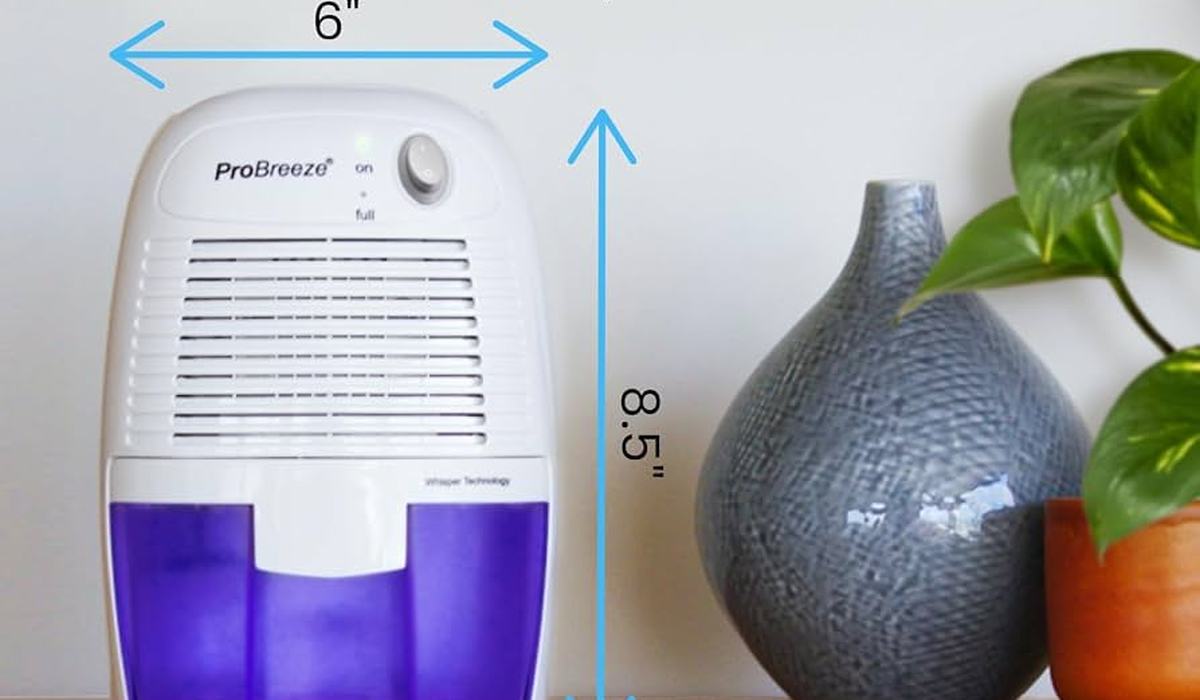
Best Dehumidifier for a Small Apartment
Compact units that actually pull moisture out of a sealed room.