On this page
Why a windowless bathroom is different
A bathroom with a window has an escape route for moisture, even if it is slow. A windowless bathroom has none. Every drop of water from a shower stays in the room until it condenses on a surface or is removed mechanically.
That is why fans do not work here. A fan needs an air path, and a sealed room has none. A dehumidifier does not need an air path — it pulls water out of the air and collects it, which is exactly what a sealed room requires.
5 picks by use case
| Use case | Capacity | Tank | Type | Price |
|---|---|---|---|---|
| Tiny en-suite (under 40 sq ft) | 10–15 PPD | 0.5–1 L | Peltier | $40–$70 |
| Standard windowless bathroom | 20–30 PPD | 1–2 L | Compressor | $60–$130 |
| Quiet, next to a bedroom | 10–20 PPD | 1–2 L | Peltier | $50–$110 |
| Heavy use, family bathroom | 30–50 PPD | 2–4 L | Compressor | $120–$220 |
| Leave running unattended | 20–30 PPD | Hose option | Compressor | $90–$160 |
Sizing for a sealed room
Because the room is sealed, you can size slightly smaller than you would for a room with airflow. The moisture load is predictable: one shower, one room. A 20–30 pint unit handles a standard windowless bathroom comfortably.
If two or more people shower back to back, size up to 30–50 pints, or run the unit continuously between showers.
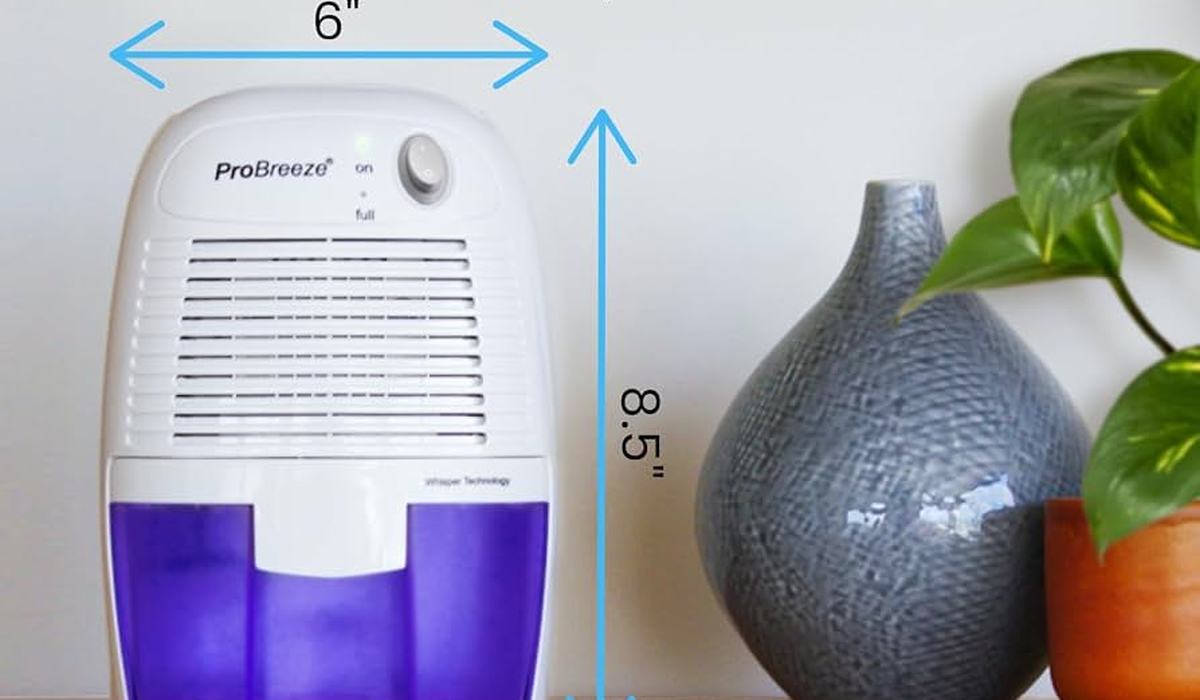
Dehumidifier for Windowless Bathrooms
Compact and quiet, with auto shut-off and a lift-out tank. Designed for sealed rooms with no air path.
Check Price on Amazon →Placement in a small room
- On the floor, not on a shelf — moist air settles low.
- Clear of the door swing so you can still get in and out.
- 2–3 feet from the shower so it does not get splashed.
- Door closed while running, so it dries the bathroom and not the flat.
The routine that keeps it dry
- Squeegee the walls and glass immediately after the shower.
- Dry the floor with a dedicated towel.
- Close the door and run the dehumidifier for 20–30 minutes.
- Empty the tank.
- Open the door to let the room equalise.
Extra steps for a sealed room
- Keep a moisture absorber in the room as a baseline between showers.
- Dry towels elsewhere. A wet towel in a sealed room undoes the dehumidifier's work.
- Fix any drip. A leaking tap keeps the room permanently humid.
- Report the lack of ventilation to your landlord in writing.
A windowless bathroom is manageable, but it needs a routine rather than a single gadget. The dehumidifier is the core of it.
How to check it is working
| Signal | Good | Problem |
|---|---|---|
| Water per run | 200–500 ml | Under 100 ml |
| Humidity after 30 min | Under 60% | Above 65% |
| Mirror after a shower | Clears in 10 min | Stays fogged |
| Grout | Stays light | Darkens again within days |
Running cost
A 20–30 pint unit costs roughly $0.03–$0.06 per hour to run. Thirty minutes a day is under $1 a month. In a sealed room the unit reaches its target faster, so it runs less than in a room with airflow.
Maintenance for a sealed room
- Empty and rinse the tank after each use — a sealed room has no airflow to dry it.
- Clean the pre-filter monthly.
- Deep clean the tank monthly to prevent biofilm, which is more likely in a sealed room.
- Check the coils monthly for dust and frost.
Myths about windowless bathrooms
- "A fan will dry it." A fan needs an air path. A sealed room has none.
- "Leaving the door open is enough." It moves the moisture into the rest of the flat.
- "A moisture absorber will do." It removes a fraction of the water, far too slowly.
- "Mould is just a cleaning problem." It is a moisture problem. Clean it and it returns unless the moisture is removed.
Sizing for a sealed room
| Bathroom | Capacity | Run time after a shower |
|---|---|---|
| Small en-suite, under 40 sq ft | 10–20 pints | 20–30 min |
| Standard bathroom, 40–80 sq ft | 20–30 pints | 30–45 min |
| Large bathroom, 80–120 sq ft | 30–50 pints | 45–60 min |
Placement in a sealed room
- On the floor, near the shower. Moist air sinks as it cools.
- Door closed. A sealed room is the unit's advantage — use it.
- Clear of the walls by 10–15 cm.
- Not in the shower. Keep it away from spray.
- On a level surface so the tank sensor works.
Features that matter most here
- Auto shut-off — essential in a wet room.
- Humidity target — set 50% and let it cycle.
- Washable pre-filter — a sealed room has no airflow to clear dust.
- Quiet operation — under 45 dB.
- Compact footprint — windowless bathrooms are usually small.
The verdict
In a windowless bathroom, a dehumidifier is not one option among several — it is the only one that removes water. Buy a 20–30 pint compressor unit, run it for 30 minutes after each shower, and the room will stay dry without a fan or a window.
The 30-minute routine
- Squeegee the walls and glass while the shower is still running.
- Dry the floor with a dedicated towel.
- Start the dehumidifier within a few minutes, door closed.
- Let it run 30 minutes, or until the humidity target is reached.
- Empty and rinse the tank so it does not grow biofilm.
- Leave the door ajar once the room is dry.
Common mistakes in a windowless room
- Running it with the door open. You dry the whole flat instead.
- Starting it an hour later. The water has already condensed onto the walls.
- Never cleaning the tank. A sealed room has no airflow to dry it, so biofilm forms faster.
- Buying by capacity alone. Placement and timing matter more in a small room.
- Ignoring the pre-filter. A clogged filter is the top cause of poor performance.
The one-line summary
In a windowless bathroom, a dehumidifier is not one option among several — it is the only one that removes water. Buy a 20–30 pint compressor unit, run it for 30 minutes after each shower, and the room will stay dry without a fan or a window.
Frequently asked questions
What is the best dehumidifier for a windowless bathroom?
Can I use a fan instead in a windowless bathroom?
How long should a dehumidifier run in a windowless bathroom?
Will a dehumidifier stop mould in a windowless bathroom?
Do I need a bigger dehumidifier for a windowless room?
Related guides
Dehumidifier for a Bathroom With No Fan: 5 Picks
Which units work when there is no fan at all.
Moisture Absorbers for Bathrooms: Do They Work?
What they remove and how to use them as a backup.