On this page
Why a dehumidifier is the right fix
An exhaust fan removes moisture by moving air outside. A dehumidifier removes moisture by pulling it out of the air and collecting it as water. In a bathroom with no vent, the second approach is the only one that works, because there is no air path for a fan to use.
A single shower adds roughly half a litre of water to the air of a small bathroom. A dehumidifier sized for the room can pull that back out in 20–30 minutes. Do that after every shower and the room never reaches the humidity level where mould grows.
What size you need
Dehumidifier capacity is measured in pints per day (PPD). For a bathroom, you do not need a big unit — you need one that fits the room and empties easily.
| Bathroom size | Capacity needed | Tank size | Typical cost |
|---|---|---|---|
| Small en-suite (under 50 sq ft) | 10–20 PPD | 0.5–1 L | $40–$80 |
| Standard bathroom (50–80 sq ft) | 20–30 PPD | 1–2 L | $60–$130 |
| Large bathroom (80–120 sq ft) | 30–50 PPD | 2–4 L | $120–$220 |
Bigger is not automatically better in a bathroom. A 50-pint unit is heavy, loud and overkill for 60 square feet. A 20–30 pint unit with a 1–2 litre tank is the sweet spot.
Compressor vs Peltier vs desiccant
| Type | Best temperature | Efficiency | Noise | Best for |
|---|---|---|---|---|
| Compressor | Above 65°F | High | Medium | Warm bathrooms, year-round |
| Peltier (thermo-electric) | Any | Low | Very low | Small en-suites, quiet operation |
| Desiccant | Below 65°F | Medium | Medium | Cold rooms, garages, basements |
For a heated bathroom, a compressor unit is the most efficient. For a small en-suite where noise matters, a Peltier unit is quieter but slower. A desiccant unit is the right choice only if the room is cold.
Features that matter
- Auto shut-off when the tank fills — essential, or it overflows onto the floor.
- Lift-out tank you can carry to the sink without spilling.
- Humidity setting so it stops at your target instead of running forever.
- Continuous drain option if you can run a hose to a drain.
- Quiet operation if the bathroom is next to a bedroom.
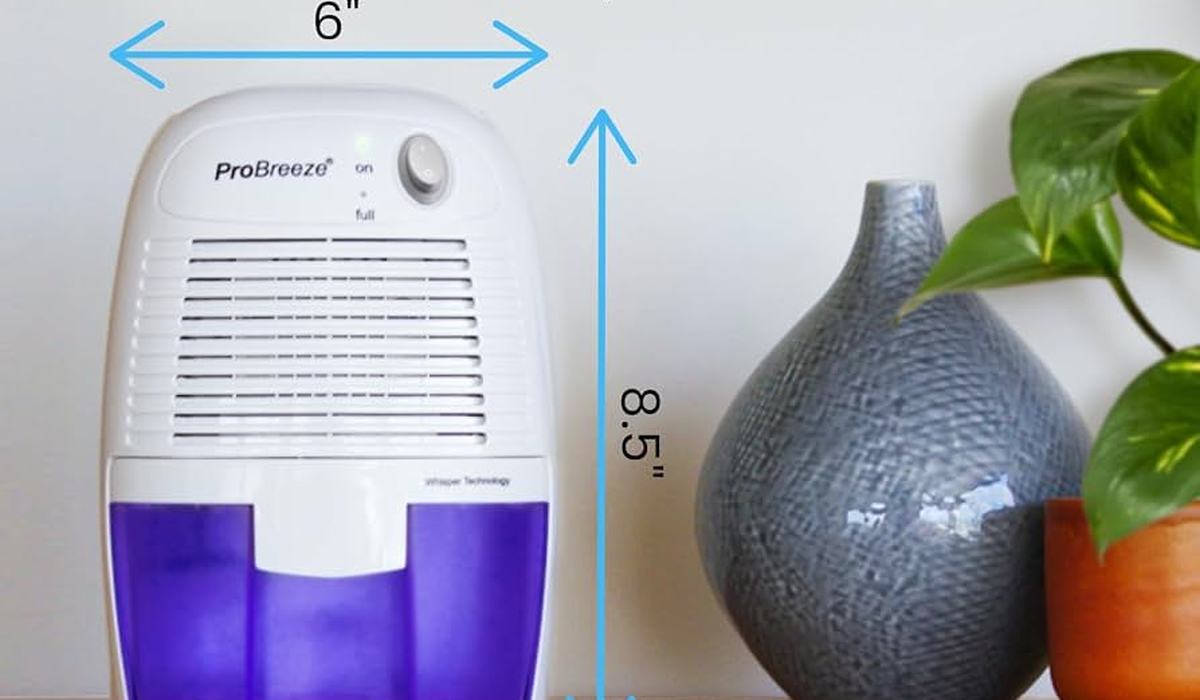
Dehumidifier for Vent-Free Bathrooms
Sized for a single bathroom, with auto shut-off and a lift-out tank. Quiet enough to run while you get ready.
Check Price on Amazon →Where to put it
Placement decides how well a dehumidifier works.
- On the floor, not a shelf. Moist air settles low, and the unit needs to draw it in.
- 2–3 feet from walls and the shower. It needs clearance to pull air, and it must not get splashed.
- Door closed while running. Otherwise it tries to dry the whole flat.
- Door open afterwards. Once the room is dry, let it equalise.
The after-shower routine
- Squeegee the walls and glass while the room is steamy.
- Dry the floor with a dedicated towel.
- Close the door and run the dehumidifier for 20–30 minutes.
- Empty the tank.
- Open the door and let the room equalise.
That routine keeps a vent-free bathroom dry for the cost of a small unit and a few minutes a day.
Mistakes to avoid
- Buying too big. A 50-pint unit in a small bathroom is loud, heavy and wasteful.
- Leaving the door open while it runs. It will never reach the target humidity.
- Never emptying the tank. Auto shut-off protects the floor, but a full tank means no drying.
- Ignoring the squeegee. Removing water from the walls first makes the dehumidifier far more effective.
- Setting the target too low. 40–50% is comfortable; below 30% is unnecessarily dry and wastes power.
How to tell if your dehumidifier is working
Two signals tell you whether the unit is doing its job: the water it collects and the humidity reading.
| Signal | Good | Problem |
|---|---|---|
| Water collected per run | 200–500 ml | Under 100 ml — too small or too cold |
| Humidity after 30 min | Under 60% | Still above 65% — run longer or size up |
| Coils | Cold and wet | Warm and dry — unit is not running |
| Air out of the vent | Noticeably warm and dry | Same as room air — airflow blocked |
Energy use and running cost
A small bathroom dehumidifier draws roughly 150–300 watts. At average electricity prices that is about $0.02–$0.05 per hour. Running it 30 minutes a day costs under $1 a month.
Running cost rises sharply if you leave it on continuously with the door open. Set a humidity target and close the door, and the cost stays trivial.
Maintenance schedule
| Task | Frequency |
|---|---|
| Empty the tank | After each use |
| Rinse the tank | Weekly |
| Clean the pre-filter | Monthly |
| Check the coils | Monthly |
| Deep clean the tank | Monthly |
A dirty pre-filter is the most common reason a dehumidifier stops collecting water. Dust blocks airflow, the coils freeze, and the unit runs without removing anything.
Choosing the right size
| Bathroom | Capacity | Type |
|---|---|---|
| Small en-suite, under 40 sq ft | 10–20 pints | Peltier or small compressor |
| Standard bathroom, 40–80 sq ft | 20–30 pints | Compressor |
| Large bathroom, 80–120 sq ft | 30–50 pints | Compressor |
In a sealed bathroom, size matters less than placement. Put the unit on the floor near the shower, close the door, and let it run for 30 minutes. A small unit in the right place beats a large one in the wrong place.
Placement rules
- On the floor, near the shower. Moist air sinks as it cools.
- Door closed. Otherwise you are drying the whole flat.
- Clear of the walls. Leave 10–15 cm for airflow.
- Not in the shower itself. Water and electricity do not mix.
- On a level surface so the tank sensor works.
The 30-minute routine
- Squeegee the walls and glass while the shower is still running.
- Dry the floor with a dedicated towel.
- Start the dehumidifier within a few minutes, door closed.
- Let it run 30 minutes, or until the humidity target is reached.
- Empty and rinse the tank so it does not grow biofilm.
- Leave the door ajar once the room is dry, so it does not go stale.
That routine takes two minutes of your time and costs a few cents a day. It is the difference between a bathroom that stays clean and one that grows mould behind the tiles.
Common mistakes
- Running it with the door open. You end up drying the whole flat.
- Starting it an hour later. By then the water has condensed onto the walls.
- Never cleaning the tank. It will smell worse than the damp did.
- Buying by capacity alone. In a small room, placement and timing matter more.
- Ignoring the pre-filter. A clogged filter is the top cause of poor performance.
Frequently asked questions
What size dehumidifier do I need for a bathroom?
Can a dehumidifier replace a bathroom exhaust fan?
How long should I run a dehumidifier in a bathroom?
What humidity should I set a bathroom dehumidifier to?
Is a Peltier dehumidifier good enough for a bathroom?
Related guides
Dehumidifier for a Windowless Bathroom: 5 Best Picks
Which units work best with no window at all.