On this page
How we chose
A bathroom dehumidifier is judged differently from a basement one. Capacity matters less than these four things:
- Tank size and emptying. If it is awkward to empty, you will stop using it.
- Auto shut-off. Non-negotiable in a room with a wet floor.
- Noise. Bathrooms are often next to bedrooms.
- Footprint. It has to fit on a bathroom floor without blocking the door.
The picks compared
| Use case | Capacity | Tank | Type | Typical price |
|---|---|---|---|---|
| Small en-suite | 10–20 PPD | 0.5–1 L | Peltier | $40–$80 |
| Standard bathroom | 20–30 PPD | 1–2 L | Compressor | $60–$130 |
| Quiet operation | 10–20 PPD | 1–2 L | Peltier | $50–$110 |
| Continuous drain | 20–30 PPD | Hose option | Compressor | $90–$160 |
| Large bathroom | 30–50 PPD | 2–4 L | Compressor | $120–$220 |
Best for small en-suites
A small en-suite does not need much capacity — it needs a unit that fits. A Peltier dehumidifier is quiet, light, and adequate for a room under 50 square feet. Look for a 0.5–1 litre tank and auto shut-off.
Best for standard bathrooms
For a 50–80 square foot bathroom, a 20–30 pint compressor unit is the most efficient choice. It pulls water faster than a Peltier unit and handles a daily shower without trouble.
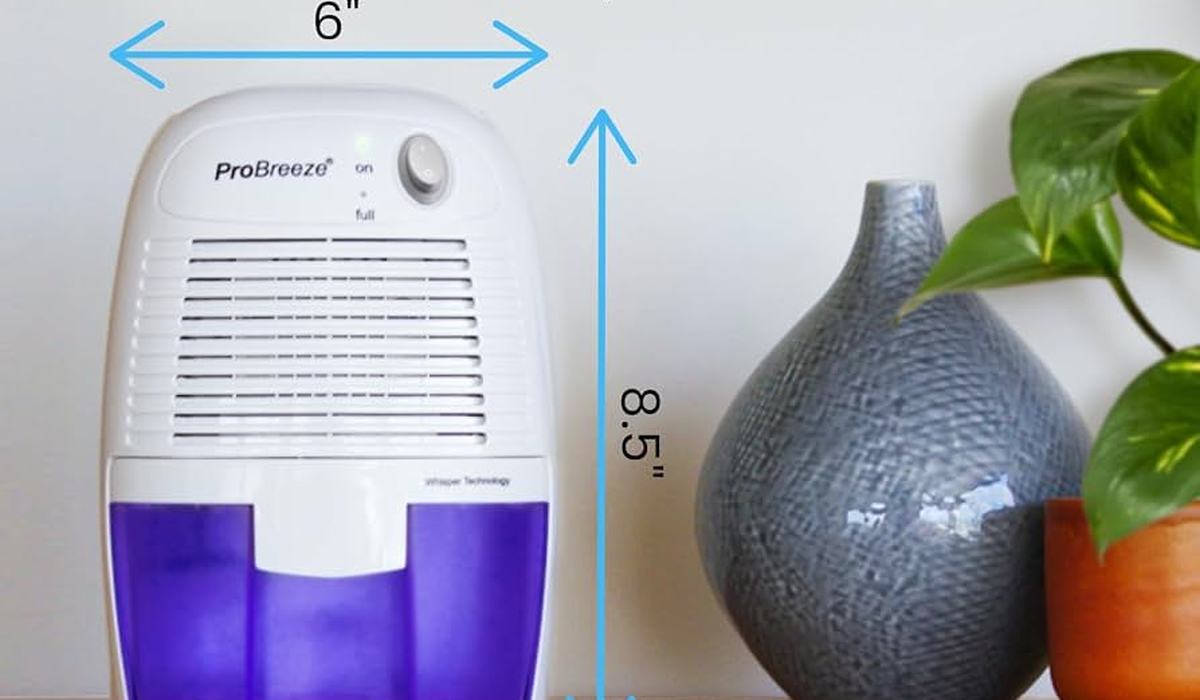
Compressor Dehumidifier (Standard Bathroom)
20–30 pint capacity with a lift-out tank and auto shut-off. Efficient in a heated bathroom.
Check Price on Amazon →Best for quiet operation
If the bathroom shares a wall with a bedroom, noise is the deciding factor. Peltier units are the quietest type, though they remove water more slowly. Run one for longer rather than buying a louder unit you will not use at night.
Best with a drain option
If you can run a hose to a drain or a sink, a continuous-drain model removes the need to empty a tank at all. This is the best setup for a bathroom you use heavily, or one you want to leave running unattended.
What to look for when buying
- Auto shut-off — protects the floor when the tank fills.
- Lift-out tank with a handle — easier to empty without spilling.
- Humidity target setting — stops it running when the room is already dry.
- Washable pre-filter — catches dust before it reaches the coils.
- Castors or a carry handle — you will move it between rooms.
Skip anything without auto shut-off. In a bathroom, a unit that overflows is worse than no unit at all.
How to check your unit is working
| Signal | Good | Problem |
|---|---|---|
| Water per run | 200–500 ml | Under 100 ml |
| Humidity after 30 min | Under 60% | Above 65% |
| Coils | Cold and wet | Warm and dry |
| Airflow from the vent | Warm and dry | Same as room air |
Running cost
A 20–30 pint unit draws roughly 250–400 watts, or about $0.03–$0.06 per hour. Thirty minutes a day costs under $1 a month. A Peltier unit draws less but removes less water, so the cost per litre is similar.
Maintenance
- Empty and rinse the tank after each use.
- Clean the pre-filter monthly — a clogged filter is the top cause of poor performance.
- Check the coils monthly for dust and frost.
- Deep clean the tank monthly to stop biofilm.
- Store upright and let the unit warm to room temperature before running after transport.
Buying mistakes to avoid
- Buying by capacity alone. Tank size and noise matter more in a bathroom.
- Skipping auto shut-off. In a wet room, an overflowing unit is a hazard.
- Choosing a unit with a narrow tank opening. You will not clean it properly, and it will smell.
- Oversizing. A 50-pint unit in a small bathroom is loud, heavy and wasteful.
Sizing by bathroom area
| Bathroom | Capacity | Type |
|---|---|---|
| Small en-suite, under 40 sq ft | 10–20 pints | Peltier or small compressor |
| Standard bathroom, 40–80 sq ft | 20–30 pints | Compressor |
| Large bathroom, 80–120 sq ft | 30–50 pints | Compressor |
Placement rules
- On the floor, near the shower. Moist air sinks as it cools.
- Door closed. Otherwise you dry the whole flat.
- Clear of the walls by 10–15 cm for airflow.
- Not in the shower. Keep it away from direct spray.
- On a level surface so the tank sensor works.
Features worth paying for
- Auto shut-off — essential in a wet room.
- Humidity target — lets you set 50% and forget it.
- Continuous drain port — useful if you later have a drain nearby.
- Washable pre-filter — saves money over the life of the unit.
- Quiet operation — under 45 dB, so you can run it at night.
The shortlist logic
For a windowless bathroom, buy a 20–30 pint compressor unit with auto shut-off, a humidity target and a washable pre-filter. Ignore capacity claims above 30 pints — in a small sealed room they are wasted, and the extra noise and weight are not worth it.
The 30-minute routine
- Squeegee the walls and glass while the shower is still running.
- Dry the floor with a dedicated towel.
- Start the dehumidifier within a few minutes, door closed.
- Let it run 30 minutes, or until the humidity target is reached.
- Empty and rinse the tank so it does not grow biofilm.
- Leave the door ajar once the room is dry.
Common mistakes
- Running it with the door open. You dry the whole flat instead.
- Starting it an hour later. The water has already condensed onto the walls.
- Never cleaning the tank. It will smell worse than the damp did.
- Buying by capacity alone. Placement and timing matter more in a small room.
- Ignoring the pre-filter. A clogged filter is the top cause of poor performance.
The shortlist logic, restated
For a windowless bathroom, buy a 20–30 pint compressor unit with auto shut-off, a humidity target and a washable pre-filter. Run it for 30 minutes after each shower with the door closed. That is the whole system, and it costs under $1 a month to run.
The one-line summary
For a windowless bathroom, buy a 20–30 pint compressor unit with auto shut-off, a humidity target and a washable pre-filter. Run it for 30 minutes after each shower with the door closed. That is the whole system, and it costs under $1 a month to run.
Frequently asked questions
What is the best dehumidifier for a bathroom with no vent?
How many pints do I need for a bathroom?
Are Peltier dehumidifiers good for bathrooms?
Do I need a drain hose on a bathroom dehumidifier?
How much should I spend on a bathroom dehumidifier?
Related guides
Dehumidifier for a Windowless Bathroom: 5 Best Picks
Which units work best with no window at all.