On this page
What a "musty" AC smell actually is
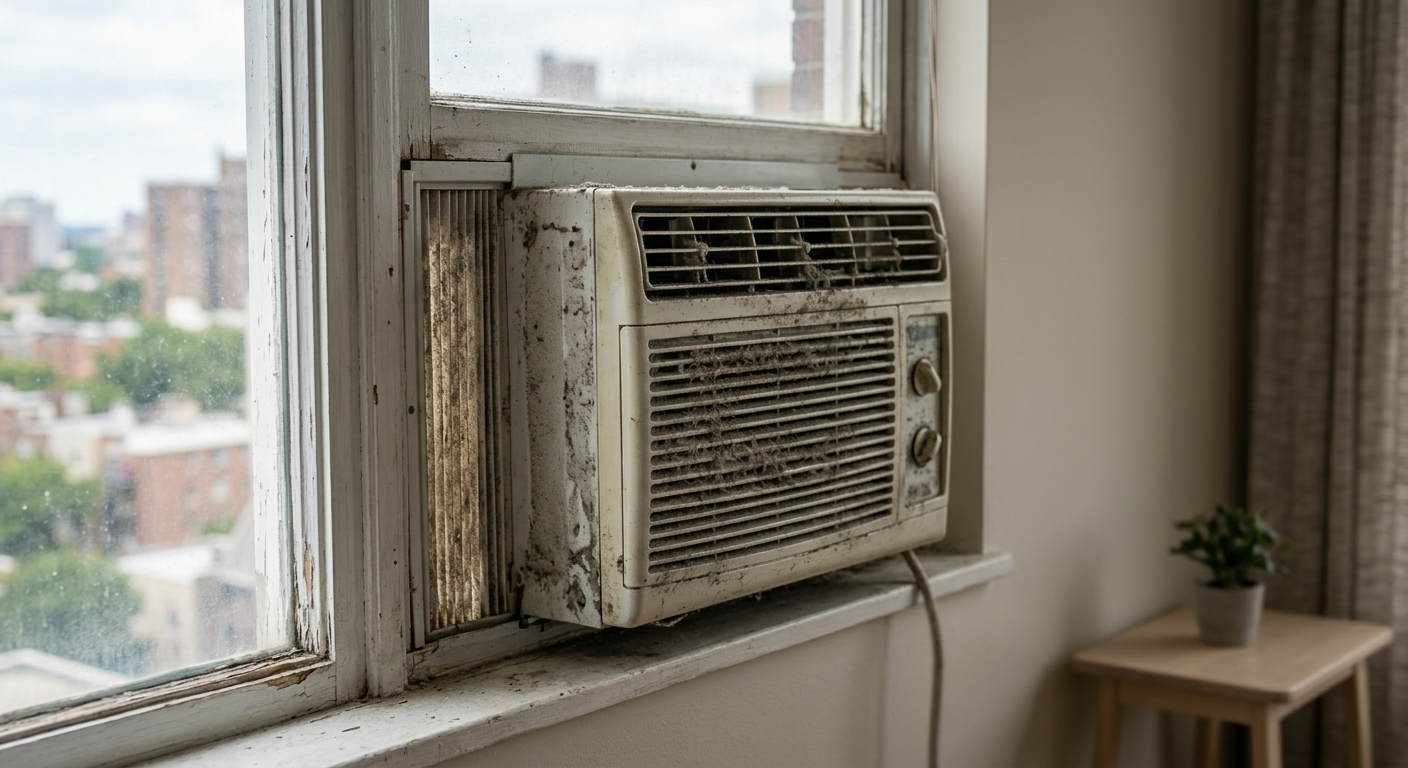
The smell is not dirt or dust. It is microbial volatile organic compounds (mVOCs) — gases released by mold, mildew and bacteria as they grow. Where there is a persistent musty smell, there is active microbial growth, and where there is active growth, there is standing moisture.
In an air conditioner, condensation is created on purpose. The evaporator coil is colder than the air passing over it, so water condenses out of that air — that is exactly how the unit dehumidifies. Three places then stay wet:
- The evaporator coil. Fine aluminium fins, always cold and wet while the unit runs. Dust plus moisture is a perfect growth surface.
- The drain pan and drain tube. Water collects here and drains away. If the drain is slow or blocked, standing water sits for days. This is the single most common source of a musty AC smell.
- The blower wheel. Sticky dust builds on the fan blades, and because it sits right behind the wet coil, it stays damp.
In a house this problem is annoying. In an apartment it is worse, for three reasons that are worth knowing because they point to the fix:
- The unit runs less. Smaller space, less runtime, less airflow to dry the coil between cycles — so the coil stays damp longer.
- Background humidity is higher. Bathrooms without vents, laundry dried indoors, cooking — an apartment holds more moisture in the air to begin with. If your space is already humid, see how to reduce humidity in an apartment.
- Ductwork is often shared or untouchable. In buildings with central air, you may not be allowed to open anything at all — which changes who fixes it.
First: is it musty, or is it something urgent?
Not every AC smell is mildew, and one of them is a safety issue. Match your smell to the list before you do anything else.
- Musty, damp, wet-basement, old-sock → mildew or biofilm. This page. Not dangerous, but fix it.
- Burning, hot plastic, electrical → stop the unit, unplug it, and do not run it again until it is checked. This can be a failing motor or wiring.
- Sweet, chemical, faintly alcoholic → possible refrigerant leak or leftover cleaning residue. Ventilate and call a professional.
- Rotten or sulfurous → a blocked drain or something dead in the ductwork. A professional job.
- Musty only in the first minutes after start-up → the classic pattern of "dirty sock syndrome" — growth on the coil that gets blown into the room before the coil re-wets.
Is it your landlord's job or yours?
This is the question that decides your whole approach, and the answer depends on what the unit is, not on what the smell is.
| Unit type | Who fixes the smell | Notes |
|---|---|---|
| Window or portable AC you bought | You | You own it, you clean it, you can take it when you move. |
| Window AC the landlord provided | Ask first, usually you can clean it | Cleaning a filter and pan is normal upkeep, but check the lease before opening the unit. |
| Through-wall or central system | Landlord | You generally cannot open these. Report the smell in writing. |
| Mini-split | Landlord / professional | Needs coil and drain-pan service by a technician. |
| Ductwork (smell appears only when the system runs) | Landlord | Wet insulation or growth inside ducts is a building-level fix. |
If the unit is your landlord's and they slow-walk the request, the escalation approach is the same one that works for other habitability issues — put it in writing, give a deadline, and keep a record. The written-request template and escalation ladder from our bathroom-fan guide works just as well for a landlord-owned AC.
The renter-safe fix, in 5 steps
If the unit is one you may service — a window or portable AC, or the landlord has said yes — this is the sequence that actually removes the smell. The full mechanical version of the cleaning steps is in our companion guide, how to clean a window AC unit.
Step 1 — Cut the moisture first
Cleaning a coil that stays wet just makes room for the growth to return. Before anything else, run the unit in fan-only or dry mode for about 20 minutes after you finish cooling, so the coil dries instead of sitting wet. Then aim to hold the room at 45–50% relative humidity. That single habit removes most of the musty smell's food supply.
Step 2 — Clean or replace the filter
Take the filter out and look at it against a light. Washable filters get rinsed under lukewarm water and dried completely before they go back — never reinstall a damp filter. This is also the fastest way to check whether the smell is coming from the filter itself.
Step 3 — Clean the evaporator coil and drain pan
With the unit unplugged, clean the coil with a soft brush and a mild coil cleaner, following the fins in their direction — never against them, and never with anything stiff enough to bend them. Then clean the drain pan and the drain hole. This is the step people skip, and it is usually the step that solves the problem: flush the drain with warm water until it runs clear, and if it is slow, clear it gently with a pipe cleaner or a length of soft wire.
Step 4 — Let everything dry completely
Reassemble only when the coil, pan and blower wheel are fully dry. A damp reassembly simply reseeds the growth. This is the step that decides whether the fix lasts a season or a week.
Step 5 — Support it with the room's air
Once the unit is clean, the room itself is the ongoing battle. A humidity monitor tells you where you stand, and a small dehumidifier keeps the space at the target. If the smell has been present a while, an air purifier with a HEPA filter will clear the spores the unit has been circulating while you sort out the source.
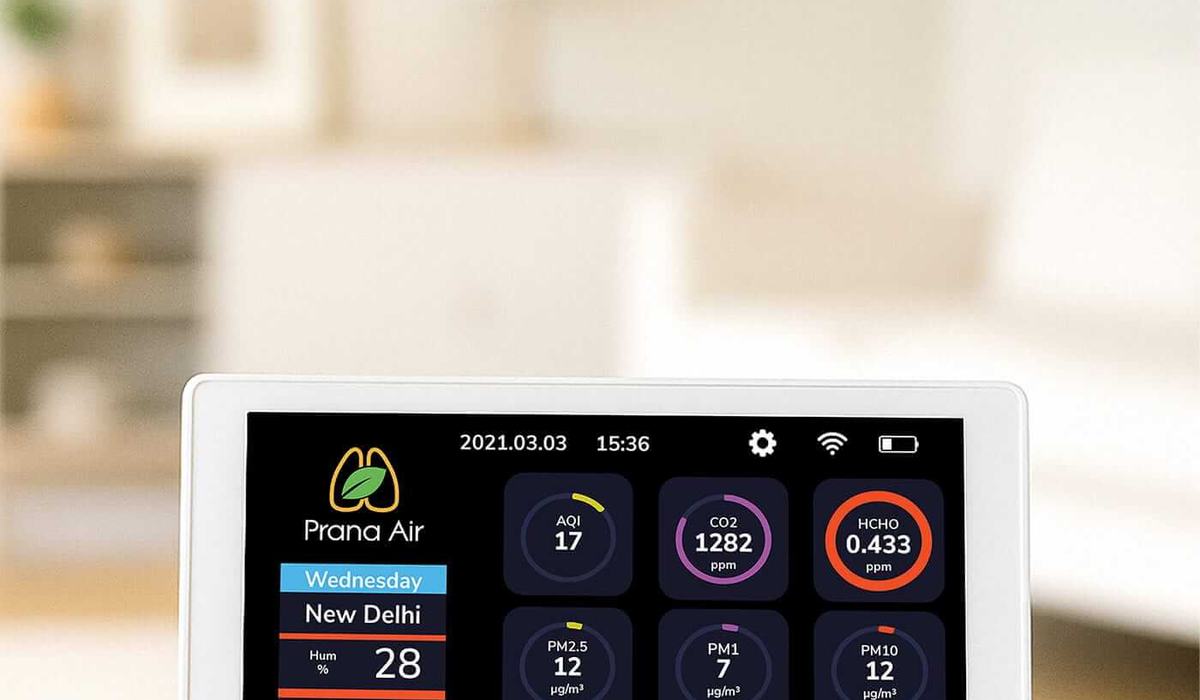
Start With a $10–15 Humidity Monitor
Nothing in this guide works if you cannot see the number. A cheap hygrometer is the first thing to buy — it tells you whether the room is feeding the smell.
Check Price on Amazon →- A $10–15 humidity monitor. The first thing to buy — you cannot manage what you cannot measure.
- A small dehumidifier sized to the room. See our guide to the best dehumidifiers for apartment spaces and the renter-safe options in renter-friendly dehumidifiers.
- A HEPA air purifier for mold spores. If the smell has been building, the unit has been blowing spores around; our round-up of air purifiers for mold in apartments covers the models that fit a rental.
- Coil and drain-pan cleaning tablets or a mild coil cleaner. The consumable that makes the Step 3 clean last longer.
Affiliate disclosure: as an Amazon Associate we may earn a commission from qualifying purchases, at no extra cost to you.
If it comes back within a week
If the smell returns quickly, cleaning treated a symptom. There are four deeper causes worth working through:
- A partly blocked condensate drain. Water trickles away slowly, so the pan never fully empties. Re-flush the drain and confirm the outdoor end actually drips.
- An oversized unit short-cycling. A unit too big for the room cools fast and shuts off before it dehumidifies, leaving the coil wet every cycle. This is very common in apartments.
- Wet duct insulation or a saturated filter housing. Sometimes the damp is in the building, not the unit.
- Humidity that never drops. If the room sits above 60%, no amount of cleaning will out-run the moisture — the room needs a dehumidifier.
Use a simple air-quality check to confirm whether the problem is moisture, particulates, or both, before you spend money on a fix.
Preventing it coming back
- Run the fan for 15–20 minutes after cooling, every time.
- Keep the room at 45–50% relative humidity — not 30%, not 70%.
- Clean the filter monthly in summer, not once a season.
- Never dry laundry indoors without ventilation.
- Run the bathroom fan during and after showers; if there is no fan, see what to do when your landlord will not install one.
- Schedule a coil and pan clean at the start of every cooling season.
Causes ranked by how common they are
A musty AC almost always has one of four causes, and they are worth checking in this order because the cheap ones are also the most common.
1. A wet evaporator coil and drain pan
Condensation forms on the cold coil every time the AC runs. If the pan does not drain fully, that standing water grows biofilm and every cycle blows the smell into the room. This is the single most common cause — see cleaning a window AC unit.
2. A dirty or damp filter
A filter that is dusty or has been washed and put back damp becomes a growth surface right at the point where air enters the unit. Check it before anything else; it takes a minute.
3. A blocked condensate line
In a split system, the line that carries water away can clog with biofilm, backing water up into the unit and the wall. Water marks near the indoor unit are the tell.
4. Ducts or a neighbouring unit
In buildings with shared or poorly sealed ducts, a smell can originate in another apartment or in a damp duct run. If the smell appears only when a neighbour runs their AC, that is your answer, and it is a building issue rather than yours.
Renter-safe fixes, in order
| Step | Action | Difficulty |
|---|---|---|
| 1 | Clean or replace the filter; make sure it is fully dry | Easy |
| 2 | Clear the drain pan and check the drain hole | Easy |
| 3 | Run the fan for 15 minutes after cooling stops, to dry the coil | Easy, free |
| 4 | Deep-clean the coil and blower as far as the unit allows | Moderate — see the window AC clean |
| 5 | Report it if the smell persists or water is dripping | Landlord job |
Why the smell comes back after a week
A returning smell means standing water is still present somewhere. The usual culprits are a drain hole that clogs again because it was not fully cleared, or a unit that never dries out because the fan is switched off at the same moment as the cooling. Leaving the fan running briefly after every cooling cycle is the cheapest preventive habit there is.
Frequently asked questions
Is a musty AC smell dangerous?
Can I just buy an air purifier and ignore the AC?
My landlord says it is "just condensation." What now?
Will cleaning fix it, or do I need a professional?
How often should I clean the unit to stop the smell?
Safety and legal notes
- Always unplug before cleaning. Never put water into a unit that is plugged in.
- Do not open a landlord-owned central or through-wall system.
- Tenant-repair and habitability rules differ by city, state and country — this guide is general information, not legal advice. Check your lease and local tenant resources.
- If you see actual mold on a wall or ceiling — not just smell it — treat it as a separate problem and see our guide on preventing mold in an apartment.
Sources: U.S. EPA (Residential Air Cleaners guide; moisture and mold guidance), ASHRAE Standard 62.2 (residential ventilation), AHAM (air-cleaner certification), CDC/NIOSH (dampness and mold in buildings).
Related guides
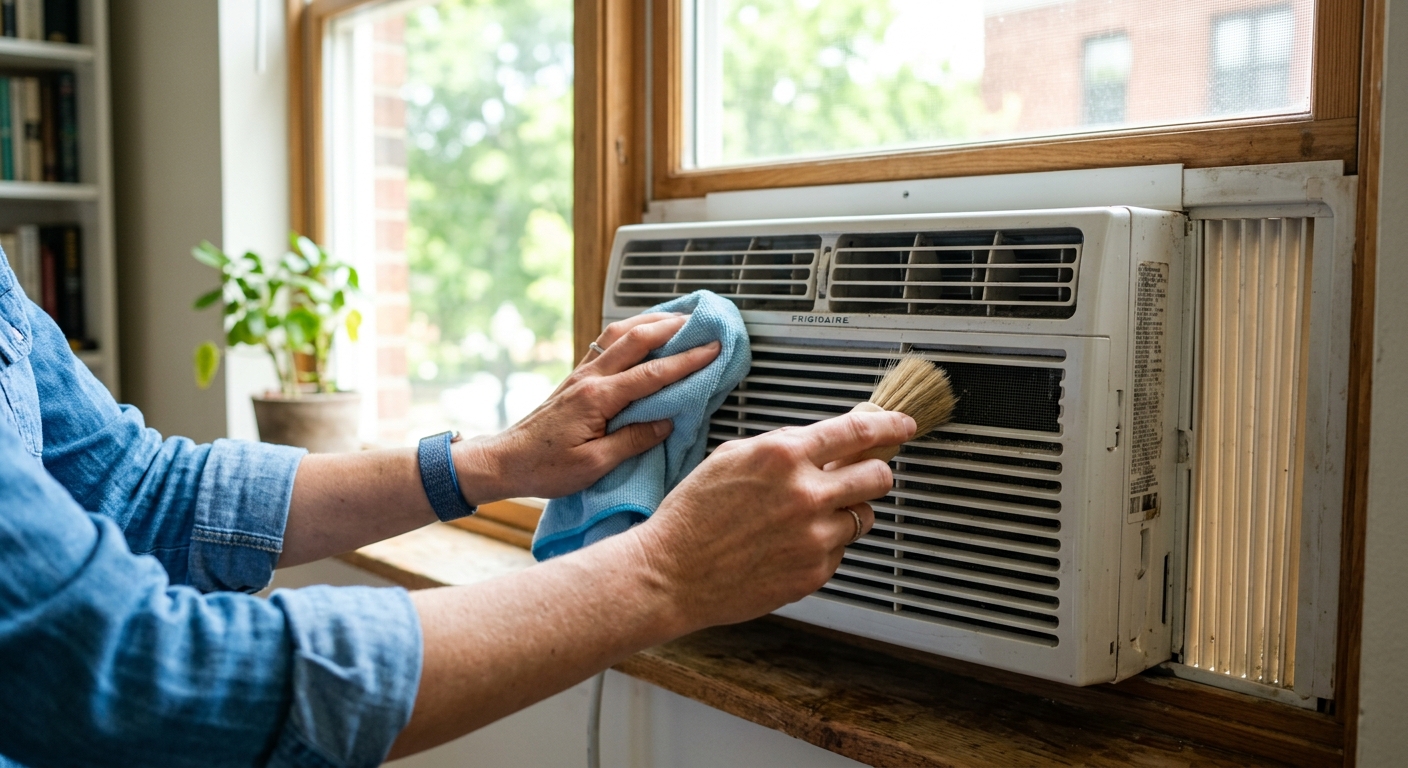
How to Clean a Window AC Unit Without Damaging Your Rental
The mechanical clean that usually fixes the smell.

Best Air Purifier for Mold Spores in an Apartment
Clear the spores the unit has been circulating.