On this page
Why basements are different
A basement apartment sits below grade, which means three things work against it:
- Ground moisture. Water moves through soil and into the walls and floor by capillary action.
- Cooler surfaces. Below-grade walls are cold, so humid air condenses on them.
- Poor airflow. Basement windows are small and often below ground level, so ventilation is limited.
The result is a space that is permanently damp unless moisture is actively removed. A dehumidifier is not optional in a basement flat — it is the main tool.
What capacity you need
| Basement size | Humidity | Capacity | Tank |
|---|---|---|---|
| Small studio (under 300 sq ft) | 60–70% | 30–40 PPD | 2–4 L |
| One-bedroom (400 sq ft) | 60–70% | 40–50 PPD | 2–4 L |
| One-bedroom (400 sq ft) | 70%+ | 50+ PPD | 4 L+ or drain |
| Two-bedroom (600+ sq ft) | 60–70% | 50+ PPD | 4 L+ or drain |
Basements need more capacity than the same area above ground, because the moisture load is higher and constant. Size up rather than down.
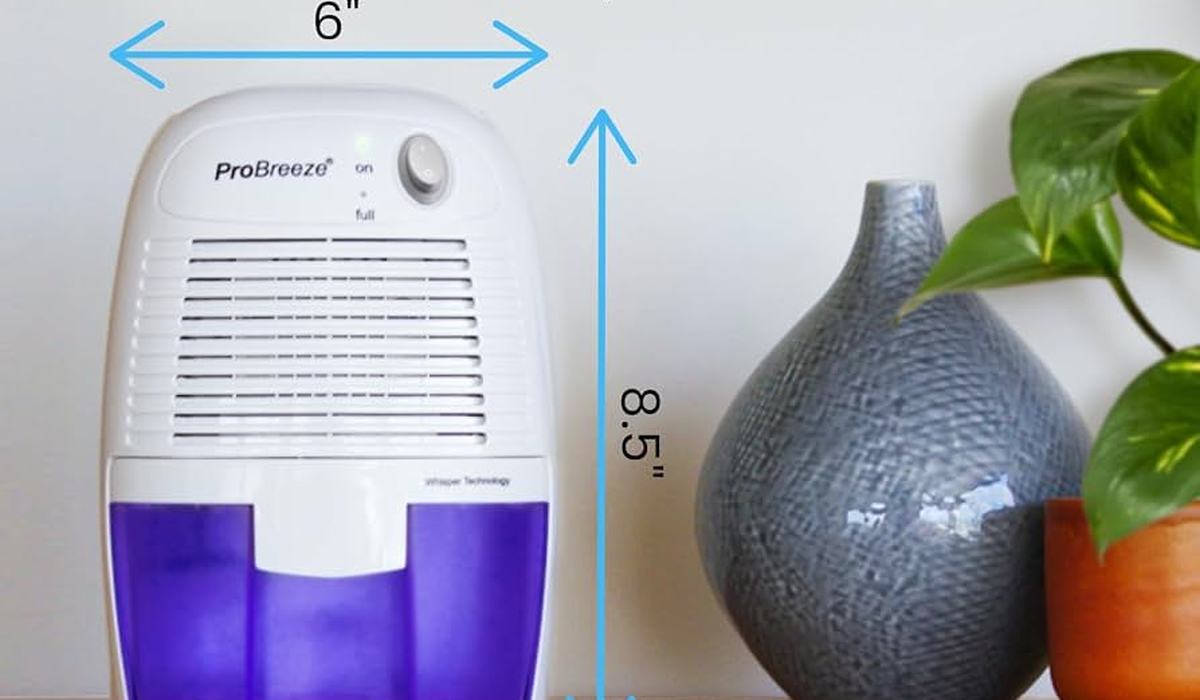
Dehumidifier for Basement Apartments
40–50 pint capacity for below-grade damp, with a humidity target and a large lift-out tank.
Check Price on Amazon →Drainage options
A basement dehumidifier runs for long periods, so emptying a tank constantly gets old. Three options:
- Large tank (4 L+). Empty it every few days. Simplest, no plumbing.
- Continuous drain hose. Run a hose to a floor drain, sink or sump. Best if you have one.
- Condensate pump. Pumps water up to a sink when no gravity drain exists. Costs more but solves the problem.
If the basement has a floor drain, a continuous drain hose is the best setup — the unit runs unattended and you never think about it.
Placement
- Central to the space, with doors open between rooms.
- Near the dampest wall if one wall is clearly worse.
- 2–3 feet from walls for airflow.
- Off the floor if the basement floods — on a low platform.
- Away from the laundry if the dryer vents indoors.
Stopping the musty smell
Basement musty smell is moisture plus microbial growth. The dehumidifier removes the moisture; you still have to clean the surfaces. Wash soft furnishings, clean hard surfaces with diluted vinegar, and treat any visible mould. Keep humidity at 40–50% and the smell will not return.
Running cost
A 50-pint unit draws roughly 500–700 watts. At average electricity prices that is about $0.07–$0.10 per hour. Running it 6 hours a day costs roughly $13–$18 a month.
Set a humidity target rather than running it continuously, and fix any obvious water source — a leaking downpipe, a failed gutter, or a gap at the base of a wall — to cut the running time.
How to check it is working
| Signal | Good | Problem |
|---|---|---|
| Water per day | 4–10 L | Under 2 L |
| Humidity after 6 hours | Under 55% | Above 65% |
| Wall condensation | Gone | Still present |
| Musty smell | Fading | Unchanged |
Maintenance
- Empty the tank every 1–2 days, or use a drain hose.
- Clean the pre-filter monthly — basements are dusty.
- Check the coils monthly for dust and frost.
- Deep clean the tank monthly to stop biofilm.
- Raise the unit on a platform if the basement can flood.
Fixing the water source
A dehumidifier treats the symptom. In a basement, look for the cause:
- Failed gutters or downpipes — water pooling against the wall.
- Poor grading — ground sloping toward the building.
- A cracked or missing damp course — a landlord repair.
- Indoor laundry drying — adds litres of water to the air.
- No ventilation — moisture accumulates with nowhere to go.
Myths about basement damp
- "Basements are always damp." They are damp when water is not managed. A dehumidifier plus source fixes changes that.
- "A fan will dry it." A fan moves air but does not remove water.
- "Mould is just cosmetic." Damp indoor environments are linked to respiratory symptoms.
- "Opening a window helps." In humid weather it can add moisture. Use the dehumidifier instead.
Sizing for a basement
| Basement | Capacity | Drain |
|---|---|---|
| Small, under 500 sq ft, mildly damp | 30–40 pints | Tank or hose |
| Medium, 500–1,000 sq ft, damp | 50–70 pints | Hose recommended |
| Large or very damp | 70+ pints | Hose essential |
| Flood-prone | 70+ pints | Hose, unit raised on a platform |
Placement in a basement
- Central position so air reaches every corner.
- Raised on a platform if the floor can get wet.
- Near a floor drain if you use a hose.
- Clear of walls by 15–20 cm.
- On a level surface so the tank sensor works.
Features worth paying for
- Continuous drain port — essential for a basement.
- Humidity target — set 50% and let it cycle.
- Auto defrost — basements run cold, and coils freeze.
- Washable pre-filter — basements are dusty.
- Castors — you will move it around.
The verdict
For a basement, buy 50–70 pints with a continuous drain port and auto defrost. Run it continuously in damp weather, fix the water source outside, and the space stops smelling musty.
The daily routine
- Morning: check the humidity and set the target to 50%.
- During the day: run it continuously in damp weather.
- Evening: check the drain hose is flowing freely.
- Weekly: clean the pre-filter and check the coils.
- Monthly: deep clean the tank if you use one.
- Seasonally: check gutters and grading outside.
Common mistakes
- Buying too small. A 30-pint unit in a damp basement runs constantly and still loses.
- Not using a drain hose. You will be emptying the tank twice a day.
- Putting it on a wet floor. Raise it on a platform if the basement can flood.
- Ignoring the pre-filter. Basements are dusty; a clogged filter kills performance.
- Never fixing the source. A dehumidifier treats the symptom, not the cause.
The verdict
For a basement, buy 50–70 pints with a continuous drain port and auto defrost. Run it continuously in damp weather, fix the water source outside, and the space stops smelling musty.
Frequently asked questions
What size dehumidifier for a basement apartment?
Do I need a drain hose in a basement?
Why is my basement apartment so damp?
How do I stop the musty smell in a basement?
How much does a basement dehumidifier cost to run?
Related guides
Best Small Dehumidifier for a Closet (2026 Picks)
Compact picks for closets and small apartments.
What Size Dehumidifier for 400 Sq Ft? Picks & Chart
Capacity picks and running costs for 400 sq ft.
How to Get Rid of Musty Smell in an Apartment for Good
Find the source and stop the smell returning.