On this page
What musty smell actually is
Musty smell is the odour of microbial volatile organic compounds — gases released by mould and bacteria as they break down organic matter. In practice that means one thing: somewhere in the flat, something is damp and something is growing on it.
This is why air fresheners never work. They add scent to air that still contains the gases. The only fix is to find the damp, remove it, and clean the surface the microbes were growing on.
Decision tree: find your source
Work through these questions in order. The first "yes" is your likely source.
| Question | If yes | Go to |
|---|---|---|
| Is the smell strongest in the bathroom? | Bathroom moisture | Source 1 |
| Is it strongest in a closet or cupboard? | Trapped damp | Source 2 |
| Is it strongest near a wall or window? | Leak or condensation | Source 3 |
| Is it strongest in the kitchen? | Under-sink or appliance leak | Source 4 |
| Is it strongest in a carpeted room? | Damp carpet or underlay | Source 5 |
| Is it everywhere, worse in humid weather? | Whole-flat humidity | Source 6 |
The 6 common sources
- Bathroom moisture — no fan or window, so every shower soaks the room.
- Trapped damp in closets — no airflow, so clothes and walls stay damp.
- Leaks and condensation — a slow leak or cold-bridge condensation on an outside wall.
- Under-sink and appliance leaks — a dripping trap or a washing machine hose.
- Damp carpet and underlay — a spill or a slow leak that soaked the floor.
- Whole-flat humidity — no ventilation, so moisture from cooking, showering and breathing accumulates.
How to fix each one
| Source | Fix | Tool |
|---|---|---|
| Bathroom moisture | Squeegee + dehumidifier after showers | Dehumidifier |
| Closet damp | Moisture absorber + leave door ajar | Absorber |
| Leak / condensation | Fix the leak; insulate the cold wall | Landlord |
| Under-sink leak | Tighten or replace the trap | Basic tools |
| Damp carpet | Dry it, clean it, or replace the underlay | Fan + cleaner |
| Whole-flat humidity | Cross-flow twice daily + dehumidifier | Dehumidifier |
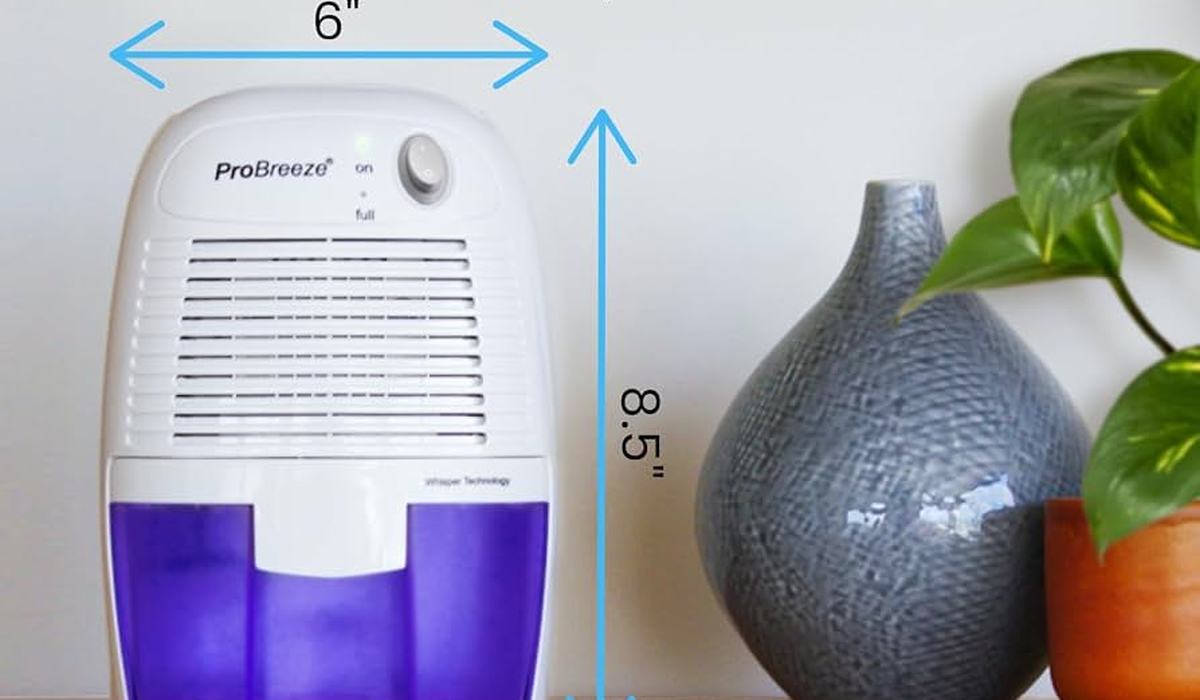
Dehumidifier for Musty Apartments
Brings humidity down to 40–50%, the level where mould stops growing. Auto shut-off and a lift-out tank.
Check Price on Amazon →Cleaning the smell out
Once the moisture is fixed, clean the surfaces the microbes were growing on.
- Wash soft furnishings — curtains, bedding, cushion covers. Hot water where the fabric allows.
- Clean hard surfaces with a diluted white-vinegar solution, then dry them.
- Treat mould on grout and silicone with a mould remover, and ventilate while you do it.
- Vacuum carpets thoroughly, and use a carpet cleaner if the smell is in the pile.
- Air the room with cross-flow for 15 minutes afterwards.
Stopping it coming back
- Keep humidity at 40–50%. A hygrometer makes this measurable.
- Ventilate twice a day with 10–15 minutes of cross-flow.
- Fix drips immediately. A slow leak is the most common hidden cause.
- Keep closets aired. Leave doors ajar and use a moisture absorber.
- Dry towels and laundry elsewhere — not in the room you are trying to dry.
When to call the landlord
If the smell returns within a few weeks of cleaning, the moisture source is still active and it is probably structural — a leak in the wall, a failed damp course, or a bathroom with no ventilation. Report it in writing, with photos and dates, and ask for the underlying cause to be fixed. Cleaning the symptom repeatedly is not a solution.
How to test whether the smell is gone
- Leave for an hour and come back in — your nose adapts, so the first breath is the honest one.
- Smell soft furnishings directly — curtains, cushions and bedding hold odor longest.
- Check behind furniture against outside walls, where condensation forms.
- Take a humidity reading — if it is above 60%, the source is still active.
What fixing it costs
| Item | Cost | What it fixes |
|---|---|---|
| Hygrometer | $10–$20 | Finds the humidity level |
| Dehumidifier | $60–$200 | Removes the moisture |
| Moisture absorber | $10–$25 | Closets and small spaces |
| Mould remover | $8–$15 | Grout and silicone |
| White vinegar | $2–$4 | Hard surfaces |
Myths about musty smell
- "Air freshener fixes it." It adds scent to air that still contains the odour gases.
- "Baking soda absorbs the smell." It absorbs a little odour from a small enclosed space, but it does not fix the moisture.
- "It is just an old-building smell." It is a moisture smell. Old buildings are often damp, but the cause is still moisture.
- "Opening the windows once will clear it." Ventilation clears the air, but the source keeps producing until it is fixed.
Why musty smell keeps coming back
Musty smell is microbial volatile compounds — gases given off by mould and bacteria growing in damp material. Cleaning removes the smell from the surface, but if the moisture is still there, the microbes regrow and the smell returns within days.
That is why the fix is always two-part: remove the moisture, then clean. Cleaning alone is a temporary fix.
Where to look, in order
- The bathroom — the most common source in an apartment.
- Closets and cupboards against outside walls.
- Behind furniture against cold walls, where condensation forms.
- Under the kitchen sink and behind the fridge.
- Carpets and underlay after any leak.
- Overall humidity — if it is above 60%, the source is still active.
What to buy
- Hygrometer — to find the humidity level.
- Dehumidifier — to remove the moisture.
- Moisture absorber — for closets.
- Mould remover — for grout and silicone.
- White vinegar — for hard surfaces.
The verdict
Find the moisture, remove it, then clean. Do it in that order and the smell stays gone. Do it in the other order and you will be cleaning the same surfaces again next month.
The weekly prevention routine
- Ventilate with 10–15 minutes of cross-flow twice a day.
- Squeegee the bathroom after every shower.
- Dry laundry outdoors or in a vented dryer, never on a radiator.
- Check closets and behind furniture for damp patches.
- Keep humidity at 40–50% with a dehumidifier.
- Fix drips immediately, before they become mould.
Common mistakes
- Cleaning without fixing the moisture. The smell returns within days.
- Using air freshener. It adds scent to air that still contains the odour gases.
- Drying laundry indoors. A single load adds litres of water to the air.
- Ignoring closets. They are the most common hidden source.
- Not measuring humidity. You cannot fix what you have not measured.
Frequently asked questions
What causes musty smell in an apartment?
How do I find the source of a musty smell?
Will a dehumidifier get rid of musty smell?
Why does the musty smell keep coming back?
Does vinegar remove musty smell?
Related guides

No Ventilation in Your Apartment? How to Fix It
What to do when the whole flat has poor airflow.