On this page
What to look for in an apartment tool bag
The requirements are different from a contractor's. You are not carrying tools to a job site; you are storing them in a closet and pulling them out a few times a year.
- Size. 16–20 inches. Big enough for the essentials, small enough to fit on a closet shelf.
- Open mouth or wide top. You want to see and reach the tools, not dig through a duffel.
- Pockets that hold shape. A bag that collapses when empty is a bag you will not use.
- Water-resistant base. Apartment storage can be damp; a moulded base protects the tools.
- Weight when full. A backpack distributes weight better if you carry tools between rooms or up stairs.
Our picks
Best capacity: DEWALT 33-Pocket Tool Bag
The DEWALT bag is the standard recommendation for a reason: 33 pockets, a moulded waterproof base, and a wide open mouth that lets you see everything at once. It is bigger than most apartments need, but it holds a full kit without spilling.
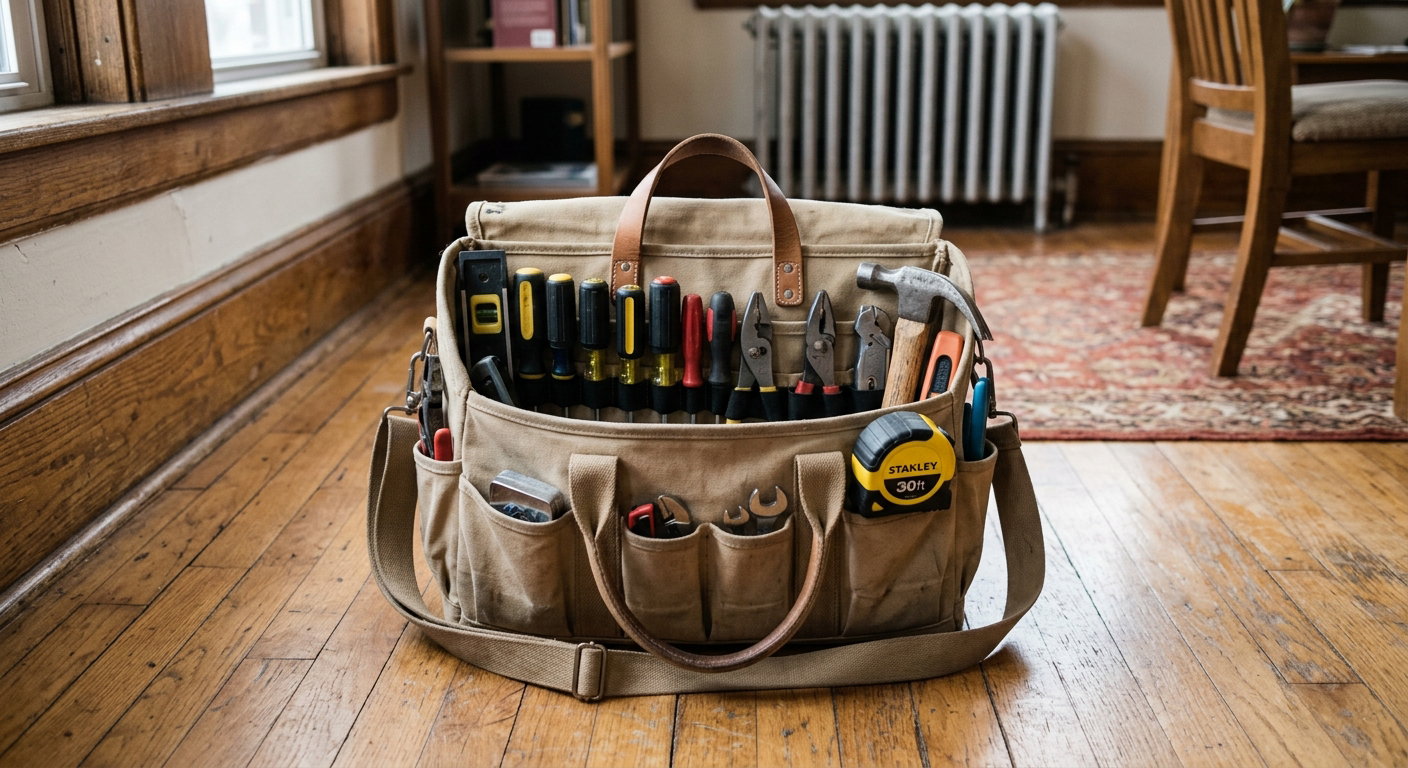
DEWALT 33-Pocket Tool Bag
A wide-mouth bag with 33 pockets and a waterproof moulded base. The most organised option for a full apartment kit.
Check Price on Amazon →Best for carrying: Klein Tools Tool Backpack
If you carry tools between rooms, up stairs, or to a friend's place, a backpack beats a bag. The Klein backpack has a hard base, plenty of pockets, and padded straps that make a heavy load manageable.
Klein Tools Tool Backpack
A hard-bottomed backpack with organised pockets. Best when you carry tools rather than store them in one place.
Check Price on Amazon →Best value: WorkPro 16-Inch Tool Bag
The WorkPro is the budget pick. It is a simple, well-made 16-inch bag with enough pockets for a starter kit, and it costs a fraction of the premium brands. For an apartment that needs one bag, it is plenty.
WorkPro 16-Inch Tool Bag
A compact, affordable bag with a wide mouth and a solid base. The best value for a starter apartment kit.
Check Price on Amazon →Comparison table
| Model | Size | Type | Pockets | Best for |
|---|---|---|---|---|
| DEWALT 33-Pocket | 18 in | Open bag | 33 | Full kit, max organisation |
| Klein Tools Backpack | 17 in | Backpack | 39 | Carrying between rooms |
| WorkPro 16-Inch | 16 in | Open bag | 14 | Value, starter kit |
| Craftsman 16-Inch | 16 in | Open bag | 18 | Mid-range all-rounder |
What to put in it
A tool bag is only useful if it holds the right tools. This is the starter kit that covers most apartment repairs:
| Category | Tools |
|---|---|
| Driving | Screwdriver set (Phillips, flat, Torx), hex keys |
| Gripping | Pliers, adjustable wrench, locking pliers |
| Measuring | Tape measure, level, stud finder |
| Cutting | Utility knife, wire strippers |
| Electrical | Multimeter, voltage tester, electrical tape |
| Fastening | Assorted screws, wall anchors, zip ties |
| Safety | Work gloves, safety glasses, flashlight |
Four tool-bag mistakes
- Buying the bag before the tools. You end up with an oversized bag holding three tools. Assemble the kit first, then buy a bag that fits it.
- Choosing a bag with no structure. A bag that collapses when empty is a bag you will not use. Look for pockets that hold their shape.
- Ignoring the base. Apartment storage can be damp. A moulded waterproof base protects the tools from rust.
- Overfilling it. A bag you cannot close is a bag you will not carry. If it is overflowing, you have tools you do not need.
Organising the bag so you can find things
A tool bag is only useful if you can find the tool you need without emptying it. Organise by function, not by size:
| Zone | Tools | Why |
|---|---|---|
| Front pockets | Screwdrivers, hex keys | Most-used, easy to reach |
| Main compartment | Pliers, wrench, hammer | Bulk tools |
| Side pockets | Multimeter, voltage tester | Keep test gear separate |
| Base | Tape measure, level, stud finder | Flat items that fit the bottom |
| Lid / top | Safety glasses, gloves | Grab-and-go safety gear |
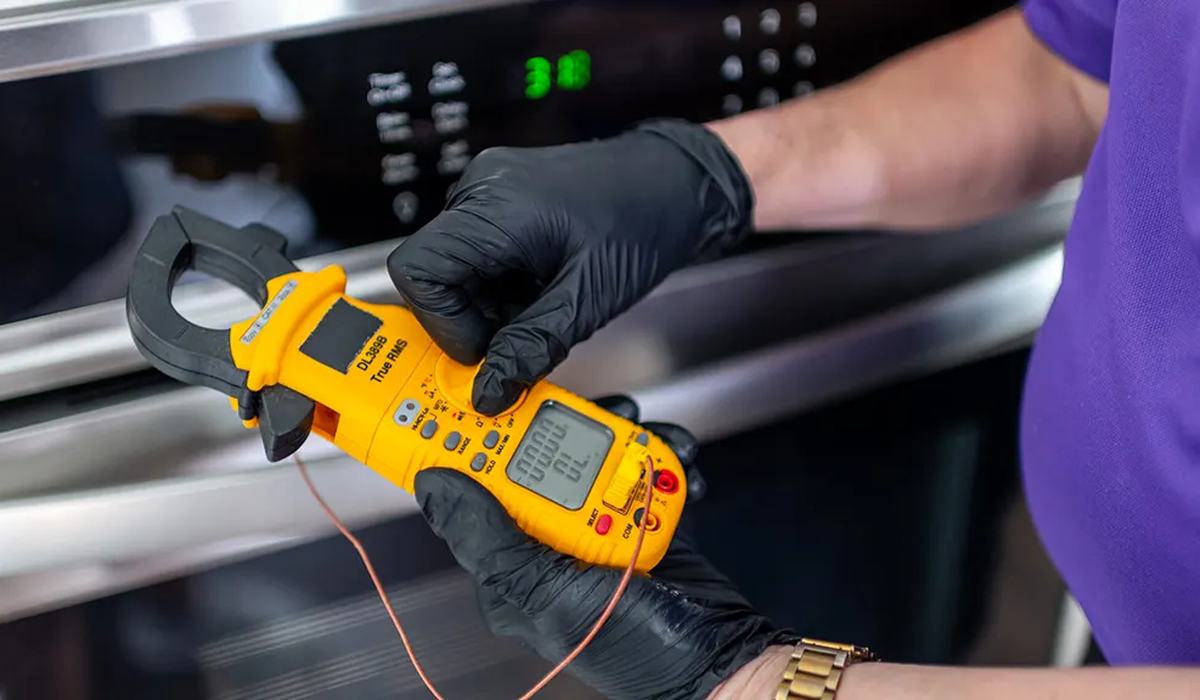
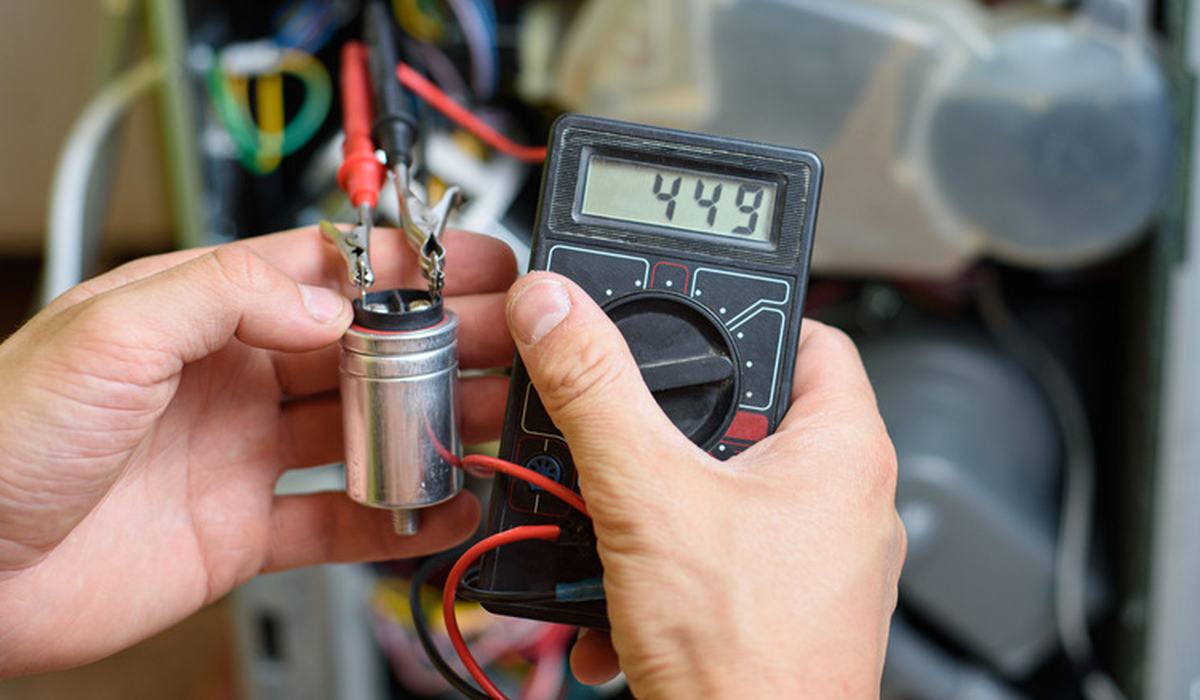
Keep the electrical test gear in its own pocket. A multimeter with its leads tangled around a wrench is a multimeter you will not use, and electrical diagnosis is where a tool kit earns its keep.
Types of tool bag
There are four shapes, and the right one depends on how you store it and how far you carry it.
| Type | Best for | Storage |
|---|---|---|
| Open tote | Grab-and-go repairs | Shelf or closet floor |
| Backpack | Carrying up stairs, small storage | Hangs on a hook |
| Rolling bag | Heavy kits | Closet floor |
| Hard case | Fragile test gear | Stackable |
For an apartment, a backpack is often the best choice. It hangs on a hook instead of taking floor space, it carries comfortably up stairs, and it keeps both hands free. An open tote is faster to work from but needs a shelf.
What goes in an apartment kit
An apartment repair kit is smaller than a contractor's. These are the tools that earn their place:
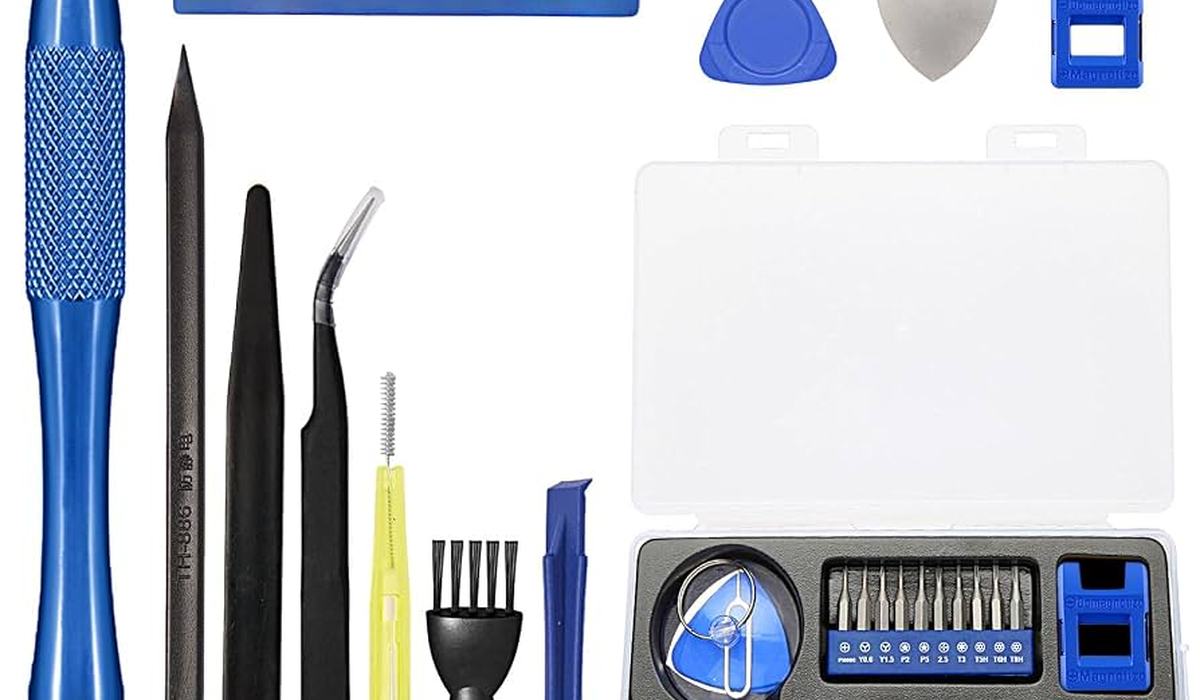
- Screwdriver set with Phillips, flat and Torx bits.
- Adjustable wrench and a set of pliers.
- Multimeter for electrical diagnosis.
- Voltage tester for a quick safety check.
- Tape measure, level and stud finder.
- Utility knife, tape and a torch.
- Safety glasses and gloves.
That kit covers almost every apartment repair: a loose hinge, a dripping tap, a dead outlet, a wobbly shelf. Add a specific tool only when a specific job needs it.
Keeping the kit usable
A tool kit that lives in a damp closet rusts. Add a silica gel packet and replace it every few months. Keep the test gear in its own pocket so the leads do not tangle. And keep the bag closed — a bag that is always open collects dust and loses small parts.
What to look for
An apartment tool bag has to do three things: hold the kit, store in a small space, and survive a damp closet.
- A moulded waterproof base to keep tools off a damp floor.
- Pockets that hold their shape so the bag does not collapse.
- A size that matches your kit — not the biggest bag you can find.
- A carry handle or shoulder strap for stairs.
The waterproof base is the detail that matters most in an apartment. A bag that sits on a damp closet floor rusts the tools inside it, and a rusted tool kit is a kit you stop using.
Building the kit first
Buy the tools before the bag. Assemble the kit you actually need — screwdrivers, pliers, a wrench, a multimeter, a tape measure, a level, a stud finder, safety glasses — then buy a bag that fits it. A bag bought first is always the wrong size, and an oversized bag holding three tools is a bag you will not carry.
Frequently asked questions
What size tool bag do I need for an apartment?
Is a tool bag or a tool box better?
What tools should every apartment have?
How do I stop my tool bag getting mouldy in storage?
Is a backpack better than a tool bag?
Related guides