There is a difference between a freezer that is dead and one that is running but not getting cold enough. The second is far more common, and it is usually about airflow, frost or heat rejection — not about the compressor being finished.
This page walks through six causes. Check them in order, unplugging the unit before touching anything inside.
- Runs constantly, freezer only cool: blocked condenser coils or a bad seal.
- Freezer warm but fridge fine: defrost fault or evaporator airflow.
- Everything warm, heavy frost: defrost system failure.
- Clicking, will not run: start relay.
On this page
1. Blocked condenser coils and restricted airflow
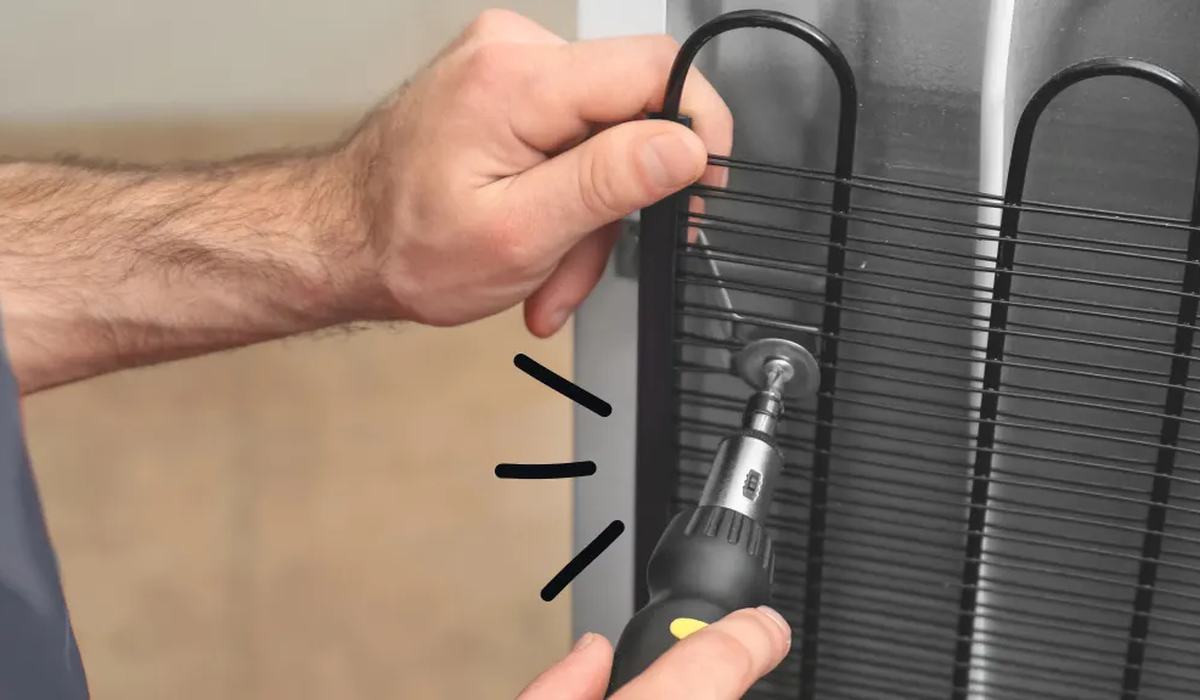
The single most common cause of weak freezing. The condenser must reject heat to the room. If it cannot, the whole cycle degrades and the freezer loses temperature first because it has the furthest to fall.
- Clean the coils. Brush along the fins, vacuum thoroughly. Do it every six months.
- Pull the unit 5 cm off the wall. Fridges need airflow at the back and sides.
- Do not box it in. A fridge enclosed in cabinetry with no ventilation will underperform in exactly this way.
- Check the ambient temperature. A garage fridge in a cold climate can struggle; most domestic fridges are rated to about 10°C minimum.
2. Door seal and hinge alignment
A freezer door that does not seal leaks the coldest air in the house. Frost builds at the leak, then the seal gets worse. The dollar-bill test is definitive: close the door on a bill at each point around the gasket and pull. If it slides freely, the seal has failed there.
Also check that the unit is level. A freezer door that hangs slightly open under its own weight will frost and warm, even with a good gasket.
3. Defrost system failure — the frost clue
Look inside the freezer. If you see heavy frost or ice, especially a solid block on the back wall, the automatic defrost system has failed. That frost insulates the evaporator, so it can no longer absorb heat from the compartment.
| Defrost component | What it does | Failure symptom |
|---|---|---|
| Defrost heater | Melts frost off the evaporator | Heavy frost, no defrost cycle |
| Defrost thermostat / bimetal | Tells the board when to heat | No defrost, or defrost never stops |
| Defrost timer or control board | Schedules the cycle | Irregular or absent defrosting |
| Drain heater | Keeps the drain clear | Ice in the drain, water pooling |
Unplug the fridge and leave both doors open for 24 hours to melt the frost completely. Put towels down. Plug it back in and check temperature after four hours. If it freezes properly now but fails again in one to three weeks, you have confirmed a defrost fault — and you have bought yourself time to order the part.
4. Evaporator fan motor
The evaporator fan moves air across the cold coil and into the compartments. If it seizes or its motor fails, the freezer becomes unevenly cold — some areas cold, others warm — and the fridge compartment warms up faster.
- Listen with the door open, pressing the door switch. A healthy unit has an audible fan.
- Check for ice jamming the blade. Frost from a failed defrost can freeze the fan solid.
- A seized fan may hum quietly without turning. That hum is the motor stalling.
- Replacement is typically $30–$90 for the part and a genuine DIY job on most top-freezer models.
5. Thermostat, thermistor or control board
Modern fridges use thermistors and an electronic board rather than a mechanical thermostat. A failed thermistor reads the wrong temperature and the board cools accordingly — or not at all.
| Control type | Failure symptom | Test |
|---|---|---|
| Mechanical thermostat | Freezer never reaches set temperature | Continuity test across the contacts |
| Thermistor | Wrong reading; fridge may over- or under-cool | Resistance test against a temperature chart |
| Control board | Erratic behaviour or a fault code | Read the code; test power to the fan and compressor |
| Damper control | Freezer cold, fridge warm | Watch the damper open when the fridge calls for cold |
If the panel is displaying a fault code, search that code with your model number. Manufacturers publish what each code means, and it often shortcuts a long diagnosis.
6. Refrigerant charge or a sealed-system fault
If the coils are clean, the seal is good, there is no frost, the fan works and the compressor runs but the freezer still will not freeze, you may have lost refrigerant or have a restriction.
- Signs of a leak: oily residue at a joint; a compressor that runs constantly and is very hot; no frost pattern on the evaporator.
- Signs of a restriction: partial frost on the first section of the evaporator only.
- This requires a technician with gauges and a refrigerant licence. It is not a DIY repair.
- Cost: typically $400–$800, which is usually not worth it on a unit past eight to ten years.
The freezer fan question people always ask
Many people assume the freezer has its own fan and the fridge has another. On most top-freezer and bottom-freezer designs there is a single evaporator fan in the freezer that pushes cold air through a damper into the fridge. That is why one failure can warm both compartments, and why a freezer-only problem so often turns out to be a defrost fault.
Clean the coils, test the door seal with a dollar bill, and look for heavy frost. Those three checks identify most freezer faults for free. If you see frost, run the manual defrost test to confirm the defrost system. If you reach refrigerant, get a quote — and compare it honestly to a new unit.
Frequently asked questions
Reading the compartment pattern
| Fridge | Freezer | Most likely fault |
|---|---|---|
| Warm | Warm | Compressor, relay or sealed system |
| Warm | Normal | Evaporator fan, air duct or defrost |
| Normal | Warm | Freezer fan, damper or freezer defrost |
| Normal | Slightly soft | Door left ajar, gasket or a thermostat drift |
| Warm | Very cold | Damper stuck open or a control fault |
Refrigerator designers almost always cool the freezer compartment directly and then move cold air into the fridge. That single design fact is what makes the two-compartment pattern so diagnostic: the compartment next to the coil usually keeps working while the one that depends on airflow fails. Reading the pattern correctly can eliminate half the possible faults before you pick up a tool.
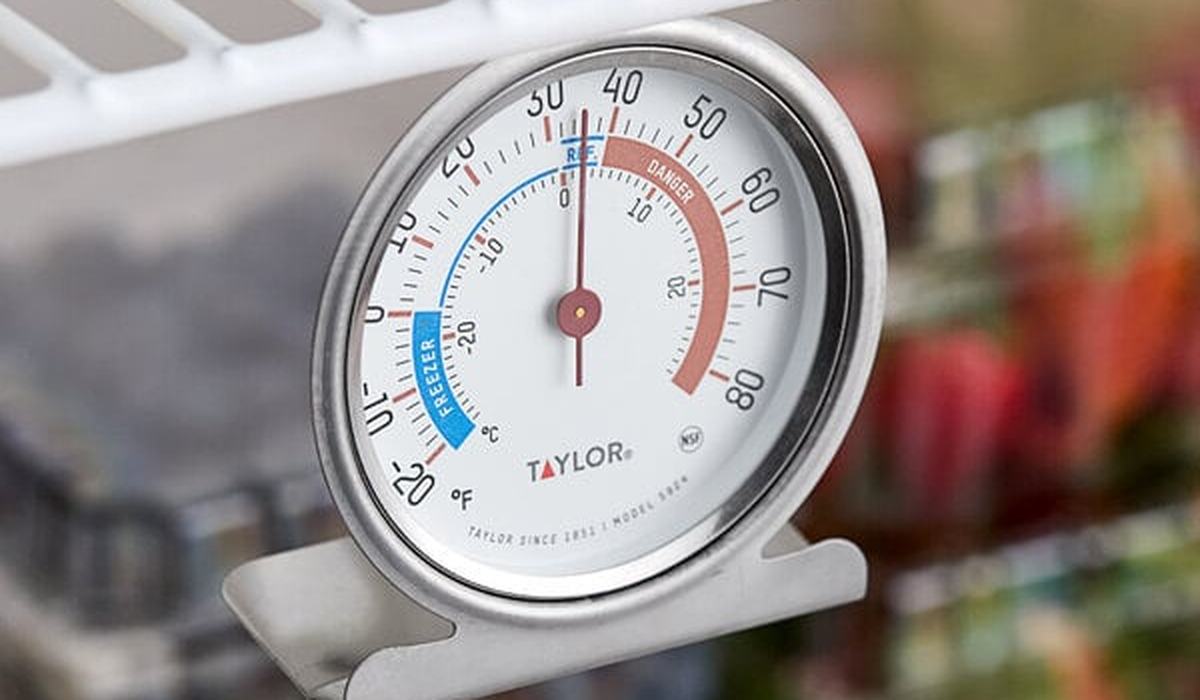
Put a thermometer in both compartments and leave it for four hours. Guessing from how things feel produces wrong diagnoses constantly — a freezer at 15°F is failing even though it still feels cold, and a fridge at 42°F is a problem even though it feels normal.