Refrigerator temperature is the one setting where being wrong is expensive in both directions. Too warm and you risk foodborne illness. Too cold and you freeze lettuce, burst cans and waste energy fighting a unit that is working perfectly.
- Refrigerator: 3°C / 37°F. Safe range 1–4°C (34–40°F).
- Freezer: −18°C / 0°F. Safe range −20 to −15°C.
- Dial numbers are not degrees. A “3” on a mechanical dial is arbitrary — the calibration differs between brands and even between models of the same brand.
- Measure with a thermometer, not with the door display, which reads the air at the sensor, not the food.
On this page
Why the exact numbers matter
Food safety guidance sets 4°C (40°F) as the upper limit for refrigerated food. Above that, bacterial growth accelerates sharply — the “danger zone” runs from 4°C to 60°C. Below 40°C, growth slows to a rate that gives you the storage times on the packaging.
- Batch-cooked food and leftovers are the highest risk. Cool them quickly and refrigerate within two hours.
- Raw meat and fish should sit at the coldest part of the fridge, not the door.
- Dairy is sensitive — a fridge running warm shortens milk life noticeably.
- Frozen food quality degrades above −18°C even though it may still be safe. Ice cream softens, bread stales, and fat oxidises.
Why dial numbers mean nothing
On a mechanical dial, the numbers 1–7 are simply positions on a thermostat, not degrees. On most brands, higher = colder. On some, it is the reverse. That is why the manual matters more than intuition.
| Setting | Typical meaning | When to use |
|---|---|---|
| 1–2 (or Warm) | Least cooling | Rarely — only in very cold rooms |
| 3–4 (or Medium) | Standard | Default for most households |
| 5–6 | More cooling | Hot kitchens, heavy loading, summer |
| 7 (or Coldest) | Maximum, no cycling | Never long-term — causes freezing and ices up |
People respond to a warm fridge by turning the dial to maximum. That does not make the fridge cool faster — it makes the compressor run continuously, so the evaporator ices up and the fridge gets less effective. Set it to the middle, wait four hours, then adjust one step.
How to measure temperature properly
- Buy a cheap fridge thermometer — a $8–$12 analogue dial or digital probe.
- Place it in the middle of the fridge, on a middle shelf, not in the door and not against the back wall.
- Leave it 24 hours. Fridges cycle; a single reading tells you little.
- Measure the freezer too — put the thermometer between two frozen items.
- Test the door shelf separately. Door shelves are the warmest part and are usually 2–4°C warmer than the middle.
Then set for the middle: aim for 3°C in the centre of the fridge. If the centre reads 3°C, the door will be around 6–7°C, which is fine for condiments and drinks but not for milk or meat.
Adjusting a fridge that is too warm or too cold
If it is too warm
| Likely cause | How to check | Fix |
|---|---|---|
| Dial set too warm | Read the dial position | Move it one step colder, wait 4 hours |
| Door seal leaking | Dollar-bill test around the gasket | Replace the gasket |
| Condenser coils blocked | Torch on the coils at the back/bottom | Brush and vacuum them |
| Overloaded / blocked vents | Look for items against the back wall | Leave air gaps; don't block vents |
| Faulty thermistor | Inconsistent readings, fault code | Test resistance or call a tech |
If it is too cold
| Likely cause | How to check | Fix |
|---|---|---|
| Dial at maximum | Read the dial | Move to the middle |
| Thermistor drifted | Readings colder than the setting implies | Test the thermistor |
| Damper stuck open | Fridge much colder than freezer setting | Check the air damper |
| Food freezing at the back | Items against the rear wall | Move them forward; check the rear is not the coldest vent |
Adjust one increment, wait at least four hours, measure again. Refrigerators have significant thermal mass — food, shelves and the liner all hold temperature. Changing the dial and checking after twenty minutes tells you nothing and leads to endless fiddling.
Where to put what
| Location | Relative temperature | Best for |
|---|---|---|
| Top shelf | Warmest | Leftovers, ready-to-eat food, drinks |
| Middle shelves | Middle | Dairy, eggs, cooked meats |
| Bottom shelf | Coldest | Raw meat and fish (on the tray, covered) |
| Crisper drawers | Humidity-controlled | Vegetables and fruit |
| Door shelves | Warmest — fluctuates most | Condiments, sauces, butter |
| Freezer door | Warmest freezer spot | Ice cream, opened items |
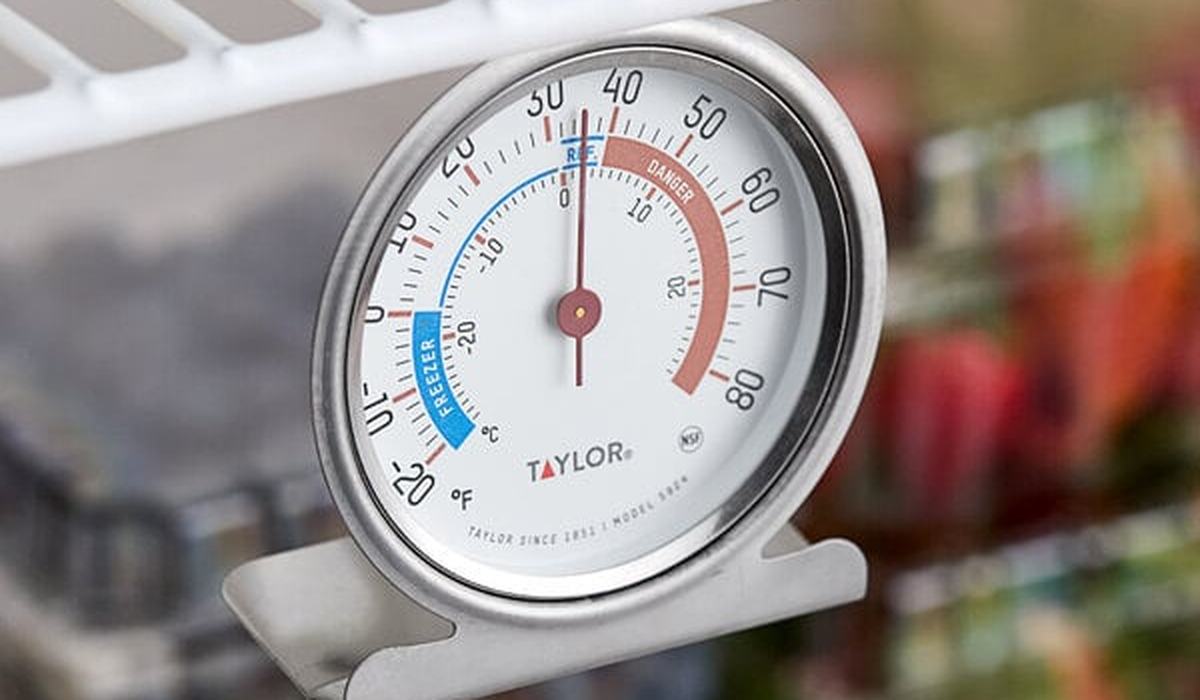
Refrigerator thermometer — the cheapest useful fridge gadget
The door display tells you the air temperature at one sensor. A $10 thermometer on the middle shelf tells you the truth where your food actually sits.
Check Price on Amazon →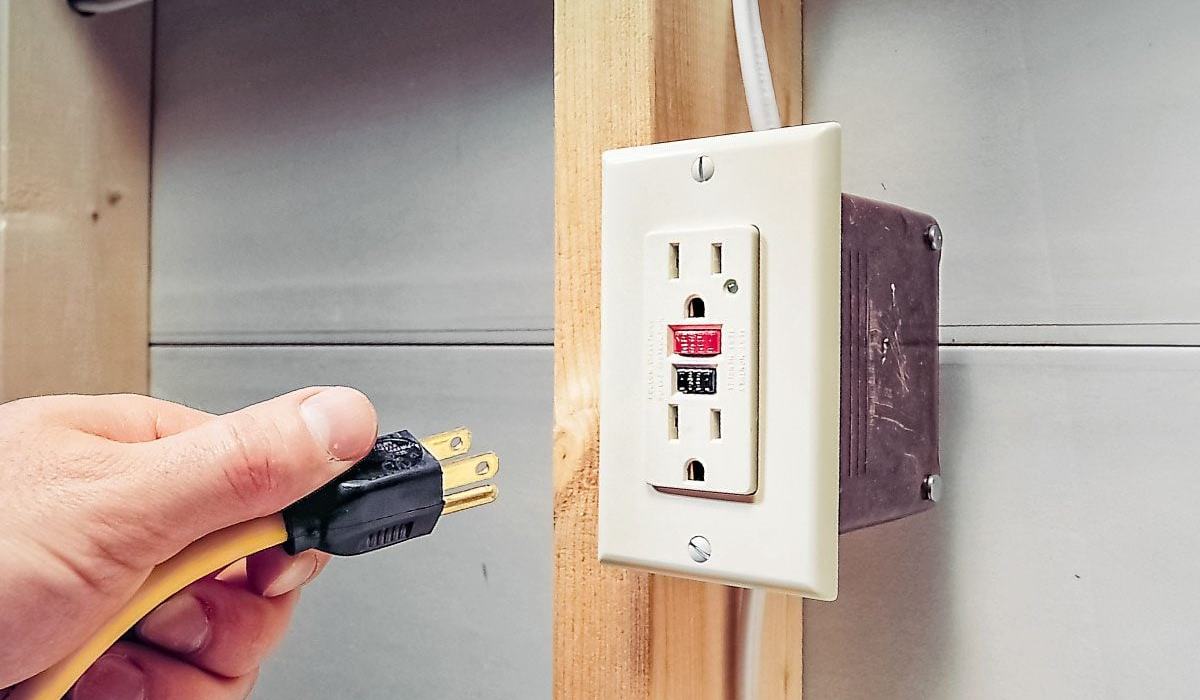
A GFCI outlet — check it before you assume the fridge has failed
A tripped GFCI makes a fridge look dead. Reset it and confirm with another appliance before diagnosing anything else.
Check Price on Amazon →Set the fridge to 3°C and the freezer to −18°C, measure with an $8 thermometer on the middle shelf after 24 hours, and adjust one step at a time. If the fridge still cannot hold temperature with a good seal and clean coils, you have a fault — not a setting problem.
Frequently asked questions
Adjusting for seasons and load
| Condition | Adjustment | Reason |
|---|---|---|
| Hot summer kitchen | One notch colder | Higher ambient raises internal load |
| Cold room, under 60°F | One notch warmer | Compressor may struggle to run |
| Fridge loaded after shopping | None — wait 24 hours | Recovery is normal |
| Mostly empty fridge | Keep the setting | Empty space warms faster |
| Holiday, fridge emptied | Warmer, or off | No food to protect |
The dial on a refrigerator controls a temperature target, not a fixed output. A fridge in a 90°F kitchen has a harder job than the same fridge at 65°F, and the same dial position gives a different result. That is why the setting that worked in winter feels inadequate in August, and why the correct approach is to adjust one notch, wait six hours, and measure again.
Setting a fridge to maximum does not make it cool better. It makes the compressor run continuously, which builds frost on the evaporator, reduces airflow and eventually makes cooling worse. If the fridge is not reaching temperature on a mid setting, you have a fault to diagnose, not a dial to turn.