A water dispenser that stops working is rarely a big repair. The water has to travel from your supply, through a filter, along a line in the door and out of a valve — and any one of those can stop it. Working through them in order saves you from replacing parts you did not need.
This guide covers the six causes in the order a technician checks them, with the quick tests for each.
On this page
The order to check
| # | Cause | Quick test | Fix |
|---|---|---|---|
| 1 | Clogged water filter | Remove filter, try again | Replace filter |
| 2 | Supply valve closed | Check valve behind fridge | Open the valve |
| 3 | Frozen water line | Feel the line in the door | Thaw the line |
| 4 | Door switch faulty | Press the switch by hand | Replace switch |
| 5 | Dispenser actuator | Listen for the click | Replace actuator |
| 6 | Water inlet valve | Test for continuity | Replace valve |
1. Water filter — the usual culprit
A clogged water filter is the most common reason a dispenser slows to a trickle and then stops. Filters are rated for a set volume — often around 200–300 gallons or six months — and once they are spent, flow drops sharply.
The test is simple: remove the filter and try the dispenser. On most models the dispenser will still work with the filter out (some will not, so check your manual). If water flows without the filter, the filter was the problem.
2. Supply valve
Behind or under the refrigerator there is a small shut-off valve on the water supply line. It gets closed during moves and repairs and forgotten. Pull the fridge out and check it is fully open.
While you are back there, check the supply line itself for kinks. A line pinched against the wall will stop flow just as effectively as a closed valve.
3. Frozen water line
The water line runs through the door, where it passes close to the freezer. If the freezer is set too cold, or the line is poorly insulated, the water inside it freezes and blocks the flow. This is common in winter or after a temperature change.
- Turn the freezer temperature up slightly (to 0°F / −18°C).
- Locate the water line in the door and feel along it for a hard, cold section.
- Thaw it with a hair dryer on low, moving constantly, or by leaving the door open for an hour.
- Do not use a heat gun or anything that could melt the plastic line.
If the line freezes repeatedly, the insulation around it has failed and should be replaced.
4–6. Switch, actuator and inlet valve
4. Door switch
The dispenser only works when the door is closed, and a small switch tells the control board the door is shut. If that switch fails, the dispenser stays dead. Press it by hand while someone tries the dispenser — if it works, replace the switch.
5. Dispenser actuator
The actuator is the paddle or button you press. If it is broken or misaligned, it never triggers the valve. Listen for a click when you press it — no click often means the actuator or its linkage has failed.
6. Water inlet valve
The inlet valve is the solenoid that actually releases water. If everything else checks out, test it for continuity with a multimeter. No continuity means the coil has failed and the valve needs replacing. This is the last thing to check, because it is the least likely and the most work to reach.
Preventing the problem
Most dispenser failures are preventable, and the prevention is the same maintenance you should be doing anyway.
- Change the filter on schedule. Every six months or 200–300 gallons. A filter left too long is the single biggest cause of a dead dispenser.
- Flush after holidays. If the dispenser has not been used for weeks, run a glass through it. Stagnant water and mineral build-up are common after a break.
- Keep the freezer at 0°F. A freezer set too cold is what freezes the water line in the door.
- Check the supply line annually. Pull the fridge out once a year and confirm the valve is open and the line is not kinked or cracked.
- Do not over-tighten the filter. Hand-tight is enough. Over-tightening cracks the housing and causes leaks.
A dispenser that is looked after will last the life of the refrigerator. The failures in this guide are almost all the result of a filter left too long or a line allowed to freeze.
Parts that help
A replacement water filter and a water inlet valve fix most dispenser faults. Match the filter to your refrigerator's model number.
Frequently asked questions
Why is my refrigerator water dispenser not dispensing water?
How do I reset my water dispenser?
Why does my water dispenser only work sometimes?
How often should I change the refrigerator water filter?
Can a frozen water line fix itself?
Related guides
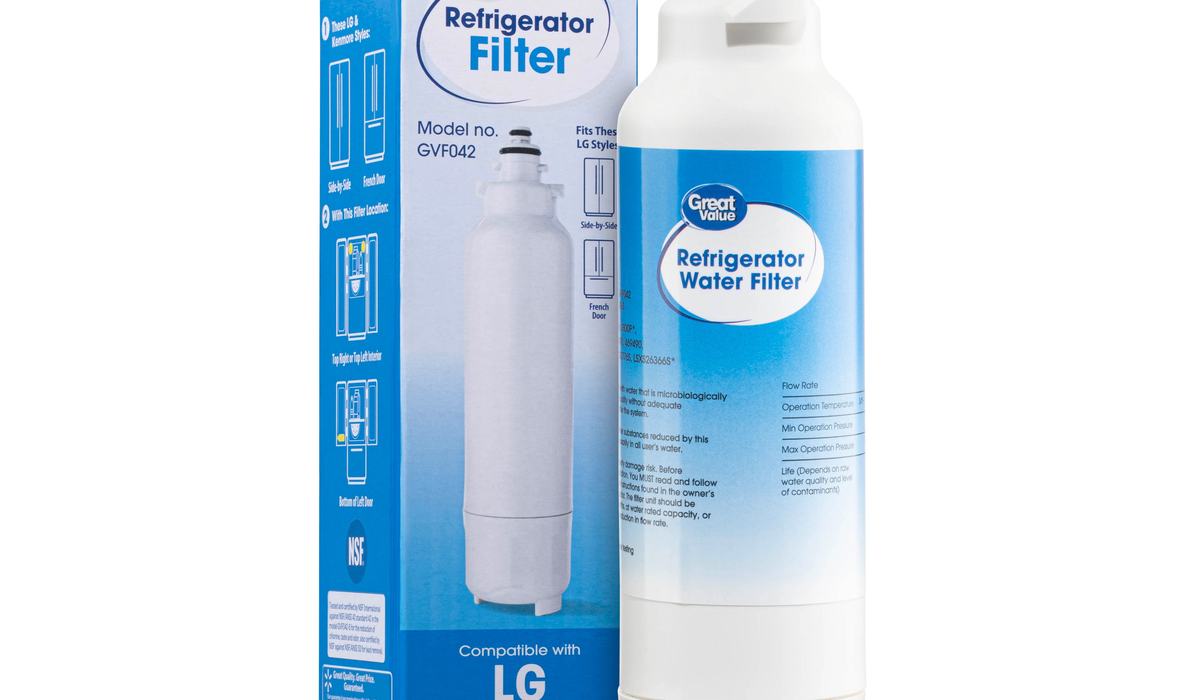
How to Replace a Refrigerator Water Filter
The five-minute job that fixes most dispenser problems.