On this page
The two layers, and which is washable
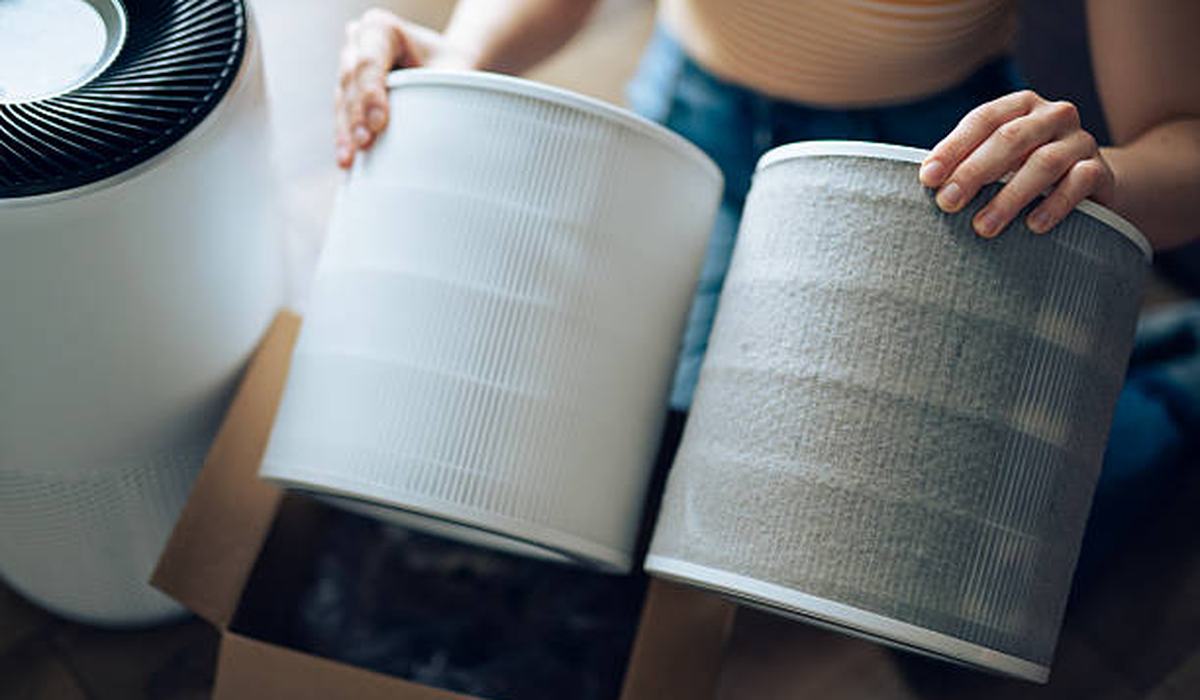
Most purifiers have at least two filter layers. The pre-filter is a coarse mesh that catches hair, lint and large dust. The HEPA layer is a dense mat of fine fibres that traps the particles that matter for air quality. In some units there is a third layer, an activated-carbon bed for odour and gases.
The pre-filter is usually washable, and often reusable for years. The HEPA layer is almost never washable, despite what some listings imply — the same distinction that decides whether a unit is non-toxic. The carbon layer is not washable either.
Why HEPA is not washable
HEPA media works by trapping particles in a tangled web of fibres, including by electrostatic attraction. Water and agitation collapse that web and strip the charge, so a washed HEPA filter passes more particles than it did before. It may look clean, but its efficiency has dropped. Manufacturers that say "do not wash the HEPA filter" mean it.
What a washable pre-filter buys you
A washable pre-filter is genuinely useful. By catching the coarse debris before it reaches the HEPA layer, it slows the HEPA filter's loading and can extend its life by months — the airborne dust it catches is the fraction covered in dust in a nursery. In a pet household or a dusty flat, that is a real saving. Rinse it every two to four weeks under a tap, let it dry fully, and put it back.
The real cost over five years
Take a typical nursery purifier. A HEPA cartridge costs $20 to $40 and lasts 6 to 12 months. Over five years that is roughly $100 to $400 in filters, depending on the unit and how dirty the air is. A washable pre-filter can push the replacement interval toward the longer end, but it does not eliminate the cost — see what a filter costs per year. A unit advertised as "no filter to buy" is usually relying on a washable pre-filter and a HEPA layer that still needs replacing — the cost trap we flag in Black Friday buying.
What matters for a nursery
For a nursery, prioritise a true HEPA layer and a washable pre-filter, and check the price and availability of the HEPA cartridge before buying. A cheap unit with expensive, hard-to-find filters is a false economy. Also check that the filter change is tool-free, because you will be doing it with a baby in one arm — the step-by-step is in the filter replacement guide.
Washable is a real feature, but it applies to the pre-filter, not the HEPA layer. Buy for the pre-filter, budget for the HEPA, and the running cost holds no surprises.
Sources: AHAM (CADR certification program), U.S. EPA (Residential Air Cleaners guide; ozone generator warning), ASHRAE Standard 62.2 (residential ventilation), WHO Environmental Noise Guidelines (night-time bedroom levels), American Academy of Pediatrics (safe sleep and cord safety).
Caring for the washable layer
A washable pre-filter only helps if you actually wash it. Rinse it under a tap every two to four weeks, or more often in a pet household, and let it dry completely before refitting. A damp pre-filter encourages mould, which is the opposite of what a nursery purifier is for. Never put a wet filter back into the unit.
Choosing between washable and replaceable
If you want the lowest running cost and do not mind a small chore, a washable pre-filter with a replaceable HEPA layer is the best combination. If you would rather not handle filters at all, a unit with a long-life HEPA cartridge and a cheap, widely available replacement is simpler. Either way, check the cartridge price and availability before buying, because that is the cost that follows you for years.
Frequently asked questions
Can you wash a HEPA filter?
What is a washable pre-filter for?
How often should I replace the HEPA filter in a nursery purifier?
Is a washable filter purifier cheaper to run?
How do I clean a washable pre-filter?
Related guides