On this page
Airborne dust versus settled dust
Dust exists in two states, and the distinction decides whether a purifier helps. Airborne dust is suspended in the air and is what a baby breathes. Settled dust is the layer on the shelf, the windowsill and the top of the wardrobe. A purifier works on the first and does nothing for the second.
This is why people sometimes say purifiers "do not work" for dust: they run one, and the surfaces still get dusty. The surfaces get dusty because settled dust is not what the purifier removes. The purifier is working on the fraction that matters for breathing.
What a purifier does help with
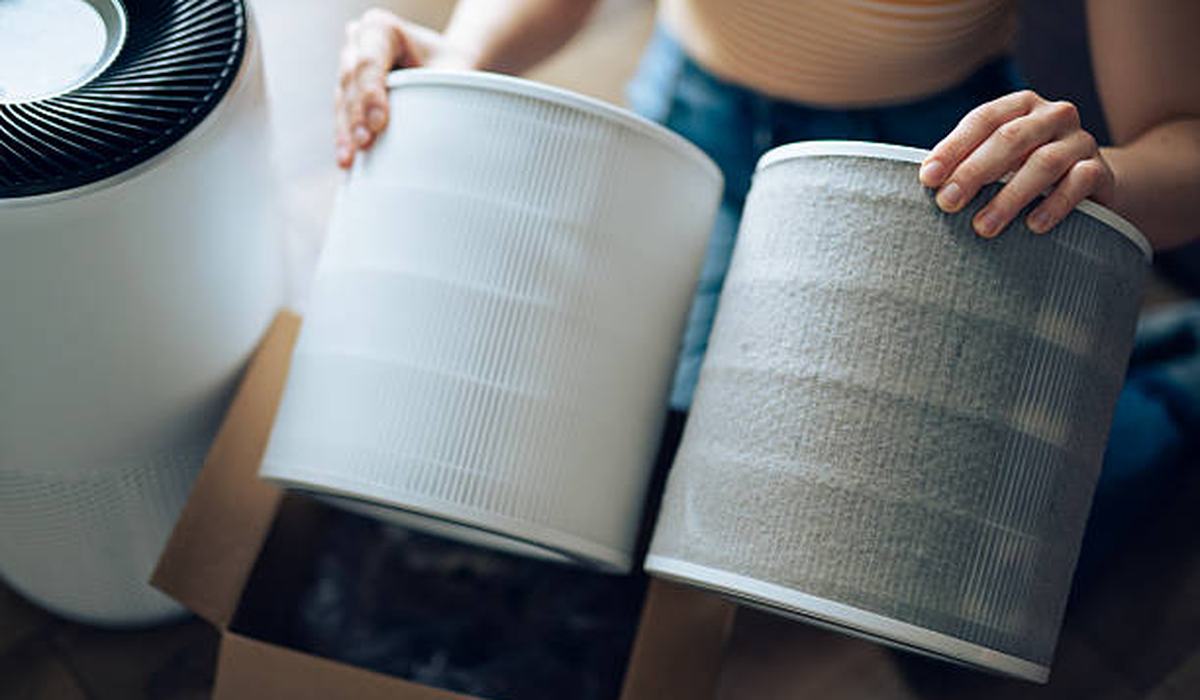
A true-HEPA purifier captures the fine airborne particles that make up most of the dust you can see floating in a sunbeam, plus the finer fraction you cannot see. In a nursery, that means fewer particles for a baby to breathe, and less dust settling out of the air onto surfaces over time. A washable pre-filter catches the coarser airborne debris before it reaches the HEPA layer — the layer that is washable, unlike the HEPA media.
What it cannot do
A purifier cannot remove dust that has already settled, cannot stop dust being produced, and cannot clean a room it is not sized for — the same sizing rule that explains why a purifier seems to do nothing. It also cannot reach dust inside a closed cupboard or under a bed. For settled dust you need a cloth; for dust production you need to address the source.
Cutting dust at the source
Most nursery dust comes from a handful of sources: fabric fibres from bedding and carpets, skin cells, pet dander, and outdoor dust tracked in. Reducing those reduces the load the purifier has to handle:
- Wash bedding weekly in hot water to remove fibre and allergen load.
- Choose hard flooring or a washable rug over wall-to-wall carpet where possible.
- Keep pets out of the nursery, or at least off the crib and bedding.
- Use a doormat and take shoes off at the door to cut tracked-in dust.
- Vacuum with a HEPA vacuum, which traps what it picks up instead of blowing it back out.
A nursery dust routine
Run the purifier continuously on a low speed, and step it up when you are cleaning — and if the unit's light stays red, check what a red light means. Damp-dust surfaces weekly with a microfibre cloth rather than dry-dusting, which just lifts dust back into the air — the full routine is in how to reduce dust in an apartment. Wash the pre-filter every two to four weeks. Vacuum with a HEPA vacuum, and change the HEPA filter on schedule.
A purifier is one part of a dust strategy, not the whole of it. It handles the airborne fraction, which is the part a baby breathes; the cloth and the vacuum handle the rest.
Sources: AHAM (CADR certification program), U.S. EPA (Residential Air Cleaners guide; ozone generator warning), ASHRAE Standard 62.2 (residential ventilation), WHO Environmental Noise Guidelines (night-time bedroom levels), American Academy of Pediatrics (safe sleep and cord safety).
Sizing a purifier for a dusty room
Dust is a continuous load, so a dusty room needs a purifier sized with headroom. Match the CADR to at least two-thirds of the floor area for dust, and if the room has carpet, pets or a nearby road, go larger — our picks are in the best purifiers for dust in an apartment. An undersized unit will run on high constantly and still not keep up, which is both noisy and ineffective.
The combination that works
No single tool clears a dusty nursery. The purifier handles airborne dust; a damp microfibre cloth handles settled dust; a HEPA vacuum handles what is in the carpet; and reducing soft furnishings and washing bedding cuts the source. Run all four together and the nursery stays genuinely cleaner than any one of them could manage alone.
Frequently asked questions
Do air purifiers actually remove dust?
Why is my nursery still dusty with a purifier running?
What size purifier do I need for a dusty nursery?
Does a purifier help with dust mites?
Should I run a purifier while cleaning?
Related guides
Air Purifier for a Nursery With a Washable Filter
The trade-offs of washable versus replaceable.

Air Purifier CADR Meaning: What It Means
The one number that decides if a unit is big enough.