On this page
Why easy-to-clean matters most
A humidifier adds moisture to the air, which is exactly what mould needs. If the tank is hard to clean, biofilm forms in the corners within days, and the unit starts spraying mould spores into the room where a baby is sleeping.
That is why "easy to clean" is not a nice-to-have for a nursery humidifier — it is the most important feature. A cheap unit with a wide, accessible tank beats an expensive one with a narrow neck you cannot reach into.
Types compared
| Type | Cleaning difficulty | Mould risk | Best for |
|---|---|---|---|
| Top-fill cool mist | Easy | Low | Nurseries — the best choice |
| Ultrasonic (narrow tank) | Hard | High | Avoid for a baby |
| Evaporative | Medium | Low | Larger rooms |
| Warm mist | Medium | Medium | Not recommended for nurseries |
| Dishwasher-safe tank | Very easy | Very low | Anyone short on time |
For a baby's room, a top-fill cool-mist unit with a wide opening is the safest and easiest choice. Warm-mist units are a burn risk and are not recommended for nurseries.
What to look for
- Wide tank opening — you should be able to get your hand inside.
- Top-fill design — no carrying the tank to a tap and flipping it.
- Dishwasher-safe parts — the single biggest time-saver.
- No hard-to-reach corners — rounded interiors clean far more easily.
- Auto shut-off when the tank empties.
- Adjustable mist and a night light that can be turned off.
- Filter-free or easy-filter design — filters add another mould surface.
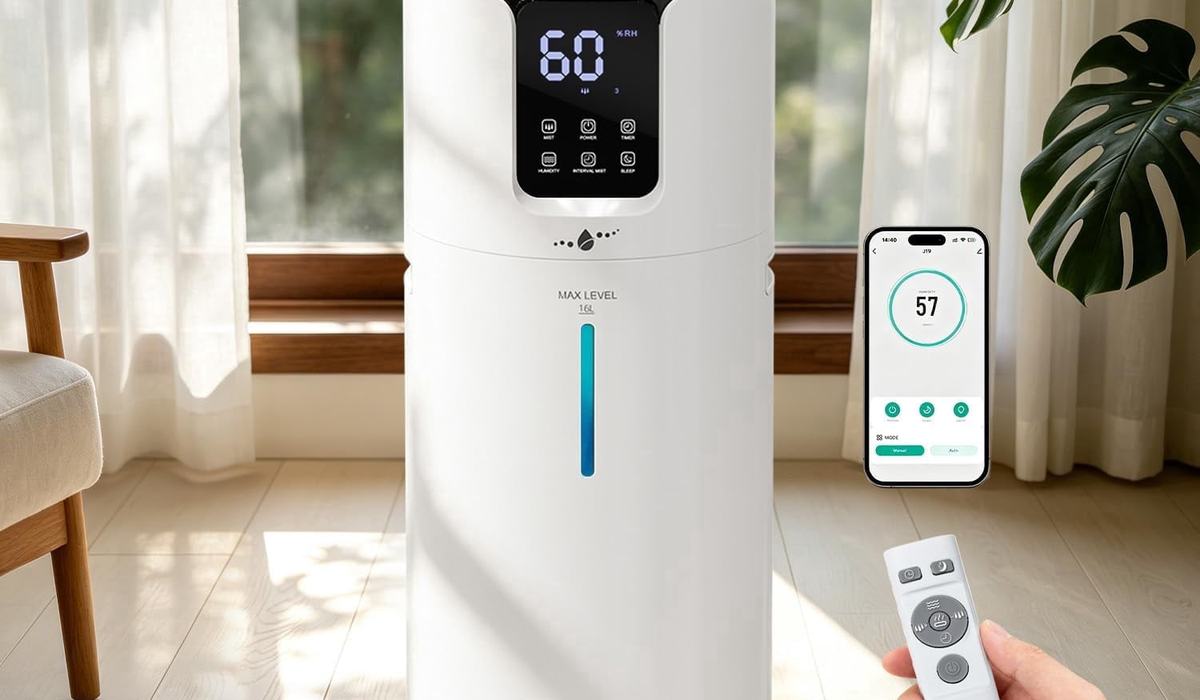
Top-Fill Cool Mist Humidifier
Wide top-fill opening and dishwasher-safe tank, so cleaning takes minutes. Auto shut-off and adjustable mist.
Check Price on Amazon →How to clean it properly
Cleaning a humidifier is a routine, not an occasional job.
- Every day: empty the tank, rinse it, and let it air-dry upside down.
- Every 1–3 days: wash the tank and base with warm soapy water and a soft brush.
- Weekly: descale with a 1:1 white-vinegar-and-water mix for 30 minutes, then rinse thoroughly.
- Monthly: check the base and any filter for biofilm or mineral build-up.
- Never leave standing water in the tank between uses.
Safety rules for a nursery
- Keep humidity at 40–50%. Higher than 60% encourages mould and dust mites.
- Place it out of reach of the cot and any reachable surface.
- Use cool mist only — warm mist is a burn risk.
- Do not over-humidify. A hygrometer takes the guesswork out.
- Clean before every use if the unit has been sitting.
Choose a unit you can clean in two minutes, and clean it on a schedule. That is what makes a humidifier safe for a baby.
Signs the humidity is wrong
| Sign | Likely cause | Action |
|---|---|---|
| Condensation on windows | Too humid | Turn it down or off |
| Damp feeling in the room | Too humid | Target 40–50% |
| Dry nose, cracked lips | Too dry | Increase mist |
| Static shocks | Too dry | Increase mist |
| Musty smell from the unit | Mould in the tank | Clean it now |
Running cost
A cool-mist humidifier draws roughly 20–40 watts, or about $0.003–$0.006 per hour. Running it overnight costs a few cents a day. The bigger cost is the cleaning time, which is why an easy-to-clean design matters so much.
Humidifier vs dehumidifier for a nursery
| Problem | Right tool |
|---|---|
| Dry air, dry nose, static | Humidifier |
| Condensation, damp, mould | Dehumidifier |
| Dust and allergens | Air purifier |
| Stuffy, no fresh air | Ventilation |
Do not run a humidifier in a room that already has condensation. Adding moisture to a damp room makes mould more likely, not less.
The cleaning schedule that keeps it safe
- Daily: empty, rinse, air-dry upside down.
- Every 1–3 days: wash with warm soapy water and a soft brush.
- Weekly: descale with a 1:1 vinegar-and-water mix for 30 minutes.
- Monthly: inspect the base and any filter for biofilm.
If you cannot keep to that schedule, choose a unit with a dishwasher-safe tank. It is the single feature that makes the routine realistic.
Why easy-to-clean matters more than features
A humidifier that is hard to clean does not get cleaned. Within a week, biofilm forms in the tank and the unit starts spraying bacteria into the air your baby breathes. That is worse than dry air.
So the ranking criterion is not mist output or tank size — it is whether you can actually wash the tank in two minutes, every day, without a bottle brush and a torch.
Placement in a nursery
- On a stable surface, out of reach of the cot.
- At least a metre from the cot so mist does not fall directly on bedding.
- Away from walls and curtains to avoid condensation.
- Not on carpet — a spill is easier to clean on a hard floor.
- Where the cord cannot be reached by a toddler.
Features worth paying for
- Dishwasher-safe tank — the single best feature for hygiene.
- Wide tank opening — so you can reach every surface.
- No hidden corners or narrow necks.
- Built-in hygrometer — so you can target 40–50%.
- Auto shut-off when the tank empties.
The verdict
For a nursery, buy the humidifier you can clean in two minutes. A dishwasher-safe tank with a wide opening beats a bigger tank with a narrow neck every time. Clean it daily, descale it weekly, and it will be safe for your baby.
The daily cleaning routine
- Empty the tank every morning.
- Rinse it with warm water and a drop of mild soap.
- Air-dry it upside down so no water sits in the corners.
- Wipe the base with a damp cloth.
- Descale weekly with a 1:1 vinegar-and-water mix for 30 minutes.
- Inspect monthly for biofilm in the base and any filter.
Common mistakes
- Leaving water in the tank. Biofilm forms within days.
- Using tap water in an ultrasonic unit. It leaves a fine white dust on furniture.
- Running it above 50% humidity. Condensation and mould follow.
- Placing it too close to the cot. Mist should not fall on bedding.
- Skipping the weekly descale. Mineral scale harbours bacteria.
The verdict
For a nursery, buy the humidifier you can clean in two minutes. A dishwasher-safe tank with a wide opening beats a bigger tank with a narrow neck every time. Clean it daily, descale it weekly, and it will be safe for your baby.
Frequently asked questions
What is the best humidifier for a baby?
How often should I clean a baby's humidifier?
Are warm mist humidifiers safe for babies?
Can I add essential oils to a baby's humidifier?
What humidity should a nursery be?
Related guides
Best Humidifier for an Apartment Bedroom (2026)
Quiet picks for bedrooms and small spaces.
Apartment Air Quality: The Complete Guide
Everything that affects the air in a small space.