On this page
The short answer
Yes. A moisture absorber is safe and useful in a bathroom. It pulls a small amount of water out of the air passively, with no power and no noise. The catch is scale: it cannot keep up with a daily shower, so it works best as a backup rather than the main fix.
Where to place it
- In the dampest corner — usually the one furthest from the door, where air moves least.
- Off the floor — on a shelf, a windowsill, or the top of the cistern. Bathroom floors get wet.
- Away from the shower spray so it does not get splashed.
- Not directly under a window — airflow there is higher and the absorber works less efficiently.
If the bathroom is small, one tub is enough. For a larger room, use two in opposite corners.
How often to check and refill
| Humidity level | Check frequency | Refill frequency |
|---|---|---|
| Under 60% | Every 2 weeks | Every 2–3 months |
| 60–70% | Weekly | Every 1–2 months |
| Over 70% | Twice a week | Every 3–4 weeks |
When the crystals have dissolved into the collection chamber, it is time to refill. Empty the liquid first, then add fresh crystals.
Refillable Moisture Absorber
Power-free, silent moisture control. Place it in a corner and refill the crystals every 1–2 months.
Check Price on Amazon →Safety rules
- Keep out of reach of children and pets — calcium chloride is not edible.
- Do not drink the collected liquid — it is a mild irritant.
- Wash hands after handling the crystals.
- Do not place it where it can tip over onto a wet floor.
- Dispose of the liquid down a drain, not on plants.
What it will not do
A moisture absorber will not dry a room after a shower, will not lower the humidity of a whole flat, and will not stop mould that is already growing. For those jobs you need a dehumidifier. Use the absorber to keep baseline humidity down between showers, and the dehumidifier to remove the water a shower adds.
Together they cost under $100 and handle a small bathroom well.
Cost over a year
| Type | Upfront | Yearly cost |
|---|---|---|
| Disposable tubs | $3–$8 each | $40–$190 |
| Refillable tub | $10–$25 | $30–$80 |
| Hanging bags | $5–$12 each | $60–$290 |
| Rechargeable silica | $15–$30 | $15–$30 |
Placement mistakes
- On the floor. Bathroom floors get wet; the absorber should be on a shelf or the cistern top.
- Directly under a window. Airflow there is higher, so it works less efficiently.
- Behind the door. It needs some air movement to work at all.
- Next to the shower. It will get splashed and dissolve prematurely.
Safety and disposal
- Keep out of reach of children and pets.
- Do not drink the collected liquid.
- Wash hands after handling crystals.
- Dispose of the liquid down a drain.
Using it with a dehumidifier
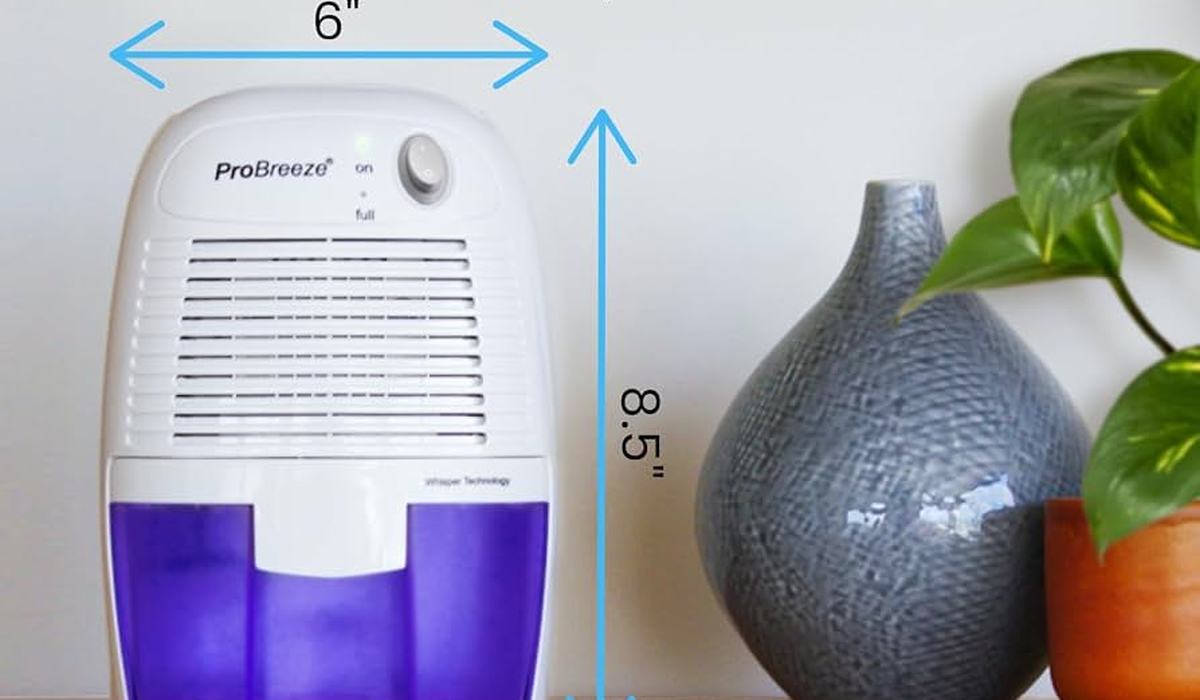
The best setup for a small bathroom is both: a dehumidifier to remove the water a shower adds, and a moisture absorber to keep the baseline humidity down between runs. Together they cost under $100 and handle a room that has no fan and no window.
How they work, and why that limits them
Calcium chloride absorbers pull water from the air and dissolve into a brine in the base. Silica gel does the same but can be dried and reused. Both are passive: no power, no noise, no moving parts.
That is the appeal and the limitation. Passive absorption is slow, so an absorber cannot keep up with the water a shower adds. It is a baseline tool, not a shower tool.
Where to put one
- On a shelf or the cistern top — never on the floor.
- Away from the shower so it is not splashed.
- Not behind the door — it needs air movement.
- Not under a window — airflow there reduces efficiency.
- In the closet too, where damp lingers.
When it is the right tool
- Closets and cupboards — small and hard to ventilate.
- Between dehumidifier runs — keeps the baseline down.
- Rented rooms where you cannot install anything.
- Storage boxes and wardrobes.
The verdict
Yes, you can put a moisture absorber in a bathroom — but treat it as a backup. It will not dry the room after a shower. Run a dehumidifier for the shower and an absorber for the baseline, and the room stays dry for under $100.
The absorber routine
- Check the level weekly — most tubs have a window.
- Replace or refill when the crystals have dissolved.
- Pour the brine down a drain, not on plants.
- Rinse the base before refilling so it does not crust up.
- Recharge silica gel in an oven at around 120°C for 1–2 hours.
- Replace the whole unit every 6–12 months if it is a sealed disposable type.
Common mistakes
- Putting it on the floor. Bathroom floors get wet; use a shelf.
- Placing it next to the shower. It will be splashed and dissolve prematurely.
- Expecting it to dry the room after a shower. It cannot; it is too slow.
- Forgetting to refill it. A spent absorber does nothing at all.
- Using it instead of a dehumidifier. They are complementary, not interchangeable.
The verdict
Yes, you can put a moisture absorber in a bathroom — but treat it as a backup. It will not dry the room after a shower. Run a dehumidifier for the shower and an absorber for the baseline, and the room stays dry for under $100.
Two questions worth answering
"How long does one tub last?" In a bathroom, a 500 ml tub typically lasts 2–6 weeks depending on humidity. In a closet it can last several months.
"Can I refill a disposable tub?" Some can be refilled with loose calcium chloride; most cannot. A refillable tub is the more economical choice if you plan to use one long-term.
The one-line summary
Yes, you can put a moisture absorber in a bathroom — but treat it as a backup. It will not dry the room after a shower. Run a dehumidifier for the shower and an absorber for the baseline, and the room stays dry for under $100.
Frequently asked questions
Can you put a moisture absorber in a bathroom?
Where should I put a moisture absorber in a bathroom?
How often should I refill a moisture absorber?
Are moisture absorbers safe in a bathroom?
Will a moisture absorber stop mould?
Related guides
Moisture Absorbers for Bathrooms: Do They Work?
What they remove, what they cannot, and how to use one.
Non-Electric Dehumidifiers for Bathrooms: Do They Work?
Passive options compared with powered units.