On this page
The types of non-electric dehumidifier
| Type | How it works | Reusable? | Cost |
|---|---|---|---|
| Calcium chloride tub | Salt absorbs water, drips into a chamber | Refillable | $10–$25 |
| Silica gel (rechargeable) | Beads absorb water, dried in an oven | Yes | $15–$30 |
| Hanging bag | Calcium chloride in a bag | No | $5–$12 |
| Charcoal / bamboo bags | Absorbs some moisture and odour | Recharge in sun | $8–$20 |
How they compare with powered units
| Feature | Non-electric | Powered dehumidifier |
|---|---|---|
| Water removed per day | 0.1–0.5 L | 1–10+ L |
| Noise | Silent | Low–medium |
| Power needed | No | Yes |
| Handles a daily shower | No | Yes |
| Cost | $10–$30 | $60–$200 |
The gap is roughly ten to twenty times in water removed. That is the whole story: passive units are convenient, powered units are effective.
What they can and cannot do
They can:
- Keep a closet, cupboard or wardrobe dry.
- Reduce baseline humidity in a small en-suite.
- Work where there is no power outlet.
- Operate silently, day and night.
They cannot:
- Dry a room after a shower.
- Lower the humidity of a whole flat.
- Stop mould that is already growing.
- Keep up with a family bathroom.
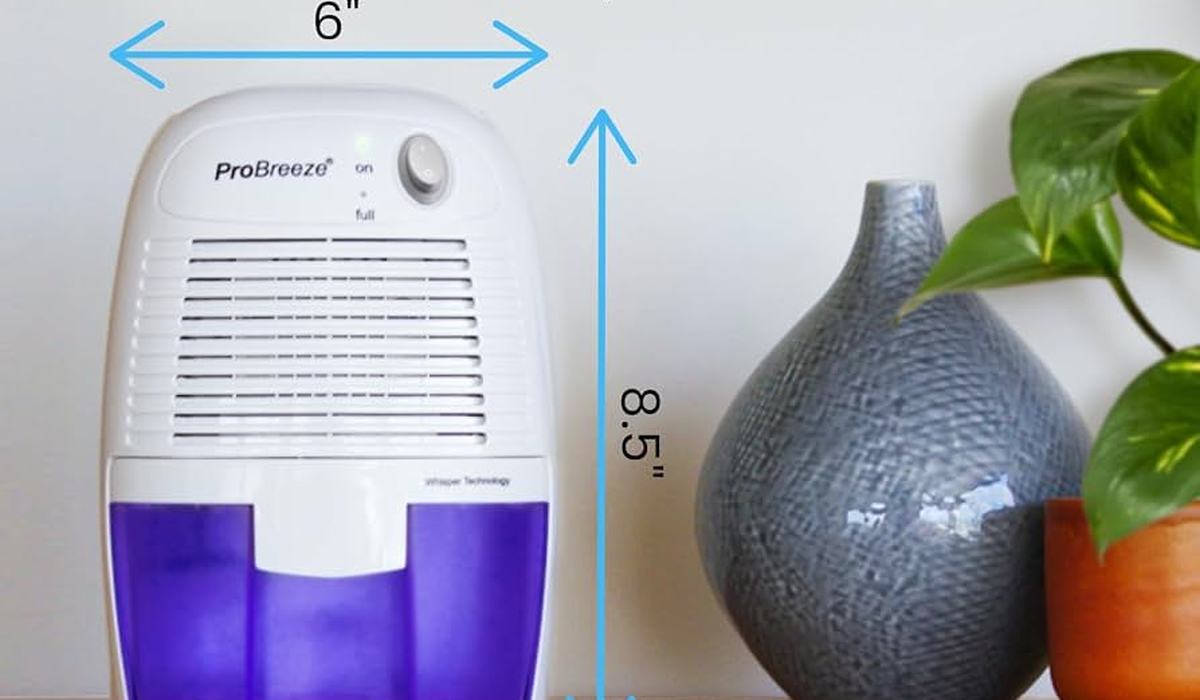
Powered Dehumidifier (Bathroom)
When a passive absorber is not enough. Removes litres per day, with auto shut-off and a lift-out tank.
Check Price on Amazon →Best uses for a passive unit
- Closets and cupboards — the classic use case, and where they work best.
- Small en-suites — as a baseline between showers.
- Wardrobes — hanging bags keep clothes from smelling musty.
- Backup — alongside a powered dehumidifier in a damp room.
The verdict
Non-electric dehumidifiers are worth buying for enclosed spaces and as a backup. They are not a substitute for a powered unit in a bathroom with a daily shower. If your bathroom has condensation, damp walls or any sign of mould, buy the powered unit — and use a passive absorber to keep the baseline down between runs.
Cost over a year
| Type | Upfront | Yearly cost | Water removed/day |
|---|---|---|---|
| Calcium chloride tub | $10–$25 | $30–$80 | 0.1–0.5 L |
| Silica gel (rechargeable) | $15–$30 | $15–$30 | 0.1–0.3 L |
| Hanging bag | $5–$12 | $60–$290 | 0.1–0.2 L |
| Powered dehumidifier | $60–$200 | $20–$60 | 1–10+ L |
How to recharge silica gel
- Check the indicator — most beads change colour when saturated.
- Spread the beads on a baking tray.
- Warm in an oven at around 120°C for 1–2 hours.
- Let them cool, then return them to the container.
- Repeat every 2–4 weeks depending on humidity.
Safety and disposal
- Keep out of reach of children and pets.
- Do not drink the collected liquid.
- Wash hands after handling.
- Dispose of the liquid down a drain.
When a passive unit is the right buy
Buy a passive unit for a closet, a cupboard, a wardrobe or a tiny en-suite. Do not buy one expecting it to dry a bathroom after a shower — for that you need a powered dehumidifier. The two are complementary, not interchangeable.
How passive dehumidifiers work
Two chemistries dominate. Calcium chloride pulls water from the air and dissolves into a brine that collects in the base — you throw it away when spent. Silica gel adsorbs water into its pores and can be dried out in an oven and reused.
Both are passive: no power, no noise, no moving parts. Both are slow. A passive unit removes a fraction of a litre a day, while a powered unit removes litres.
Where to put one
- On a shelf or the cistern top — never on the floor.
- Away from the shower so it is not splashed.
- Not behind the door — it needs air movement.
- In the closet too, where damp lingers.
- Not under a window — airflow reduces efficiency.
When passive is the right choice
- Closets, cupboards and wardrobes — small and enclosed.
- Between powered runs — keeps the baseline down.
- Rented rooms where you cannot install anything.
- Storage boxes, caravans and boats.
The verdict
Buy a passive unit for a closet, a cupboard or a tiny en-suite. Do not buy one expecting it to dry a bathroom after a shower — for that you need a powered dehumidifier. The two are complementary, not interchangeable.
The passive-unit routine
- Check the level weekly — most tubs have a window.
- Replace or refill when the crystals have dissolved.
- Pour the brine down a drain, not on plants.
- Rinse the base before refilling so it does not crust up.
- Recharge silica gel in an oven at around 120°C for 1–2 hours.
- Replace the whole unit every 6–12 months if it is a sealed disposable type.
Common mistakes
- Putting it on the floor. Bathroom floors get wet; use a shelf.
- Placing it next to the shower. It will be splashed and dissolve prematurely.
- Expecting it to dry the room after a shower. It cannot; it is too slow.
- Forgetting to refill it. A spent absorber does nothing at all.
- Using it instead of a powered unit. They are complementary, not interchangeable.
The verdict
Buy a passive unit for a closet, a cupboard or a tiny en-suite. Do not buy one expecting it to dry a bathroom after a shower — for that you need a powered dehumidifier. The two are complementary, not interchangeable.
Two questions worth answering
"How much water does a passive unit remove?" Typically 0.1–0.5 litres a day, depending on the size and the humidity. A powered unit removes several litres a day. That gap is why passive units are for closets, not showers.
"How often do I recharge silica gel?" Every 2–4 weeks in a humid bathroom, less often in a dry room. Most beads change colour when saturated, which makes it easy to tell.
The one-line summary
Buy a passive unit for a closet, a cupboard or a tiny en-suite. Do not buy one expecting it to dry a bathroom after a shower — for that you need a powered dehumidifier. The two are complementary, not interchangeable.
How to tell a passive unit is still working
A passive unit gives you no readout, so check it directly. The crystals should be visibly dissolving or clumping, and the base should be collecting liquid. If the crystals look dry and unchanged after a month in a humid bathroom, the unit is spent and needs replacing or recharging.
Pair it with a cheap hygrometer so you can see whether the room is actually drying. If the reading stays above 60%, the passive unit is not keeping up and you need a powered dehumidifier.
Frequently asked questions
Do non-electric dehumidifiers work?
What is the best non-electric dehumidifier for a bathroom?
Are silica gel dehumidifiers reusable?
Can a non-electric dehumidifier stop mould?
How much water does a passive dehumidifier remove?
Related guides
Moisture Absorbers for Bathrooms: Do They Work?
What they remove, what they cannot, and how to use one.