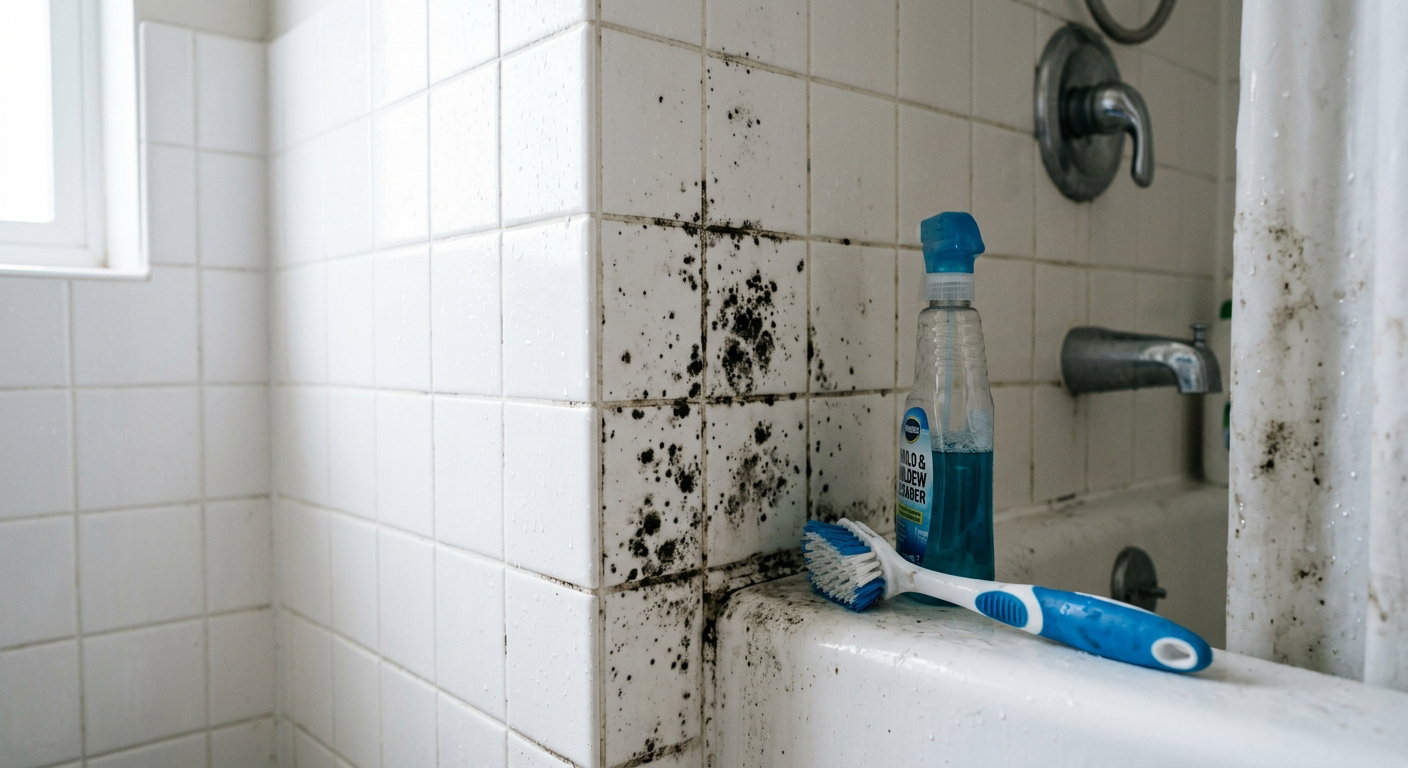
A closet is the worst place in an apartment for moisture and the hardest place to dry. It has no airflow, often sits against an outside wall, and stays closed for weeks at a time.
Standard dehumidifier advice does not apply here, because a closet is a sealed volume. The unit heats the air it works in, and in a sealed box that heat has nowhere to go.
On this page
Why closets get damp
Four things make a closet wetter than the room around it.
- Cold outside wall. The closet is often against an exterior wall, so its surface is the coldest in the apartment. Warm room air reaching that surface condenses on it.
- No airflow. A closed door stops the room's dry air from reaching the closet. Moisture arrives with the air and then cannot leave.
- Stored contents. Clothes, bedding and shoes hold moisture and release it slowly. A closet full of textiles is a slow-release humidifier.
- The door stays shut. A bathroom or kitchen does not, which is why those rooms at least get a burst of dry air occasionally.
The result is the classic pattern: clothes that smell musty, leather that grows a white bloom, and dark spots on the wall behind the hanging rail.
The EPA lists keeping indoor relative humidity between 30% and 50% as the primary way to prevent this, and a sealed closet is exactly the space where that target is hardest to hold without help.
Which dehumidifier type fits
| Type | Heat added | Best for closet? | Notes |
|---|---|---|---|
| Compressor, full size | Moderate, plus compressor heat | No | Traps heat in a sealed space, cycles constantly |
| Compressor, mini ( 10 pint) | Low | Only with the door open | Better suited to open rooms |
| Thermo-electric (Peltier) | Very low | Yes | Quiet, tiny, low capacity — ideal for a closet |
| Desiccant, mini | Noticeably warm | Only if vented | Warms the air; needs some air exchange |
| Rechargeable moisture absorber | None | Yes | No power, no heat, no noise — best for sealed closets |
| Passive silica gel packs | None | Yes, for small volume | Cheap, needs regular recharging |
The pattern is clear: the smaller and more passive the better. A closet does not need a machine that removes pints per day; it needs a device that keeps a small, sealed volume below the mould threshold.
Sizing for a closet
Closet volume is tiny compared with a room, so the sizing chart for rooms does not apply. A standard bedroom closet is around 25 sq ft — smaller than the smallest row on a room chart.
| Closet type | Approx volume | Capacity needed |
|---|---|---|
| Small linen closet | 15–25 cu ft | Passive absorber or mini thermo-electric |
| Bedroom wardrobe | 40–70 cu ft | Mini thermo-electric, 10–20 pint rated |
| Walk-in closet | 150–300 cu ft | Mini thermo-electric, door ajar |
| Storage closet, outside wall | 60–120 cu ft | Thermo-electric plus a silica absorber |
| Whole-apartment closet bank | 300+ cu ft | Treat as a room: 20–25 pint unit, door open |
Moisture absorbers as an alternative
For a sealed closet, a moisture absorber is often the better engineering choice. It needs no power, adds no heat, makes no noise, and cannot overheat in a closed box.
There are two kinds. Disposable tubs contain calcium chloride that absorbs water and then needs replacing. Rechargeable units contain silica gel that you plug in for a few hours to drive the water back out, then put back in the closet.
The trade-off is capacity and speed. An absorber handles a small sealed volume well, but it cannot keep up with a closet that gets a lot of fresh moisture — for example one next to a bathroom with no vent. If the closet smells damp again within a week, the moisture source is the real problem.
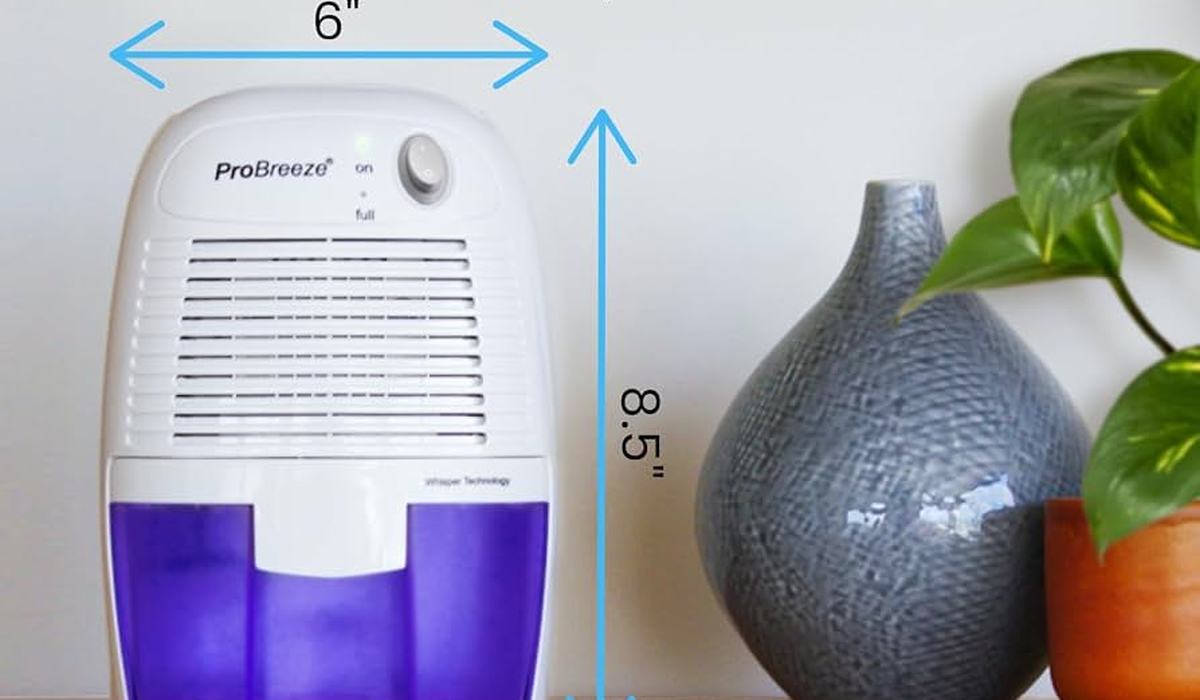
Rechargeable Moisture Absorber for Closets
No power, no heat and no noise. The safest choice for a sealed closet, because there is nothing to overheat.
Check Price on Amazon →Safety in a sealed space
This is the section that matters most, because a closet is the one place where a dehumidifier can create a genuine hazard.
- Never run a compressor unit with the door closed. It heats the air with nowhere to vent, and the compressor can run continuously trying to reach a humidity it cannot.
- Give any powered unit an air gap. If you use a mini dehumidifier, leave the door ajar, or run it only while the room is occupied.
- Keep the unit away from fabric. A mini dehumidifier touching stored clothes blocks its own airflow and warms the fabric against it.
- Check the cord. A cord pinched by a closet door is a common and avoidable fault.
- Prefer passive first. If an absorber solves it, use one. There is no electrical risk at all.
A drying routine that works
- Empty the closet completely once a season and let it air with the door open for a few hours.
- Wipe the walls, especially the outside-wall corner, with a diluted vinegar solution if you see any dark spotting.
- Put in an absorber and check it weekly for the first fortnight to learn how fast it fills.
- Leave clothes loosely hung, not packed tight. Air has to move between them.
- Never store damp items. A towel that went in slightly damp will colonise the whole closet.
- Leave the door ajar for an hour after you use a powered unit.
If the closet is damp again within a week despite an absorber and an airing, the moisture is arriving from somewhere — a bathroom on the far side of the wall, a ceiling leak, or an unvented dryer. Fixing the source matters more than any device in the closet.
The apartment angle
Renters usually cannot vent a closet, and the closet is usually against a shared or exterior wall the landlord controls.
- Document existing damage. Photograph any spotting behind the rail before you move in or before you treat it, in case it becomes a deposit debate.
- Report persistent damp. A closet that returns to damp within days is usually a building issue — a missing vapour barrier, a roof leak or a blocked duct.
- Do not paint over mould. It will return, and in a rental you may be charged for the paint. Clean, dry, report.
- Prefer solutions you can pack up. A rechargeable absorber and a mini thermo-electric unit both fit in a box when you move.
Frequently asked questions
What kind of dehumidifier is best for a closet?
Can I put a dehumidifier in a closet with the door closed?
Do moisture absorbers really work in a closet?
Why does my closet smell musty even with an absorber?
How big a dehumidifier for a walk-in closet?
Related guides