On this page
What dog smell actually is
Dog odour is not one thing. It is a mixture, and knowing which component you are fighting tells you which tool to reach for.
| Component | Where it lives | What removes it |
|---|---|---|
| Volatile organic compounds (VOCs) | In the air | Activated carbon |
| Dander (protein allergen) | Airborne, settles on surfaces | HEPA filter, washing |
| Sebum and oils | Fabrics, upholstery, walls | Enzyme cleaner, washing |
| Urine residue | Carpet backing, subfloor | Enzyme cleaner, deep extraction |
| Bacteria and yeast on damp fabric | Anywhere humid | Drying the environment out |
A dehumidifier acts on the last row, and indirectly on the third. That is a smaller job than it sounds, and a bigger one than you would expect.
Why damp air makes it worse
Three separate mechanisms turn humidity into smell.
Water is a solvent for odour. Fabric that has absorbed moisture holds odour molecules more tightly than dry fabric. This is why a dog's bed smells far stronger in a humid apartment than in a dry one, even when the bed is washed on the same schedule. Dry the fabric and more of the odour becomes removable.
Bacteria multiply faster when it is damp. The characteristic "dog smell" in a home is partly bacterial. The organisms that digest sebum and skin cells on fabrics and carpets work far better above 60% relative humidity. Dry air starves them.
High humidity extends the life of airborne odour. Odour molecules cling to water droplets in the air and stay suspended longer instead of settling. Dropping the humidity makes the room clear faster after the dog has been in it.
What the dehumidifier really does
A dehumidifier removes water from the air. Applying that to the three mechanisms above, it does this:
- Makes fabrics easier to clean by removing the moisture that holds odour molecules in place.
- Slows bacterial odour production by dragging the room out of the humidity band bacteria prefer.
- Makes other tools work better. An air purifier, a vacuum and an enzyme cleaner all perform better in dry air. That is the real value.
And it does not do this:
- Remove VOCs directly. No dehumidifier without a carbon filter captures odour molecules from the air. Most have no carbon at all.
- Remove dander. Dander is a particle, not a vapour. You need a HEPA filter.
- Remove urine residue. Dried urine salts reactivate every time humidity rises. Only an enzyme cleaner breaks them down.
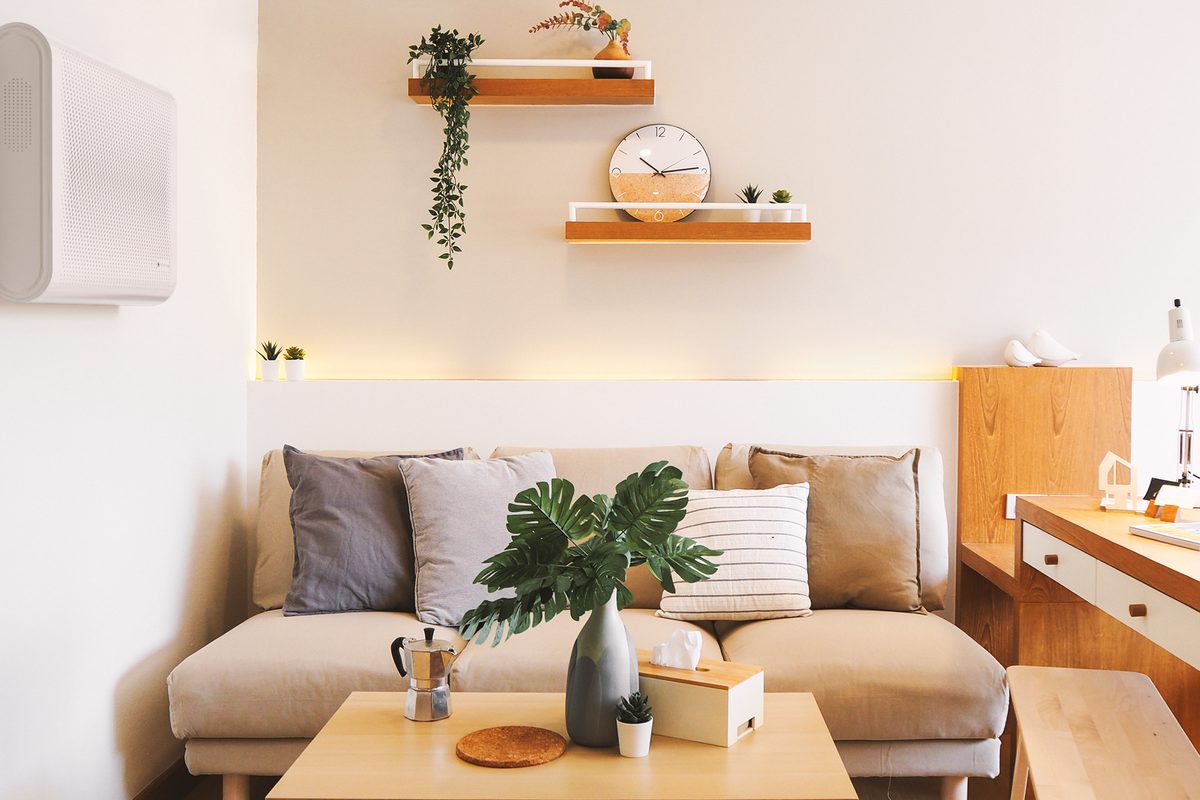
HEPA + Carbon Air Purifier
The piece that removes the smell from the air. HEPA catches dander and hair; the carbon layer adsorbs the odour molecules a dehumidifier cannot touch.
Check Price on Amazon →The full odour-removal stack
Dehumidifier, purifier, cleaning and ventilation each remove a different component. Skip one and the smell comes back, because you have only removed part of the mixture.
| Tool | Removes | Priority |
|---|---|---|
| Enzyme cleaner on urine spots | Urine residue and the salts that reactivate | 1 — nothing else works without this |
| Washing all fabrics on a schedule | Sebum, oils, dander | 2 |
| Dehumidifier | The damp that locks odour in | 3 |
| HEPA + carbon purifier | Airborne VOCs and dander | 4 |
| Ventilation (windows, fans) | Air exchange and clearing the room | 5 |
| Vacuum with a HEPA filter | Dander and hair in carpet | 5 |
Note the ordering. People buy the purifier first because it is the fun purchase. The enzyme cleaner is the one that actually solves the problem, and it costs $15.
The humidity target for a pet apartment
Pet apartments run humid for structural reasons, not just because of the dog.
- A water bowl evaporates steadily. A large open bowl in a warm apartment adds measurable humidity 24 hours a day.
- Wet walks come inside. Rain on a coat and paws goes straight into the air of a small flat.
- Bath time and towel drying. Both dump water into the room.
- A dog's respiration. A large dog releases a surprising amount of water vapour just by breathing.
Set the dehumidifier's target at 45% and let it cycle. Rather than running it on a timer, use a humidistat — most units over 20 pints have one built in. The machine then handles a rainy walk day automatically and stays off when the flat is already dry.
Mistakes that keep the smell
- Buying a HEPA-only purifier. HEPA does not remove odour. Without carbon you have spent $200 on dander removal.
- Masking with air freshener or candles. Adds VOCs without removing any. Some people find this triggers more allergy symptoms, not fewer.
- Washing bedding but not the dog bed itself. The bed is usually the strongest single odour source in the flat and the one most often forgotten.
- Over-drying below 40%. Irritating for both the dog's skin and yours, and it makes static and dust worse.
- Cleaning urine spots with a normal detergent. Detergent removes the visible part and leaves the salts. The smell returns with the next humid day.
- Running the dehumidifier with windows open. You are drying outdoor air continuously. Close up first.
A weekly routine that works
- Daily: keep the dehumidifier set to 45% with the humidistat controlling it. Empty the tank.
- Weekly: wash the dog bed, any throws and the dog's towels at the hottest setting the fabric allows.
- Weekly: vacuum with a HEPA-filtered vacuum, including the sofa and under furniture where dander collects.
- Monthly: walk the room on hands and knees looking for urine spotting that the light does not show. Treat any you find with an enzyme cleaner and let it dwell overnight.
- Monthly: rinse the dehumidifier filter and the purifier's pre-filter. Both lose capacity quietly.
- Seasonally: replace the carbon layer in the purifier. Spent carbon removes nothing and looks exactly like fresh carbon.
Frequently asked questions
Does a dehumidifier get rid of dog smell?
Will a dehumidifier help with pet odour in a small apartment?
What humidity should I keep for a dog?
Does an air purifier remove dog smell?
Why does my house smell like dog even after cleaning?
Should I run a dehumidifier with the windows open?
Related guides
Will a Dehumidifier Help With Pet Odors?
What it does to odour, and the humidity band that matters.
Will an Air Purifier Help With Dog Smell? Honest Answer
HEPA vs carbon, and which one you actually need.
Do Dehumidifiers Remove Pet Odor? What Actually Works
The full method for pet odour in an apartment.