Dehumidifier capacity is quoted in pints, and the number is tested under one specific condition: 80 °F and 60% relative humidity, over 24 hours. That is a warm, muggy room. Most apartments are not that.
So the pint rating is a ceiling, not a promise. The chart below translates it into a room size you can actually measure with a tape, and explains what changes the answer.
On this page
What the pint rating really means
A “30-pint” dehumidifier removes about 30 pints of water from the air in 24 hours when the air is 80 °F and 60% relative humidity. Under those conditions the unit is working easily and the number is at its best.
Change the conditions and the number falls. At 70 °F and 50% humidity the same unit may remove half that. At 60 °F, less again. This is why two people with the same unit report completely different results: one lives in a humid climate, the other in a cold basement.
The practical translation: use the pint rating to size the room, and the tank size to decide whether you need a continuous drain hose.
Room size chart
This chart assumes an average damp room at typical apartment temperature, around 70 °F and 55% humidity.
| Room size | Room type | Recommended pints | Typical tank |
|---|---|---|---|
| Up to 150 sq ft | Bathroom, closet, small bedroom | 20–25 pints | 3–6 pints |
| 150–300 sq ft | Bedroom, laundry room, small kitchen | 25–30 pints | 6–8 pints |
| 300–500 sq ft | Studio apartment, large bedroom | 30–35 pints | 6–10 pints |
| 500–800 sq ft | One-bedroom apartment | 35–45 pints | 10–14 pints |
| 800–1,200 sq ft | Two-bedroom, small basement | 45–50 pints | 14–20 pints |
| Over 1,200 sq ft | Whole house, large basement | 50+ pints or two units | 20+ pints |
Two caveats. First, this is floor area, not cubic volume — a room with a high ceiling holds more air. Second, a wet room behaves like a bigger room. A 60 sq ft bathroom right after a shower can load the air like a 200 sq ft bedroom.
Adjusting for how damp the room is
Room size is only half the calculation. The other half is how much moisture the room is producing. Add capacity for each of these:
- Daily showers — a vent-free bathroom needs capacity for the shower itself, not just the room.
- Indoor laundry drying — a single load of wet washing releases several pints of water into the air.
- Cooking without an extractor — boiling pasta for 20 minutes is a pint of water.
- A visible damp patch or musty smell — that is a sign of ongoing moisture, not just a wet day.
- Pets and houseplants — both raise baseline humidity continuously.
| Situation | Capacity to add |
|---|---|
| Vent-free bathroom with daily showers | +10 pints |
| Drying laundry indoors | +10 pints |
| Cooking without an extractor hood | +5 pints |
| Visible mould or musty smell | +10 pints |
| Aquarium or many houseplants | +5 pints |
| No dampness, just prevention | +0 pints |
Add the adjustments to the chart figure. A 200 sq ft vent-free bathroom with daily showers and indoor laundry, for example, wants a 30-pint unit rather than a 25-pint one.
Why cold rooms need more capacity
Cold air holds less moisture, so a cold room is often drier in absolute terms even when the relative humidity reads high. But the dehumidifier itself gets less efficient, which is the catch.
A compressor unit rated at 30 pints at 80 °F may collect only 10 to 12 pints at 60 °F. If your basement reads 60% humidity at 58 °F, you need a unit rated well above the room-size chart, or a desiccant unit that does not lose efficiency in the cold.
The AHAM and DOE test standards
Dehumidifier capacity in the United States is measured under a standard maintained by AHAM, the Association of Home Appliance Manufacturers, and referenced in the Department of Energy test procedure. The reference condition is 80 °F and 60% relative humidity.
That matters for two reasons. First, it tells you the number on the box is comparable between brands, because every manufacturer tests the same way. Second, it tells you the number is only valid at that condition, which is why two units with the same rating perform differently in your apartment.
In 2019 the DOE changed the test procedure and the pint ratings on most units dropped. A unit sold as “70 pint” before the change became a “50 pint” unit with identical performance. If you are comparing an old unit to a new one, compare the wattage and the tank size, not just the pint number.
Picking a unit for each room
| Room | Size | Best pint rating | Notes |
|---|---|---|---|
| Bathroom, no vent | 40–80 sq ft | 20–25 | Add 10 pints for daily showers |
| Nursery | 100–150 sq ft | 20–25 | Prioritise quiet operation |
| Closet | 20–50 sq ft | 10–20 | Small units, check for auto shut-off |
| Laundry room | 60–120 sq ft | 25–30 | Add 10 pints for indoor drying |
| Basement apartment | 400–700 sq ft | 45–50 | Desiccant if below 65 F |
| Studio apartment | 300–500 sq ft | 30–35 | One unit can cover the main room |
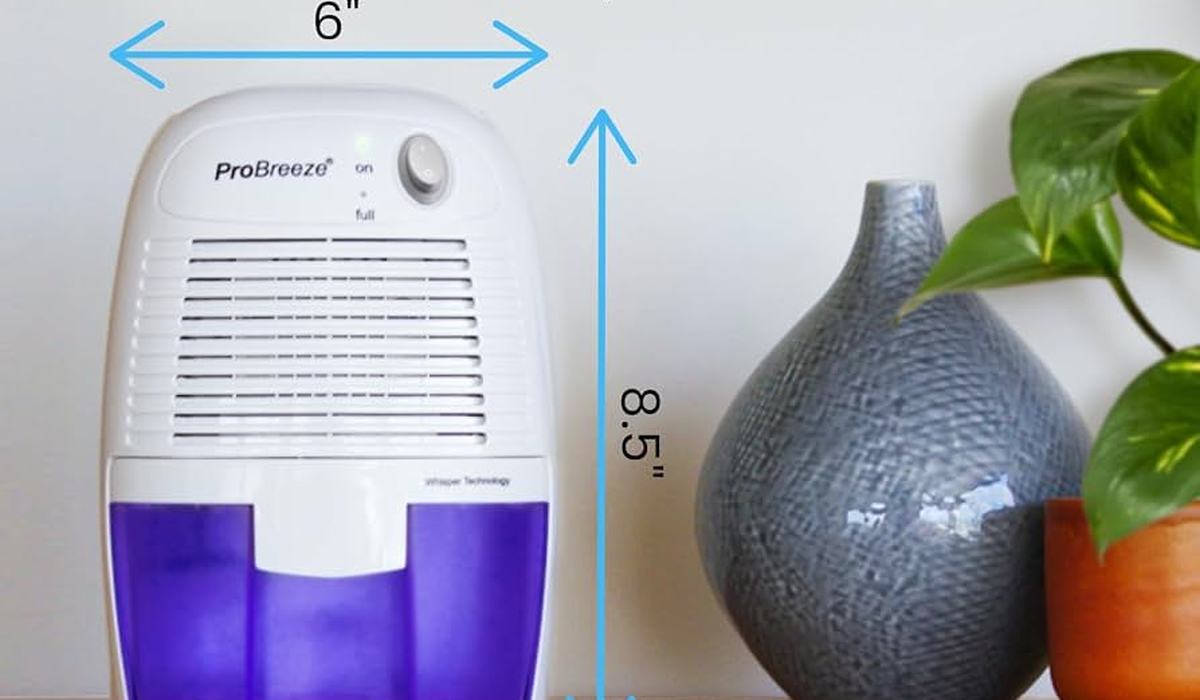
Mid-Size Dehumidifier, 30–35 Pint
The sweet spot for a studio or a damp bedroom. Covers up to about 500 sq ft and has a continuous drain outlet for hands-off operation.
Check Price on Amazon →The apartment angle
Oversizing is the most common renter mistake, and it costs twice. A unit that is too large for the room pulls the humidity down fast, then cycles on and off, which wastes power and wears the compressor. It is also heavier and noisier than you needed.
The renter-specific considerations are footprint and drainage. A 50-pint unit is the size of a small suitcase and needs a permanent corner. A 20-pint unit fits on a shelf. If you cannot dedicate a floor corner or empty a tank twice a day, choose a smaller unit with a continuous drain hose.
- Measure the room with a tape before you buy, not the doorway.
- Check the unit's footprint against your floor space — tanks and hoses need clearance.
- Prefer a unit with a drain outlet even if you start with the tank.
- If the room is cold, add 50% to the rating or switch to a desiccant unit.
Frequently asked questions
How do I know what size dehumidifier I need?
Is a bigger dehumidifier better?
What does 30 pint mean on a dehumidifier?
How many pints do I need for a 500 square foot apartment?
Does tank size matter as much as pint rating?
Related guides
What Humidity Should a Dehumidifier Be Set To?
Set the target number once and let the humidistat work.