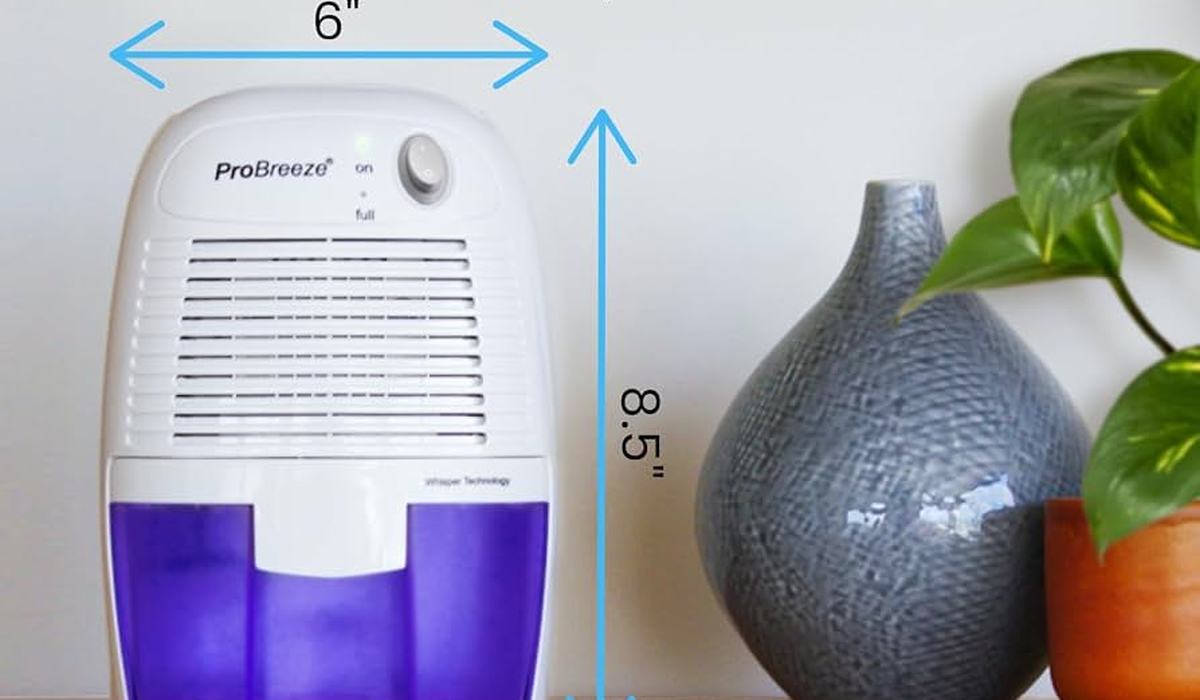
Emptying a 6-pint tank twice a day is the reason most dehumidifiers end up switched off in a cupboard. A continuous drain removes that chore entirely.
There are two ways to do it, and picking the wrong one is why some setups leak. This guide covers the physics, the parts, and the renter-safe version of each.
On this page
Why a continuous drain is worth it
Dehumidifier tanks are small. A 30-pint unit often has a 6-pint tank, so at full output it needs emptying four times a day. Miss one and the unit shuts off with a full-tank light, and the room climbs straight back to where it started.
The EPA recommends keeping indoor relative humidity between 30% and 50%, and a unit that shuts off on a full tank cannot hold that target through a humid week. ASHRAE comfort guidance points the same way: sustained humidity above 60% is where mould and dust-mite problems begin.
The practical effect is that the unit only works when you are home and paying attention. A continuous drain removes that dependency, which means the unit can run on a schedule or on the humidistat and you never think about it again.
Gravity drain, step by step
- Find the outlet. Most units have a threaded drain port, often behind a small cap, plus a supplied short hose.
- Check the height difference. The outlet must sit at least a few inches above the end of the hose — more for a long run.
- Route the hose downhill the whole way. No loops, no uphill sections, no kinks. Even a small dip traps water and stops the flow.
- Terminate below the outlet. A floor drain, a shower tray, a laundry sink, or a bucket.
- Remove the tank if the manual says so. On many units the tank must be out, or a plug removed, before the port flows.
- Test with a cup of water before you trust it. Pour water into the collection area and watch it leave.
Gravity is silent, uses no power, and has nothing to fail. It is the right choice whenever the geometry allows it.
Pump drain, step by step
A pump-equipped dehumidifier has an internal condensate pump that lifts water uphill, typically up to 15 or 20 ft of vertical rise. That lets you discharge into a sink, a bathtub, or out of a window.
- Confirm the unit has a pump. Not all do. A pump unit will list a maximum lift height in the manual.
- Measure your rise. The vertical height from the outlet to the discharge point must be inside the pump's rating, with headroom.
- Use the pump's own hose or the specified diameter. A larger hose on a pump can reduce lift.
- Secure the discharge end. Clip it into the sink or tub so it cannot swing out and soak the floor.
- Listen for the pump cycle. It should run in short bursts. A pump that runs continuously is struggling.
| Feature | Gravity drain | Pump drain |
|---|---|---|
| Rise required | Must fall | Up to 15–20 ft |
| Noise | Silent | Audible pump bursts |
| Power use | None | Adds a few watts, intermittently |
| Failure modes | Kinks, clogs, overflow | Pump failure, hose pop-off |
| Cost | Hose only, often included | Higher unit price |
| Best for | Drain nearby and lower | Sink, tub or window discharge |
Parts and hose sizing
Two hose details cause most problems: diameter and length.
- Diameter. Most units use a 3/8 inch or 1/2 inch inner diameter hose. Use the size the manual specifies. Too narrow and it clogs; too wide on a gravity drain is fine but on a pump it reduces lift.
- Length. Longer is not better. Every extra foot adds friction and, on a gravity drain, more chance of a dip. Keep gravity runs short and continuously downhill.
- Material. Clear vinyl lets you see a clog forming and is easy to unblock. It also kinks, so support it.
- Fittings. A hose clamp at both ends stops the pop-off that floods floors.
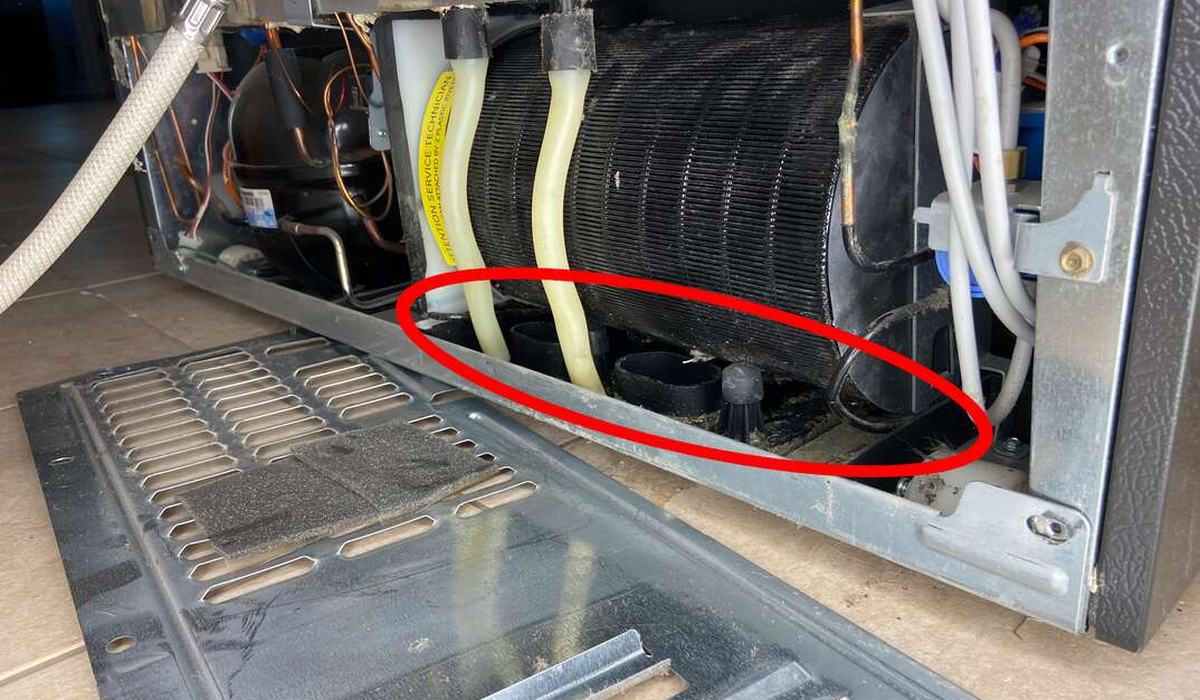
Dehumidifier Drain Hose Kit With Clamps
A clear hose shows a clog before it floods. Buy one with clamps and get the diameter the manual specifies.
Check Price on Amazon →Flood-safety rules
A continuous drain moves the water somewhere you are not watching, so the failure mode changes from “full tank” to “water on the floor”. Three rules prevent it.
- Never drain to a place you cannot see or control. A drain hose that ends under a bed or behind a washing machine is a flood waiting for a clog.
- Add a leak alarm. A puck-shaped water alarm costs a few dollars and sits where the hose ends. It is the cheapest insurance in this whole project.
- Test after every move. Any time you shift the unit or re-route the hose, pour water through and watch it leave. A hose that worked last month can kink this month.
The apartment angle
Renters cannot drill a new drain or tap into plumbing, so the setup has to work with what exists.
- Bathroom floor drain if the apartment has one — the ideal gravity target, and common in older and basement units.
- Shower tray over the lip, or into the drain grid, as a fallback in a vent-free bathroom.
- Laundry sink or washing machine drain pan in a kitchen or utility area.
- Window discharge on a pump unit only if the window closes over the hose without breaking the seal or the lease.
- Bucket as a last resort — but size it for a full day of output and check it daily.
Landlord-wise, nothing here is permanent. A gravity hose from a dehumidifier to a floor drain needs no permission and leaves no trace. A hose hung out of a window is the one setup that can draw attention, so check the lease before you run one.
Troubleshooting
| Symptom | Likely cause | Fix |
|---|---|---|
| Tank still fills | Port still capped or tank not removed | Remove the cap or tank per the manual |
| No flow, unit runs | Hose kinked or run uphill | Straighten, re-route downhill |
| Slow or intermittent flow | Dip in the hose trapping a water plug | Remove the dip, shorten the run |
| Pump runs constantly | Lift height beyond rating, or blocked hose | Reduce rise or clear the hose |
| Water on the floor | Hose popped off the outlet | Add a hose clamp at both ends |
| Musty smell from the hose | Standing water in the line | Flush with vinegar, re-route to fully drain |
Frequently asked questions
How do I set up a continuous drain on my dehumidifier?
Can I drain my dehumidifier into a sink?
What size hose does a dehumidifier drain use?
Do I need a pump to drain a dehumidifier?
Why is my dehumidifier still filling the tank with a hose connected?
Related guides