On this page
The steam method
Microwave food splatters, and those splatters bake onto the walls and ceiling every time you run the unit. Scrubbing dried food is hard; loosening it with steam is easy.
- Fill a microwave-safe bowl with 1 cup of water and a splash of white vinegar or a few lemon slices.
- Run the microwave on high for 3–5 minutes, until the window is fogged and the water is steaming.
- Leave the door closed for 5 minutes. This is the step people skip — the trapped steam is what softens the food.
- Remove the bowl and wipe the walls, ceiling and floor with a damp microfiber cloth. Most food wipes off with no scrubbing.
- Wash the turntable and the turntable ring in warm soapy water.
Burnt-on food
For food that has carbonised into a hard spot, the steam method softens it but does not remove it. Use a paste instead:
- Mix baking soda and water into a thick paste.
- Spread it over the burnt spot and leave it for 15 minutes.
- Wipe with a damp cloth, using a non-scratch pad for stubborn spots.
- Never use an abrasive cleaner or steel wool — it scratches the interior coating, and scratched microwaves stain permanently.
Turntable, filter and vent
The interior is only half the job. Two parts get forgotten and both matter.
| Part | How to clean | How often |
|---|---|---|
| Turntable + ring | Warm soapy water | Weekly |
| Interior walls | Steam method | Weekly |
| Grease filter (over-range) | Dishwasher or hot soapy water | Monthly |
| Charcoal filter (recirculating) | Replace — cannot be washed | Every 6–12 months |
| Exterior + door seal | Damp cloth | Weekly |
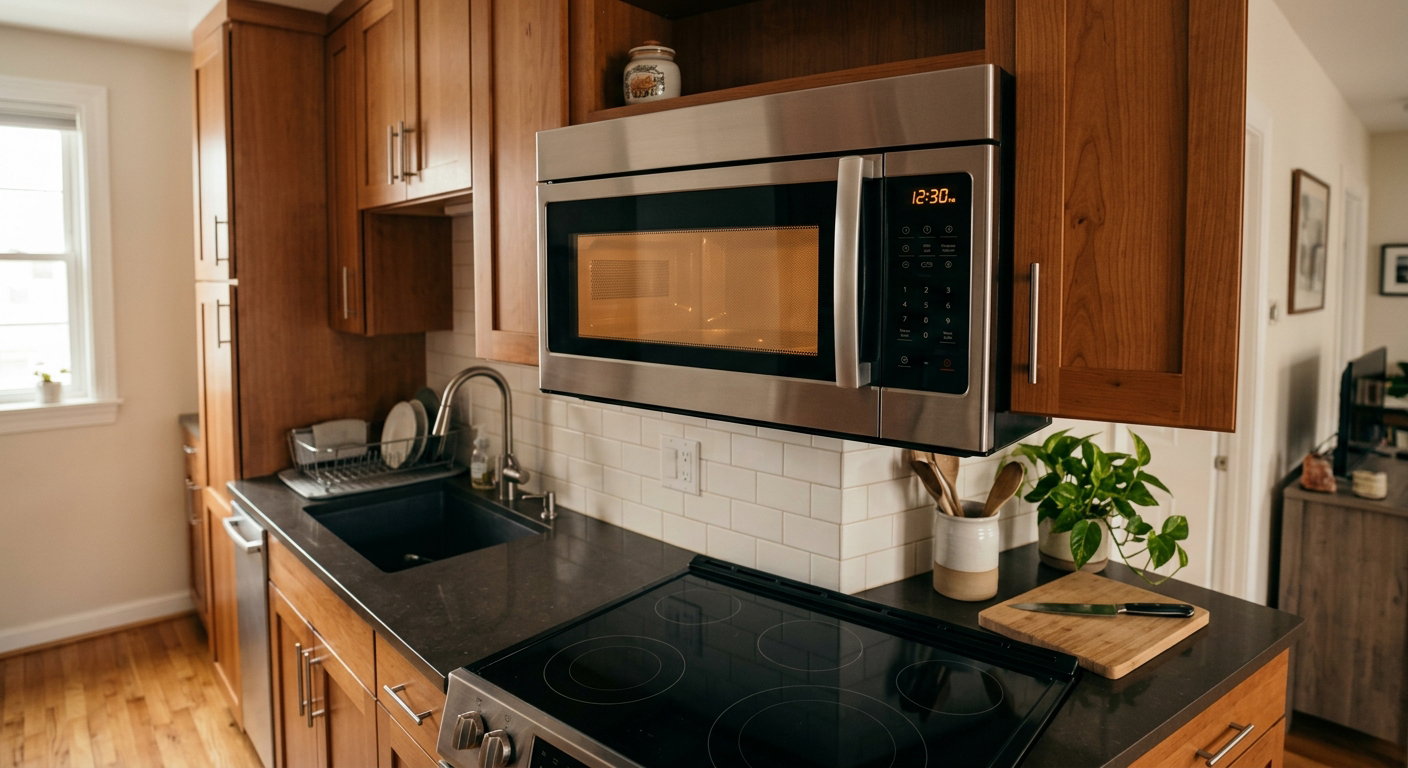
If your microwave is an over-the-range model, it has a grease filter underneath and, if it recirculates air instead of venting outside, a charcoal filter behind the grille. In an apartment you almost always have the recirculating type, because there is no outdoor vent.
Microwave Splatter Cover
The cheapest way to stop cleaning the microwave at all: cover the plate and the splatter never lands on the walls.
Check Price on Amazon →Killing the smell
A microwave that smells even after cleaning usually has food residue in the vent or the door seal, not on the walls. Work through these in order:
- Wipe the door seal and the frame — grease collects in the groove and holds odour.
- Run the steam method again with vinegar, which neutralises rather than masks.
- Leave a bowl of baking soda or activated charcoal inside overnight with the door shut.
- If the smell persists, the charcoal filter is saturated — replace it.
Four microwave cleaning mistakes
- Scrubbing dried food. It scratches the interior coating, and a scratched microwave stains permanently. Steam it first, then wipe.
- Using abrasive cleaners. Steel wool and scouring powder damage the coating. Use a soft cloth and a baking-soda paste.
- Forgetting the door seal. Grease collects in the groove and holds odour. Wipe it every time you clean the interior.
- Running it empty. A cleaning cycle with no water in the bowl can damage the magnetron. Always have the bowl in place.
Countertop vs over-the-range
The cleaning method is the same, but the parts differ. Over-the-range microwaves have two extra components that countertop models do not.
| Feature | Countertop | Over-the-range |
|---|---|---|
| Interior cleaning | Steam method | Steam method |
| Turntable | Wash weekly | Wash weekly |
| Grease filter | None | Clean monthly |
| Charcoal filter | None | Replace every 6–12 months |
| Exterior vent grille | None | Wipe monthly |
In an apartment, an over-the-range microwave almost always recirculates air rather than venting outside, which means it has a charcoal filter. That filter cannot be washed — it has to be replaced, and a saturated one is the usual cause of a microwave that smells no matter how often you clean it.
The steam method, step by step
Steam loosens dried food so it wipes off instead of needing to be scraped. This is the method to use every time.
- Fill a microwave-safe bowl with one cup of water and a splash of lemon juice or vinegar.
- Microwave on high for three to five minutes, until the window fogs.
- Leave the door closed for five more minutes — the steam does the work.
- Remove the bowl carefully; it will be hot.
- Wipe the interior with a damp microfibre cloth, top down.
- Wash the turntable and the turntable ring in the sink.
The five-minute wait after the microwave stops is the step people skip, and it is the step that matters. The steam needs time to soften the food; opening the door immediately releases it.
Removing odour, not just food
A microwave can be spotless and still smell. The odour lives in three places:
| Source | Fix |
|---|---|
| Interior walls | Steam with lemon or vinegar |
| Turntable and ring | Wash in hot soapy water |
| Door seal groove | Wipe with a damp cloth and a cotton bud |
| Charcoal filter (OTR only) | Replace — cannot be washed |
| Vent grille (OTR only) | Remove and wash monthly |
If the microwave still smells after all of that, and it is an over-the-range model, the charcoal filter is saturated. It is a $10–$20 part and it is the usual answer to a microwave that smells no matter how often you clean it.
Safety and the things not to do
Never run a microwave empty — with no load, the magnetron can be damaged. Never put metal, foil or a dish with a metallic rim inside. And never use a steam method with a bowl that is not microwave-safe; a cracked bowl can shatter and leave glass in the cavity.
The weekly 5-minute routine
A microwave stays clean if you do a five-minute routine once a week. It is far less work than the quarterly deep clean.
- Wipe the interior with a damp cloth while it is still warm from use.
- Wash the turntable and ring in the sink.
- Wipe the door seal groove with a cotton bud.
- Wipe the exterior and the control panel.
- Leave the door open for ten minutes to dry.
The door seal groove is the part everyone forgets, and it is where grease collects and holds odour. A cotton bud run along the groove once a week keeps the microwave smelling clean without any deep cleaning at all.
Removing stubborn stains
Burnt-on food needs a paste, not more scrubbing. Mix baking soda with a little water, spread it on the stain, leave it for ten minutes, then wipe. The paste lifts the residue without scratching the interior coating. Never use steel wool or an abrasive pad — a scratched microwave stains permanently and cannot be repaired.
Frequently asked questions
How do I clean a microwave without scrubbing?
How often should I clean my microwave?
Can I use vinegar to clean a microwave?
Why does my microwave still smell after cleaning?
Is it safe to put the turntable in the dishwasher?
Related guides