On this page
Mildew vs mould — why it matters here
Careless use treats them as one thing. For a smell problem they are two different jobs. Mildew is the early, surface form: flat, powdery, often white or grey, growing on fabric, grout, window frames and the back of furniture. Mould is the established form: fuzzy or slimy, often dark green or black, growing into porous material and sometimes into the wall itself.
Mildew smell is the odour of the fungal metabolism, and it is usually easiest to remove because the growth has not penetrated deeply. If the material is fabric, you can often simply wash it. This article deals with that case; the deeper mould problem is covered in its own guide.
The EPA's guidance on mould and moisture in the home is straightforward about the conditions involved: keep indoor humidity below 60% and ideally between 30% and 50%, fix any water leak rather than treating the symptom, and dry any damp material within 24 to 48 hours. Mildew smell is what happens when those three rules are broken — which is why drying the room is the first step below, not the last.
Where the smell actually lives
People smell mildew in a room and assume the walls. In apartments, the source is usually one of these, in roughly this order of likelihood.
| Source | Why it happens | How to confirm |
|---|---|---|
| Towels and bath mats | Never fully dry between uses | Smell them after a shower |
| Curtains and blinds | Cool surface, condensation, no airflow | Smell the hem and folds |
| Wardrobe contents | Sealed box, no air exchange, cool walls | Open it and wait five seconds |
| Mattress and bedding | Body moisture, poor under-bed airflow | Smell the underside |
| Sofa and cushions | Damp from windows or spills | Press and smell the seams |
| Carpet and underlay | Spills, bathroom overspill, humidity | Smell at floor level in a corner |
| Washing machine | Detergent residue and a sealed drum | Smell inside the drum, not the door |
| Walls, grout, window frames | Condensation on cold surfaces | Look for the growth itself |
Step 1: dry the space
Nothing else works while the room is damp. If humidity is above 60%, treating the fabric and putting it back into the same room just restarts the growth.
- Measure. A hygrometer is the difference between working blind and working to a target. Put it where the smell is strongest.
- Ventilate hard for two days. Cross-flow with windows on opposite sides, 10–15 minutes twice a day.
- Add a dehumidifier. Run it to hold the room at 45–50%. In a closet or wardrobe, a refillable moisture absorber or a small rechargeable unit is enough.
- Separate the items from the damp space. Move anything you are going to treat into a dry room while you work. Do not treat fabric inside the room that made it damp.
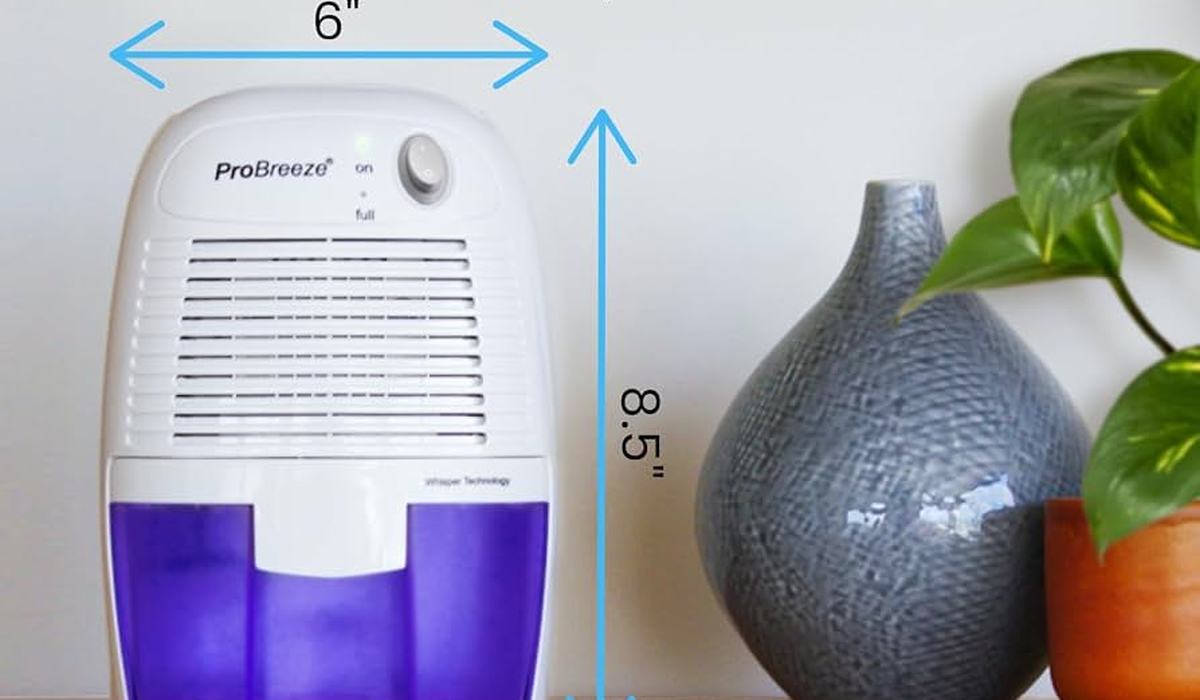
Dehumidifier for Mildew Control
Size it to the room where the smell is strongest. Keeping that room at 45–50% is the step that stops the mildew re-growing after you have cleaned everything.
Check Price on Amazon →Step 2: kill the growth
Drying stops mildew growing. It does not kill what is already there, and dead mildew still smells until it is physically removed. Kill it, then remove it.
| Method | Works on | How | Cautions |
|---|---|---|---|
| Washing at 60 °C+ | All washable fabric | Hottest setting the fabric allows | Check the care label first |
| White vinegar (5%) | Hard surfaces, grout, some fabric | Spray, leave 60 min, wipe | Do not mix with bleach |
| Oxygen bleach | Fabric, grout, tile | Soak per the label | Test on a hidden area |
| Isopropyl alcohol 70% | Hard surfaces, non-porous | Wipe and let dry | Flammable; ventilate |
| Commercial mildewcide | Walls, ceilings, timber | Follow the label exactly | Some are toxic; ventilate and wear a mask |
| Sunlight | Anything you can carry outside | Air and sun for 3–4 hours | Some dyes fade |
Do not use bleach on porous materials. It kills the surface growth, leaves the smell-producing residue behind, and does not penetrate far enough to reach the roots. On fabric it also damages fibres, which gives mildew a rougher surface to grip next time.
Step 3: treating each fabric type
Different fabrics need different handling. Getting this wrong is how people ruin a curtain and still have the smell.
| Item | Method | Watch out for |
|---|---|---|
| Towels, sheets, clothing | Hot wash + oxygen bleach | Do not overload the drum |
| Curtains | Wash if the label allows, otherwise steam + air outside | Lining and header tape shrink |
| Mattress | Vacuum, spray white vinegar diluted 1:1, dry fully in air | Never soak — internal damp is the worst outcome |
| Sofa cushions | Remove covers and wash; steam the foam in place | Foam holds water — dry for 48 hours |
| Carpet | Vacuum, then a diluted vinegar mist, then extract or dry | Over-wetting makes it worse |
| Leather / suede | Specialist cleaner only | Water causes staining |
| Books and paper | Air outside, sun if possible | Once foxed, staining is permanent |
Step 4: stopping the return
Mildew comes back when the conditions come back. Four habits keep the room out of that range permanently.
- Hold 45–50% humidity. This is the single number that matters. Below 60%, mildew does not establish.
- Never put damp fabric in a wardrobe. Hang it to dry fully elsewhere first. A cupboard with a closed door and no airflow is the single best mildew incubator in a flat.
- Leave gaps behind furniture. Furniture pressed against a cold exterior wall creates a condensation pocket. Leave 2–3 inches.
- Fix the condensation before it becomes a growth. Wipe windows and sills in winter; towel-dry shower walls after use.
When it is not mildew at all
A smell that does not respond to any of the above is usually one of four other things, and each looks like mildew from a distance:
- Sewer or drain gas. Tends to be intermittent and worse after running water. Check sink and shower traps for a dried-out seal.
- A dead animal or a food spill under a fixture. Sharper and more directional than mildew.
- Wet packaging or a leak under the floor. Check under the sink and around the toilet base.
- Chemical off-gassing from new furniture or a recently painted surface — a dry, sharp smell rather than an earthy one.
If you have dried the room, treated every fabric and still smell it, stop treating and start looking for a source. That is the point at which people normally call someone in, and it is usually the right call.
Frequently asked questions
How do I get rid of mildew smell in my apartment?
Does vinegar kill mildew smell?
Why does my apartment smell like mildew even after cleaning?
Does a dehumidifier remove mildew smell?
Is mildew smell dangerous?
How do I stop mildew smell coming back?
Related guides
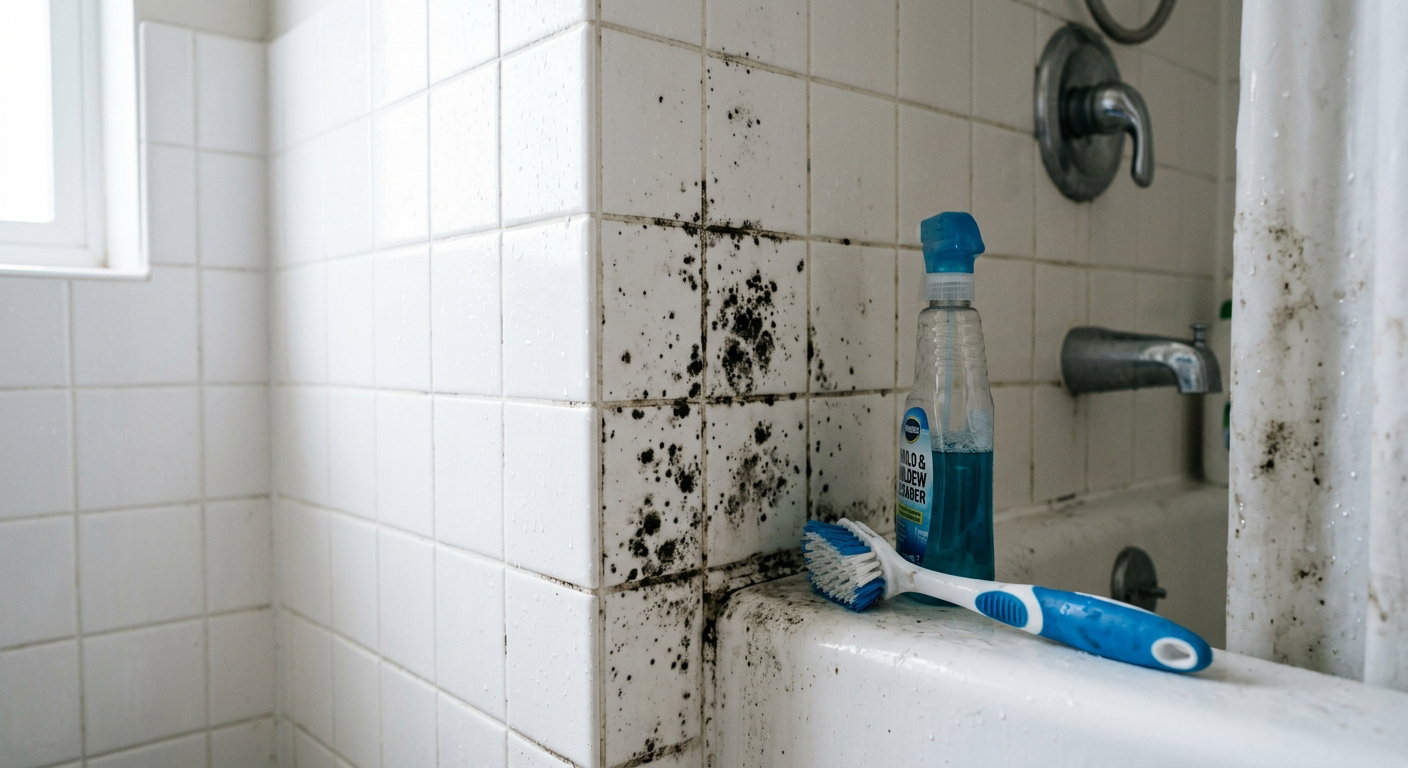
How to Get Rid of Musty Smell in an Apartment for Good
The broader musty-smell decision tree for an apartment.
How to Get Rid of Moldy Smell in an Apartment
The deeper mould problem, and when it needs a landlord.

How to Get the Smell Out of a Washing Machine
The sealed-drum problem that re-seeds mildew onto clean laundry.