On this page
What the smell tells you
Mould smell is a specific, earthy, damp-cardboard odour. It is produced by microbial volatile organic compounds — gases the mould releases as it metabolises. Two things follow from that.
First, you can smell it before you can see it. The compounds diffuse through a room long before the growth is large enough to notice on a wall. A persistent mouldy smell with no visible growth almost always means the growth is hidden.
Second, dead mould still smells. This is the mistake almost everyone makes. They treat a patch, the growth dies, and the smell stays because the dead material and spores remain in the surface. Killing the growth is only half the job; removing the residue is the other half.
Finding the hidden source
In an apartment the growth is usually where air does not move and a cold surface meets warm damp air. Work through this list in order — it is arranged by how often each one turns out to be the answer.
| Location | Why mould grows there | How to check |
|---|---|---|
| Behind and on top of wardrobes | Cold exterior wall, zero airflow | Pull it out 30 cm and look at the wall |
| Under the bed and mattress base | Body moisture, no airflow beneath | Lift the mattress; look at the slats |
| Under the kitchen and bathroom sink | Slow drip feeding constant damp | Feel the cabinet floor and the pipe joints |
| Carpet and underlay | Spills or overspill trapped beneath | Lift a corner and smell the underside |
| Window reveals and sills | Condensation on the coldest surface | Look at the corners, not the middle |
| Inside a wall cavity / behind skirting | Leak, rising damp or a bridged damp course | Look for paint blistering, soft plaster, tide marks |
| Ceiling below a bathroom above | Escaping water from the flat above | Look for staining and a ring outline |
| Air conditioning or extract vents | Dust plus condensation in the duct | Smell at the vent while it runs |
Stopping the moisture
There are only two possible sources and they need different responses.
Source 1: condensation from the room
The flat is producing more moisture than it can get rid of, and it condenses on the coldest surfaces. This is the common case in apartments. Fix it with:
- Air exchange. Cross-flow ventilation for 10–15 minutes, twice a day, even in cold weather. Short bursts beat windows left ajar all day.
- Humidity control. A dehumidifier holding the flat at 45–50%. This is the step most renters skip and the one that actually resolves the smell.
- Behaviour fixes. Dry laundry with the door closed and a window open, always use the extractor over the hob, and never dry towels on radiators.
Source 2: water ingress
Water is getting in from outside or from another flat. This is not solvable with a dehumidifier, and treating the visible growth will not help because it will simply return. The signs are damp walls, tide marks on plaster, blistering paint, and a smell that returns within days.
This is a repair, and in almost every jurisdiction it is the landlord's responsibility. Do not spend money fixing a building defect yourself.
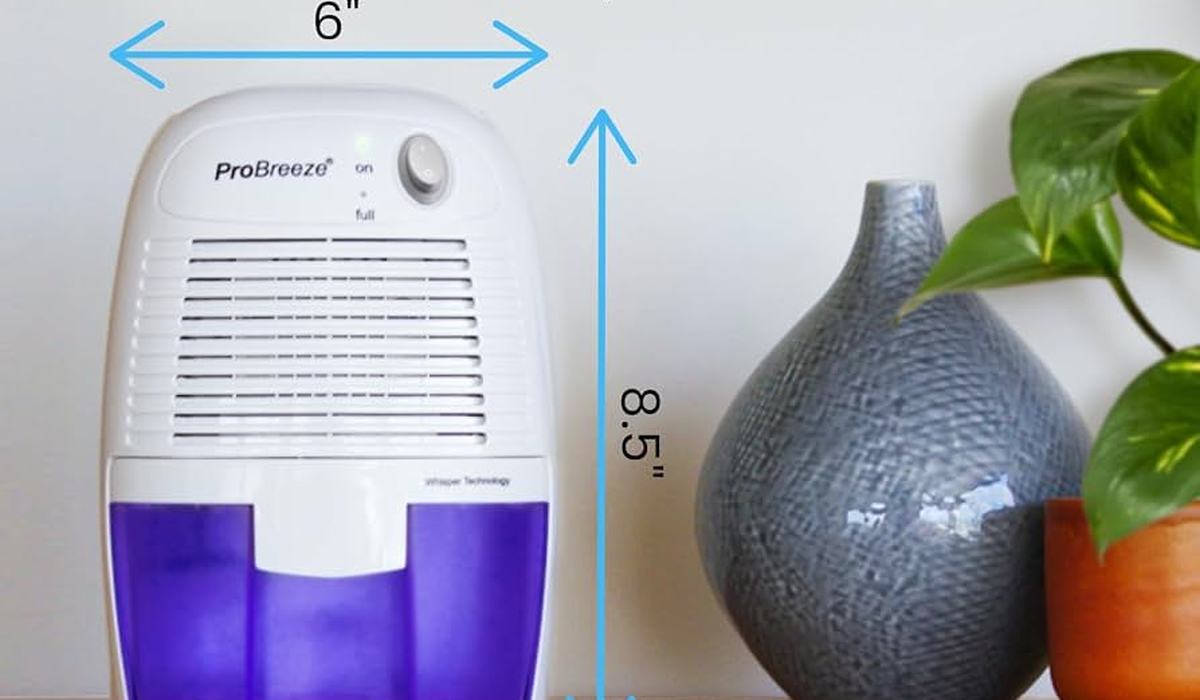
Dehumidifier for Condensation Control
Only useful if the moisture is condensation from inside the flat. If the wall itself is damp, the dehumidifier will run all day and the smell will stay — check with the paper-towel test first.
Check Price on Amazon →Treating the growth safely
If the affected area is small and on a hard surface, you can treat it yourself. The safety rules are not optional: mould spores are an allergen and some species produce irritants.
- Protect yourself. N95 or better mask, gloves, eye protection. Do not use a dusting brush on dry mould — that aerosolises spores. Wipe, never brush.
- Seal the area. Close the door and tape a plastic sheet over the doorway if you are treating a lot of growth, so spores do not spread to the rest of the flat.
- Treat the surface. A commercial mould cleaner or a diluted white vinegar spray. Bleach works on non-porous surfaces like tile and glass, but never on plaster, timber or fabric.
- Remove the residue. Wipe with a damp cloth and dispose of the cloth in a sealed bag. This step is what removes the smell.
- Dry the area completely with airflow and a dehumidifier before you put furniture back.
- Replace porous items you cannot clean. Carpet underlay, a mattress and a badly affected sofa are usually not recoverable, and treating them repeatedly wastes money.
When it is the landlord's job
Renters spend a lot of money treating mould that was never theirs to fix. The line is reasonably clear.
| Situation | Who fixes it | Why |
|---|---|---|
| Small patch on tile or window frame | You | Condensation, and easily treated |
| Mould covering more than ~10 sq ft | Landlord | Beyond routine cleaning; health risk |
| Mould inside a wall cavity or behind plaster | Landlord | Structural defect |
| Any sign of water ingress or a leak | Landlord | Building repair, not tenant behaviour |
| Mould under carpet or floorboards | Landlord | Requires lifting the floor |
| Mould that returns within days of treatment | Landlord | Evidence of an ongoing defect |
| Mould after you have ventilated and dried properly | Landlord | The property has inadequate ventilation |
Put everything in writing. Photograph the growth with something for scale, log the dates, note your humidity readings, and keep a copy. A written report that shows you have ventilated and dried the flat — with numbers — is far more effective than a phone call, because it removes the landlord's usual defence that the tenant caused it.
In the UK, the Housing Health and Safety Rating System gives local authorities the power to require a landlord to act on serious damp and mould. Several US states have similar implied-warranty habitability provisions. If written requests are ignored, a council environmental health team or a tenants' rights organisation is the next step.
Health signs you should not ignore
Mould exposure affects people differently, and some are far more sensitive than others. Seek proper medical advice if anyone in the flat experiences:
- A persistent cough, wheeze or shortness of breath that improves when you are away from the flat.
- New or worsening allergic rhinitis — sneezing, itchy eyes, blocked nose — indoors.
- Skin irritation or recurring rashes.
- Frequent headaches or unusual fatigue that clears when you leave.
Anyone with asthma, a weakened immune system, or an infant in the home should treat mould as a priority rather than a nuisance, and should not do the removal work themselves. This guide is not medical advice — if symptoms are significant, see a doctor.
Keeping it gone
The fixes that actually hold are boring and cheap.
| Habit | Target | Frequency |
|---|---|---|
| Check humidity | 40–50% RH | Daily in winter |
| Cross-flow ventilation | 10–15 minutes | Twice daily |
| Wipe window condensation | Dry sills and frames | Every morning in winter |
| Squeegee the shower | Dry walls and screen | After every use |
| Pull furniture off exterior walls | 2–3 inch gap | Permanent |
| Check under sinks for drips | Dry cabinet floors | Monthly |
| Air the wardrobe | Leave doors open to dry | Weekly |
Frequently asked questions
How do I get rid of moldy smell in my apartment?
Why does my apartment smell moldy but I can't see mold?
Is moldy smell dangerous?
Does a dehumidifier get rid of moldy smell?
Should my landlord fix the mold?
Does vinegar kill mold?
Related guides
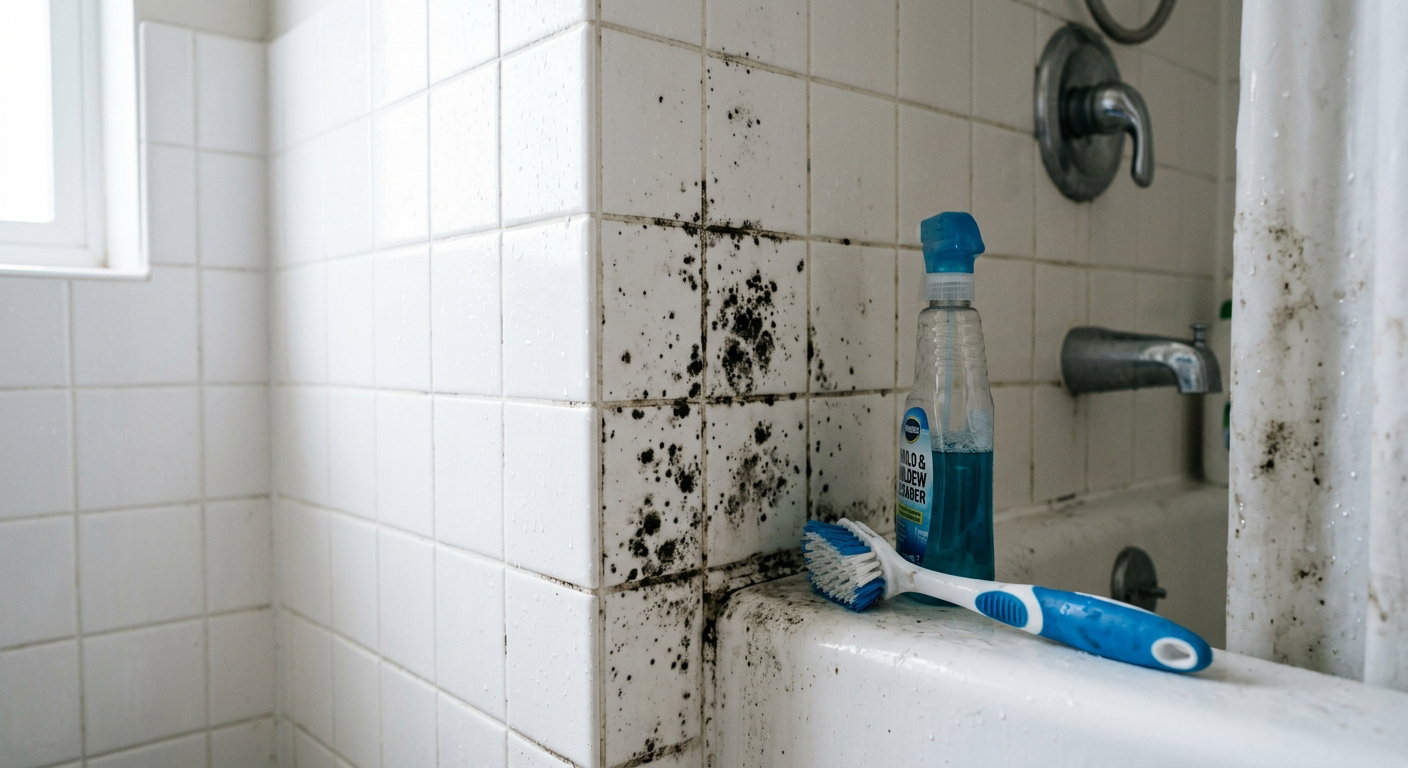
How to Get Rid of Mildew Smell in an Apartment
The surface-level version of the same problem, solved in order.
How to Get Rid of Musty Smell in an Apartment for Good
The apartment decision tree for damp and musty smells.
Best Dehumidifier for a Small Apartment (2026 Picks)
Sizing and picking a dehumidifier for a small flat.