On this page
Safety first
Mold removal involves chemicals and airborne spores. Take these steps before you start:
- Open a window and run the exhaust fan, or set up a fan blowing out of the room.
- Wear gloves and eye protection. Never mix bleach with ammonia or vinegar — the fumes are dangerous.
- Wear an N95 mask if the mold covers more than a small patch.
- Do not dry-brush mold — that launches spores into the air. Wet it first.
Cleaner by surface
The right cleaner depends on what the mold is growing on. Using bleach on a painted wall can strip the paint; using a gentle detergent on grout will not kill the roots.
| Surface | Best cleaner | Avoid |
|---|---|---|
| Ceramic tile | Mold cleaner or 1:10 bleach solution | Abrasive pads |
| Grout | Mold cleaner + stiff brush | Bleach left to sit (erodes grout) |
| Painted wall / ceiling | Mild detergent + water | Bleach (strips paint) |
| Silicone sealant | Replace the sealant | Trying to clean it |
| Grout that is deeply stained | Oxygen bleach paste | Scrubbing hard |
Step-by-step removal
- Ventilate the room and put on gloves and eye protection.
- Wet the mold with a spray bottle of water so spores do not go airborne.
- Apply the cleaner for your surface and let it sit for the time on the label — usually 5–10 minutes.
- Wipe or scrub with a microfiber cloth or a soft brush. Work from the top down.
- Rinse with clean water and dry the surface completely.
- Dispose of the cloth or sponge — do not reuse it elsewhere.
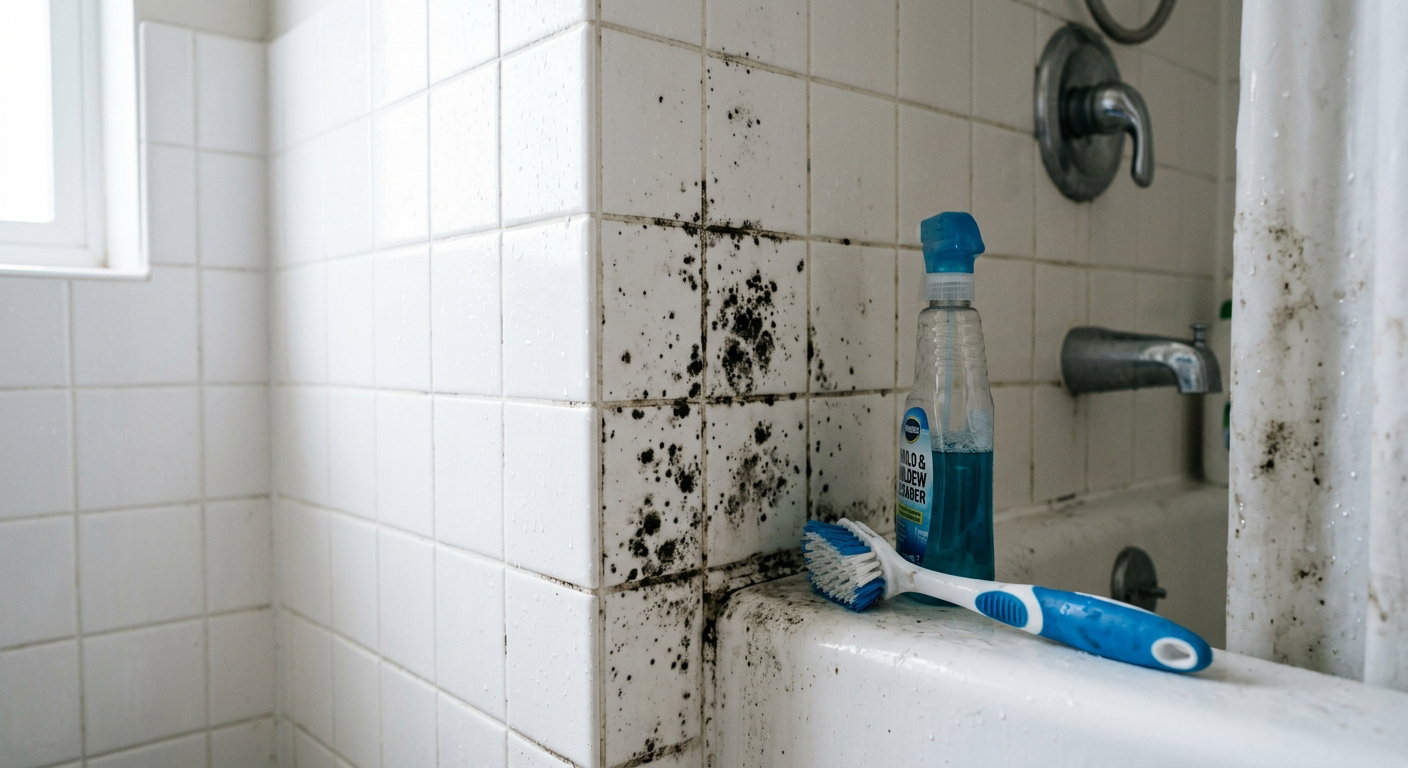
Mold Remover Spray
A ready-to-use mold cleaner that clings to vertical surfaces so it works on walls and grout without running off.
Check Price on Amazon →Stop it returning
Mold needs moisture. Remove the moisture and the mold does not come back — no matter how well you cleaned, it will return in weeks if the room stays damp.
- Run the exhaust fan during and for 20 minutes after every shower. If there is no fan, open a window.
- Squeegee the walls after showering. Two minutes with a squeegee removes most of the water mold feeds on.
- Fix leaks — a dripping tap or a failed sealant line keeps the wall wet permanently.
- Keep a small dehumidifier in a windowless bathroom. This is the single most effective fix in an apartment with no fan.
- Repaint with mold-resistant paint after cleaning a painted wall.
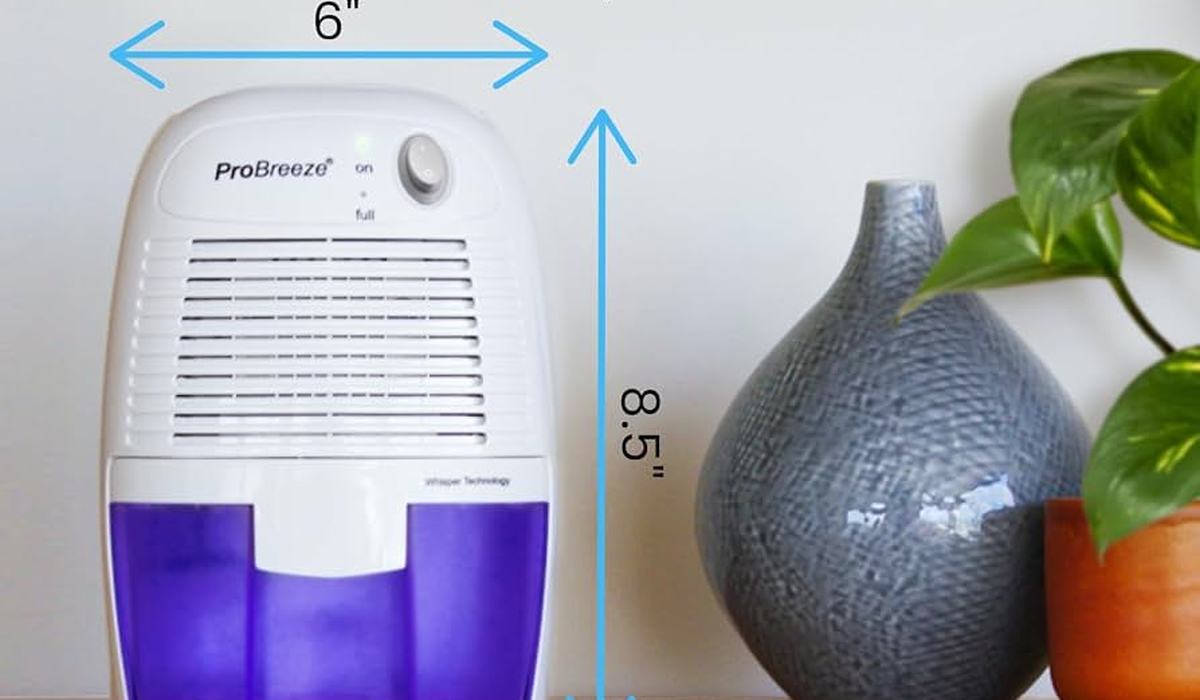
Small Dehumidifier for Bathroom
A compact dehumidifier for a windowless bathroom. Keeps the room under the humidity level mold needs.
Check Price on Amazon →If you rent
In most leases, the landlord is responsible for fixing the cause of mold — a failed fan, a leak, or a ventilation defect. Cleaning it yourself is fine, but document it:
- Photograph the mold before you clean it.
- Notify your landlord in writing about the moisture source.
- Keep a record of what you cleaned and when.
- If it returns after cleaning, that is evidence of an unresolved moisture problem, not a cleaning failure.
Four mold-removal mistakes that make it worse
- Dry-brushing the mold. This launches spores into the air, where they settle elsewhere and start new colonies. Wet it first, always.
- Mixing bleach and ammonia. This produces chloramine gas, which is genuinely dangerous. Never combine cleaning products.
- Painting over mold. Paint does not kill mold. It traps the moisture and the mold grows through the new paint within months.
- Cleaning without fixing the moisture. The mold returns in weeks. Cleaning is the easy half; moisture control is the half that lasts.
Is it mold or just staining?
Not every dark mark on a bathroom wall is mold. Knowing the difference saves you a lot of unnecessary scrubbing.
| Appearance | Likely cause | Test |
|---|---|---|
| Black spots in grout lines | Mold | Wet it; mold wipes, stain does not |
| Pink/orange film in the shower | Serratia bacteria | Wipes off easily with soap |
| Brown water stains | Mineral staining | Does not respond to mold cleaner |
| White powder on walls | Efflorescence (salts) | Dry, powdery, not organic |
| Black patches on painted ceiling | Mold from condensation | Grows back after cleaning |
The pink film that appears in showers is not mold — it is a bacterium called Serratia marcescens. It wipes off with ordinary soap and water, and it is a sign of a damp shower rather than a mold problem.
Removing mold, step by step
The method matters as much as the product. Done wrong, cleaning mold spreads it.
- Ventilate. Open a window and run the exhaust fan.
- Put on gloves, a mask and eye protection.
- Wet the mold with a spray bottle so spores cannot go airborne.
- Apply the cleaner and leave it for the dwell time on the label.
- Wipe, do not scrub hard. Work from the outside of the patch inward.
- Rinse and dry completely. Moisture left behind means it returns.
The dwell time is the part people skip. A mold cleaner needs five to ten minutes of contact to kill the roots, not just bleach the surface. Wiping it off immediately removes the stain and leaves the mold alive.
Which cleaner to use
| Product | Best for | Caution |
|---|---|---|
| White vinegar | Light surface mold, grout | Slow; needs dwell time |
| Bleach solution | Non-porous surfaces | Never mix with ammonia |
| Hydrogen peroxide | Porous surfaces, fabric | Test on colour first |
| Commercial mold remover | Heavy growth | Ventilate well |
| Baking soda paste | Light mold on grout | Gentle, good for weekly use |
Vinegar is the safest for a rental because it will not bleach a coloured grout or damage a seal. Bleach is faster on tile but it is harsh on grout and it must never meet ammonia-based cleaners, which produces a toxic gas.
Stopping it coming back
Cleaning is the easy half. Mold returns unless you fix the moisture. Run the exhaust fan for 20 minutes after every shower, squeegee the walls, fix any dripping tap, and keep a small humidity monitor in the bathroom. If the reading stays above 60%, a small dehumidifier is the fix — and in a rental, a persistent leak behind the wall is a landlord repair, not a cleaning job.
Frequently asked questions
What kills bathroom mold permanently?
Does bleach kill mold on bathroom walls?
How do I remove black mold from grout?
Is bathroom mold dangerous?
How do I stop mold coming back in a rental bathroom?
Related guides