On this page
What to test for
“Air quality” is not one number. It is several different pollutants, and the right test depends on which one you are worried about.
| Pollutant | Source | Health concern | How to test |
|---|---|---|---|
| PM2.5 | Smoke, cooking, dust | Respiratory, cardiovascular | Monitor or kit |
| VOCs | Paints, furniture, cleaners | Irritation, headaches | Monitor (PID sensor) |
| CO2 | Breathing, poor ventilation | Drowsiness, poor focus | Monitor |
| CO | Gas appliances, heaters | Fatal at high levels | CO alarm (required) |
| Radon | Soil, basement | Lung cancer | Dedicated kit only |
| Mold spores | Damp surfaces | Allergies, asthma | Lab sample or inspection |
A CO alarm is not optional — it is a safety device, and in many places a legal requirement. Buy one regardless of any other testing you do.
Three ways to test
1. A multi-sensor monitor
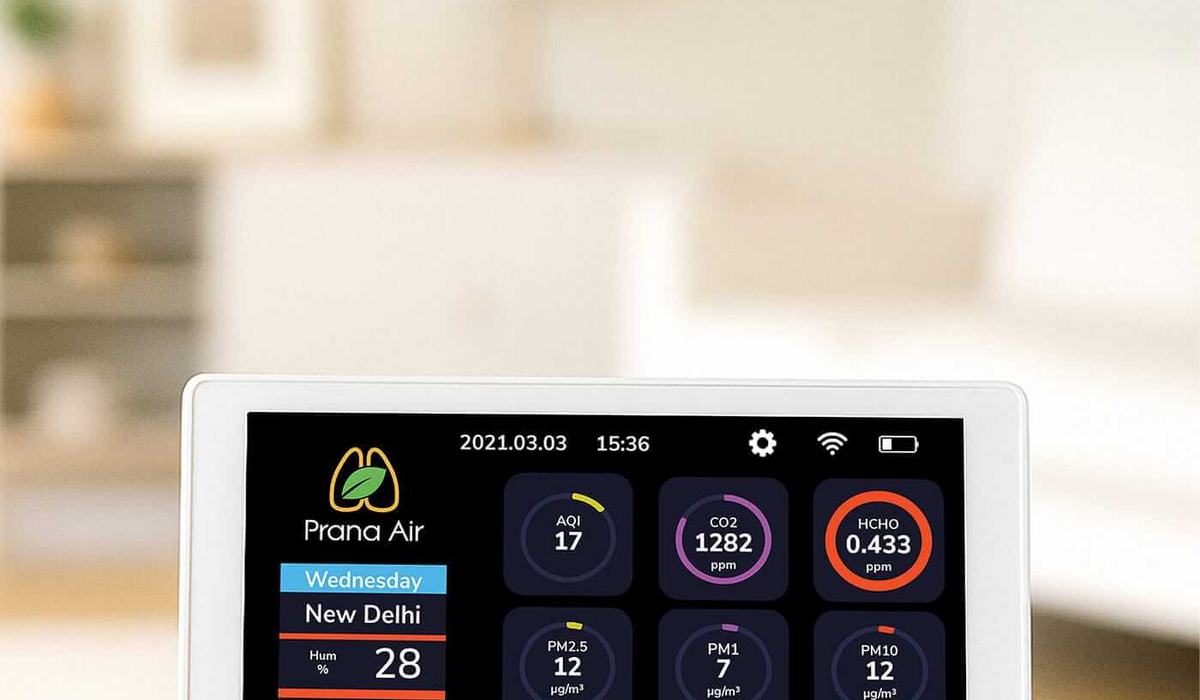
A monitor gives you live readings you can watch change as you cook, open a window, or run a purifier. This is the most useful option for everyday decisions, because it tells you whether your interventions actually work.
Airthings View Plus
Measures PM2.5, VOCs, CO2, radon, humidity and temperature. The most complete consumer monitor, with a radon sensor most rivals lack.
Check Price on Amazon →2. A test kit
Kits are single-purpose and cheap. They are the right choice for a specific question — usually radon or mold — where a general monitor will not help.
- Radon kit: a passive detector you leave in place for 2–90 days, then mail to a lab. The only reliable consumer radon test.
- Mold kit: a swab or petri dish you send for analysis. Useful to confirm a species, not to find hidden mold.
- Water test kit: not air, but worth doing at the same time if you are worried about a whole-home issue.
3. A certified lab test
A professional test is the right answer when the result has consequences — a health concern, a dispute with a landlord, or a suspected gas leak. It costs more, but the report is defensible.
Comparison table
| Method | Cost | Measures | Best for | Limitation |
|---|---|---|---|---|
| Multi-sensor monitor | $150–$300 | PM2.5, VOC, CO2, humidity | Everyday decisions | No radon on most models |
| Radon kit | $20–$50 | Radon only | Basements, ground floor | One-time, slow |
| Mold kit | $30–$60 | Mold species | Confirming a suspicion | Does not find hidden mold |
| Lab test | $200–$600 | Full panel | Health / legal concern | Expensive, slow |
| CO alarm | $20–$40 | Carbon monoxide | Safety (always) | CO only |
Using a monitor well
A monitor is only useful if you use it to test changes, not just to stare at a number. The method that works:
- Place the monitor at breathing height, away from windows, doors and the kitchen.
- Let it run for 24 hours to establish a baseline.
- Note the readings at different times — cooking, sleeping, with the window open.
- Make one change at a time (run a purifier, open a window) and watch the effect.
- Act on the pollutant that is actually high, not the one you assumed.
Apartment-specific risks
Apartments have air problems houses do not, and they change what is worth testing:
- Shared ventilation. Cooking and smoke from neighbours can enter through shared ducts. A CO2 and VOC monitor catches this.
- Sealed windows. Modern apartments are airtight, so CO2 and VOCs build up. Ventilation matters more than filtration.
- Ground-floor and basement units. Radon is a real risk. Test with a dedicated kit.
- No control over materials. You cannot choose the paint or the flooring, so VOC monitoring is more useful than in a house you renovated.
Four air-quality testing mistakes
- Testing once and assuming it is fixed. Air quality changes with cooking, weather and occupancy. A single reading tells you almost nothing.
- Placing the monitor badly. A monitor next to a window or in the kitchen reads the outdoor air or the cooking plume, not the room you breathe in.
- Chasing the wrong pollutant. A HEPA purifier does nothing for CO2 or VOCs. Test first, then buy the fix for the pollutant that is actually high.
- Skipping the CO alarm. A general monitor is not a safety device. Carbon monoxide needs a dedicated alarm, and it is not optional.
How air quality changes through the year
An apartment's air problems change with the season, and so should your testing.
| Season | Main risk | What to watch |
|---|---|---|
| Winter | CO2 and VOCs (sealed windows) | CO2 above 1,000 ppm means ventilate |
| Spring | Pollen entering from outside | PM2.5 spikes with open windows |
| Summer | Ozone and humidity | Humidity above 60% feeds mold |
| Autumn | Wildfire smoke (region-dependent) | PM2.5 spikes outdoors |
In winter, the problem is usually too little ventilation, not too much pollution. A CO2 reading above 1,000 ppm means the room needs fresh air, even if the PM2.5 is low.
What to test for
Air quality is not one number. There are five things worth measuring in an apartment, and they need different tools.
| Pollutant | Risk | How to test |
|---|---|---|
| PM2.5 | Smoke, dust, pollen | Monitor or purifier sensor |
| CO2 | Poor ventilation | CO2 monitor |
| VOCs | Paints, furniture, cleaning products | VOC monitor |
| Carbon monoxide | Combustion, lethal | Dedicated CO alarm |
| Radon | Natural gas from soil | Radon test kit (long term) |
Carbon monoxide is the one that is not optional. A general air-quality monitor is not a safety device; you need a dedicated CO alarm, and it should be on every floor of the home.
Monitor vs kit vs lab
There are three ways to test, and they answer different questions.
| Method | Cost | Best for |
|---|---|---|
| Consumer monitor | $80–$300 | Ongoing PM2.5, CO2, VOC readings |
| Home test kit | $20–$50 | One-off radon or VOC check |
| Professional lab test | $150–$500 | Formal report, mold or asbestos |
A consumer monitor is the right starting point for most apartments. It gives you continuous readings, so you can see what cooking, cleaning and closing the windows actually do to your air. A lab test is for a specific problem — a musty smell you cannot find, or a renovation.
What to do with the numbers
A reading is only useful if it changes what you do. PM2.5 above 35 µg/m³ means run a purifier or ventilate. CO2 above 1,000 ppm means open a window — no purifier removes CO2. VOCs above 500 ppb means ventilate and find the source. And any CO reading above zero on a dedicated alarm means leave and call for help.
Frequently asked questions
How can I test my home air quality?
Are home air quality monitors accurate?
How do I test for mold in the air?
Do I need a radon test in an apartment?
What is a good PM2.5 level indoors?
Related guides