On this page
Safety first
You are working with live mains voltage. Take these precautions:
- Never touch the metal probe tips while they are in the outlet. Hold the insulated handles only.
- Use a meter rated CAT III for mains work. A cheap meter without a CAT rating is not safe for outlet testing.
- Keep your hands dry and stand on a dry floor.
- Do not force the probes into a tight outlet — use a proper outlet tester if the slots are stiff.
Testing voltage
- Set the multimeter to AC voltage (V~) at a range above 120V, or use auto-range.
- Insert one probe into the shorter vertical slot (hot) and the other into the longer vertical slot (neutral).
- Read the display. A healthy outlet reads 110–125V.
- If you read 0V, the outlet has no power — check the breaker and any GFCI upstream.
- If you read a low or fluctuating voltage, there is a wiring problem. Stop and call an electrician.
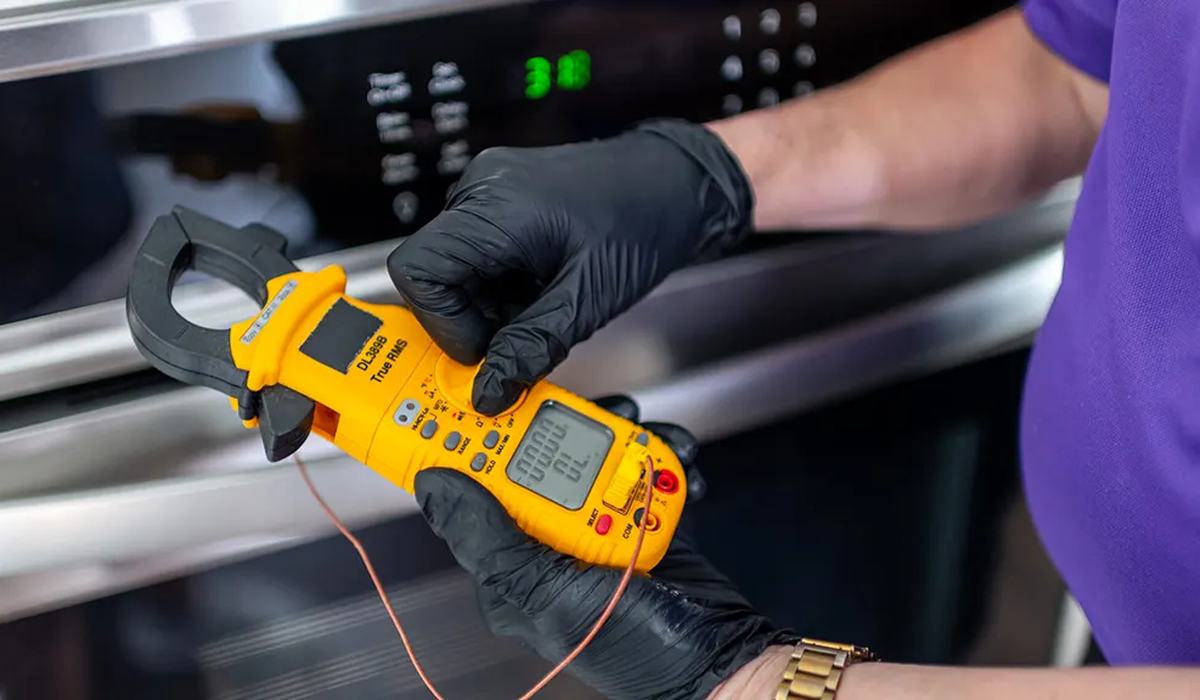
Digital Multimeter (CAT III)
A CAT III-rated meter safe for mains testing, with auto-ranging and a clear display. The right tool for outlet work.
Check Price on Amazon →Polarity and grounding
Voltage alone does not tell you the outlet is wired correctly. Test polarity and ground too:
| Test | Probes | Expected reading | If wrong |
|---|---|---|---|
| Voltage | Hot to neutral | 110–125V | No power or bad wiring |
| Hot to ground | Hot slot to ground hole | 110–125V | Ground fault |
| Neutral to ground | Neutral slot to ground hole | 0–2V | Neutral/ground fault |
| Reversed polarity | Neutral reads hot | — | Outlet wired backwards |
Reversed polarity — where the hot and neutral are swapped — is common in older apartments and is a real shock risk. An inexpensive outlet tester detects it instantly with a light pattern, which is easier than reading a multimeter.
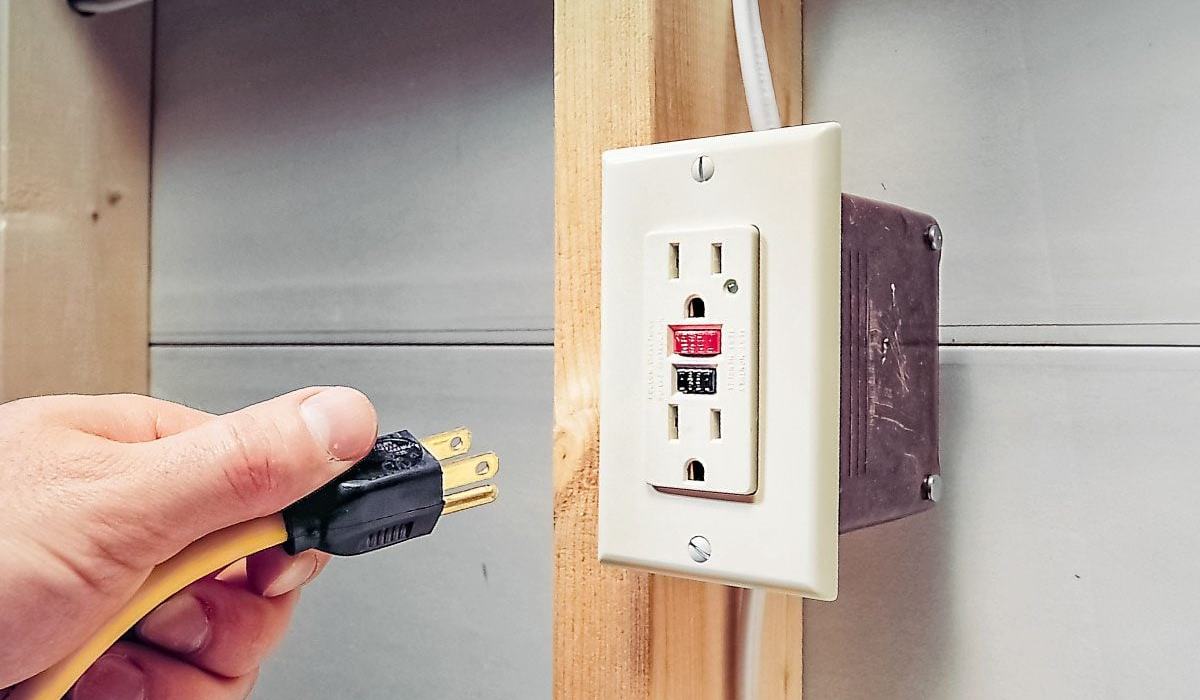
GFCI Outlet Tester
Plugs in and shows wiring faults with a light pattern. The fastest way to check polarity, ground and GFCI function.
Check Price on Amazon →GFCI outlets
A GFCI outlet has TEST and RESET buttons. It protects against shock by cutting power when it detects a fault. If an outlet is dead, check for a tripped GFCI first — it may be on a different outlet that protects this one.
- Press RESET on the GFCI. If power returns, the GFCI had tripped.
- Press TEST to confirm it trips, then RESET again.
- If it will not reset, the GFCI has failed and needs replacing.
- If a GFCI keeps tripping, something on the circuit has a fault — stop using it and report it.
A dead outlet behind an appliance
This is the apartment-specific case. An appliance that will not power on may not be faulty — the outlet may be dead.
- Test the outlet with the multimeter or a plug-in tester before blaming the appliance.
- Check the breaker — a fridge or microwave on a shared circuit can trip it.
- Check for a GFCI upstream — kitchen and bathroom outlets are often GFCI-protected from a single point.
- Try another outlet to confirm the appliance works elsewhere.
Four outlet-testing mistakes
- Using a meter without a CAT rating. A cheap meter is not safe for mains voltage. Use a CAT III-rated meter for outlet work.
- Touching the probe tips. Hold the insulated handles only. The tips are live when they are in the outlet.
- Testing only voltage. Voltage does not tell you about polarity or grounding. Test all three.
- Blaming the appliance. A dead outlet behind an appliance is common. Test the outlet before you assume the appliance has failed.
When to use an outlet tester instead
A multimeter gives you numbers; an outlet tester gives you a light pattern that names the fault. For a quick check, the tester is faster and easier to read.
| Fault | Tester indication | Multimeter check |
|---|---|---|
| Correct wiring | Two lights on | 120V hot-neutral, 120V hot-ground |
| Open ground | One light on | 0V hot-ground |
| Open neutral | One light on | 0V hot-neutral |
| Reversed polarity | Two lights, different pattern | Neutral reads hot |
| Open hot | No lights | 0V everywhere |
For a rental, an outlet tester is the better tool to own. It is cheap, it needs no settings, and it tells you the fault by name — which is exactly what you need when you are documenting a problem for a landlord.
Testing an outlet, step by step
Testing an outlet takes a minute and it tells you three things: whether there is power, whether the polarity is right, and whether the ground is connected.
- Set the meter to AC voltage (V~) at a range above 120V.
- Insert one probe into the short slot (hot) and one into the long slot (neutral).
- Read the voltage — it should be 110–125V.
- Move the second probe to the round hole (ground) and read again — it should also be 110–125V.
- Test hot to ground and confirm the reading.
If hot-to-neutral reads 120V but hot-to-ground reads 0V, the outlet has an open ground. If hot-to-neutral reads 0V but hot-to-ground reads 120V, the polarity is reversed. Both are common and both are worth fixing.
What the readings mean
| Hot–Neutral | Hot–Ground | Meaning |
|---|---|---|
| 120V | 120V | Correct |
| 120V | 0V | Open ground |
| 0V | 120V | Reversed polarity |
| 0V | 0V | No power — check the breaker |
| 120V | 120V but GFCI trips | Ground fault — investigate |
A GFCI outlet that trips when you plug something in is doing its job — it has detected a ground fault. Do not bypass it. Find the fault, or call an electrician.
Safety and the rental angle
Use a meter rated CAT III for outlet work, and hold only the insulated handles. Never touch the probe tips. In a rental, if an outlet is dead or has an open ground, photograph it, note the reading, and report it in writing — a faulty outlet is a landlord repair, and a clear record makes it a repair rather than a dispute.
What you need
Outlet testing needs a meter rated for mains voltage, and nothing else.
| Item | Why |
|---|---|
| CAT III multimeter | Safe for 120V outlet work |
| Outlet tester | Names the fault by light pattern |
| Non-contact voltage tester | Confirms power before you touch anything |
A non-contact voltage tester is the safety tool worth adding. Hold it near the outlet before you insert a probe, and it tells you whether the circuit is live. It is a five-dollar tool that prevents a shock.
Testing a GFCI outlet
A GFCI outlet has two buttons: TEST and RESET. Press TEST and the outlet should cut power; press RESET and it should restore. If it does not trip on TEST, the GFCI has failed and needs replacing — it is no longer protecting you. Test every GFCI in the apartment once a month, and test the ones in the kitchen and bathroom first, because those are the ones that matter.
Frequently asked questions
How do I test an outlet with a multimeter?
What should an outlet read on a multimeter?
How do I know if an outlet is grounded?
Why is my outlet dead but the breaker is on?
Can I replace an outlet myself in a rental?
Related guides
How to Test Continuity With a Multimeter
The one skill behind every electrical diagnosis.