On this page
What continuity means
Continuity means electricity can flow from one point to another. If a wire, fuse, switch or heating element has continuity, the path through it is intact. If it does not, the path is broken — and that is usually the fault.
The test works by sending a tiny current from the meter through the component. If the current completes the circuit, the meter beeps. It is safe, fast, and it is the first test to run on almost any electrical fault.
The test
- Turn off and unplug the appliance. Continuity is tested on a dead circuit.
- Set the multimeter to the continuity setting (the sound-wave icon) or the lowest resistance range.
- Touch the two probes together. The meter should beep — this confirms the meter and leads work.
- Touch one probe to each end of the wire, fuse or component you are testing.
- A beep means continuity; silence means the path is broken.
Reading the result
| Reading | Meaning | Action |
|---|---|---|
| Beep / ~0 Ω | Continuity — path is complete | Component is good |
| OL / 1 / no beep | No continuity — path is broken | Component has failed |
| High resistance (kΩ+) | Poor connection | Clean or replace the connection |
| Intermittent beep | Failing connection | Wiggle the wire; replace if it cuts out |
An intermittent beep is the hardest fault to find and the most important to catch. Wiggle the wire or the connector while watching the meter — if the beep cuts out, you have found a broken conductor inside intact insulation.
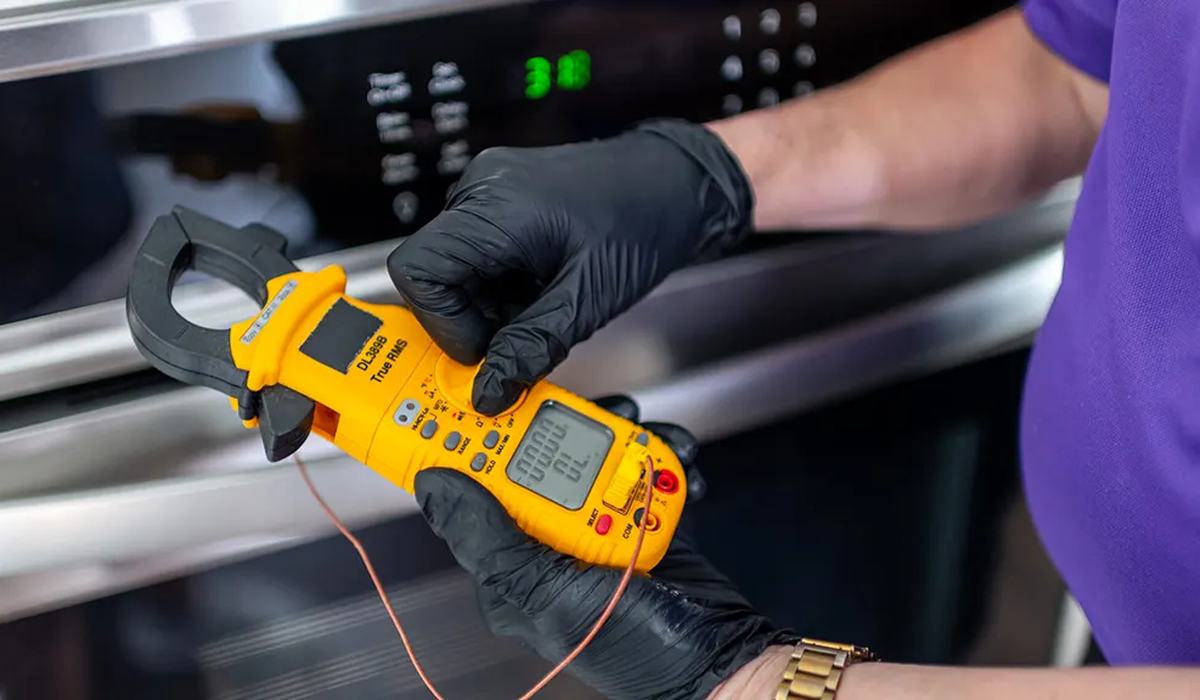
Digital Multimeter with Continuity Beeper
A meter with a loud continuity beeper and auto-ranging. The essential tool for every electrical diagnosis.
Check Price on Amazon →What you can test with continuity
This is the test that answers most appliance questions. In an apartment, the common uses are:
| Component | What continuity tells you |
|---|---|
| Fuse | Blown (no beep) or good (beep) |
| Wire | Broken conductor or intact |
| Switch | Working or failed |
| Heating element | Intact or open circuit |
| Thermostat / thermistor | Continuity or open |
| Motor winding | Intact or burnt out |
Four continuity-testing mistakes
- Testing a live circuit. Continuity must be tested on a dead circuit. Unplug the appliance and discharge any capacitors first.
- Not checking the meter. Touch the probes together first. If the meter does not beep, the meter or the leads are faulty, and every reading after that is meaningless.
- Testing in circuit. The meter can find a path around the component through the rest of the circuit. Isolate the component where possible.
- Ignoring an intermittent beep. An intermittent beep is a failing connection — the hardest fault to find and the most important to catch.
Finding an intermittent fault
An intermittent fault is the hardest kind to diagnose, because it works when you test it and fails when you do not. Continuity is the tool that finds it.
- Connect the meter across the suspect wire or connector.
- Wiggle the wire along its length while watching the meter.
- Flex the connector and any joints.
- If the beep cuts out at any point, you have found the break.
- Mark the spot, then repair or replace the wire.
Intermittent faults are usually a broken conductor inside intact insulation, or a loose crimp. Both are invisible from the outside, which is why the wiggle test is the only way to find them.
Testing continuity, step by step
Continuity is the simplest test a multimeter does, and it is the fastest way to find a broken wire or a blown fuse.
- Turn off the power and unplug the appliance.
- Set the meter to continuity (the beep symbol).
- Touch the probes together — the meter should beep. If it does not, the meter or leads are faulty.
- Touch one probe to each end of the wire, fuse or switch.
- Listen. A beep means a complete path; silence means a break.
The self-test in step three is the step people skip, and it is the one that matters. If the meter does not beep when the probes touch, every reading after that is meaningless — you would be diagnosing a fault that is actually a dead battery.
What continuity finds
| Component | Good reading | Bad reading |
|---|---|---|
| Wire | Beep, near 0Ω | Silence, infinite |
| Fuse | Beep, near 0Ω | Silence, infinite |
| Switch (on) | Beep | Silence |
| Switch (off) | Silence | Beep |
| Heating element | Low but not zero | Infinite (open) or zero (shorted) |
A heating element is the exception: it should read low resistance, not zero. A reading of infinity means the element is open and has failed; a reading of zero means it is shorted. Both mean replace it.
Finding an intermittent fault
An intermittent fault is the hardest kind to diagnose, because it works when you test it and fails when you do not. Continuity is the tool that finds it. Connect the meter across the suspect wire, then wiggle it along its length and flex any connectors. If the beep cuts out at any point, you have found the break. Mark the spot and repair or replace the wire.
What you need
Continuity testing needs very little: a multimeter with a continuity setting, and a pair of test leads. Alligator clips help when you need both hands free.
| Item | Why |
|---|---|
| Multimeter with continuity | The beep makes the test fast |
| Test leads | Standard probes are fine |
| Alligator clips | For hands-free testing |
| Insulated screwdriver | For discharging capacitors first |
Alligator clips are the one accessory worth adding. They let you clip onto a wire and then wiggle it with both hands, which is exactly what finding an intermittent fault requires.
What continuity cannot tell you
Continuity tests a dead circuit for a complete path. It cannot tell you whether a component works under load, and it cannot test a live circuit. For those you need voltage and current measurements. Most appliance diagnoses use both: confirm power reaches the component with voltage, then confirm the component itself is intact with continuity.
Frequently asked questions
How do I test continuity with a multimeter?
What does no continuity mean?
Can I test continuity on a live circuit?
What is the difference between continuity and resistance?
Why does my multimeter beep intermittently?
Related guides