On this page
Why 'no outside access' changes everything
A conventional bathroom exhaust fan works by pushing moist air through a duct to the outside. That requires two things: a duct, and a hole in an external wall or the roof. When your bathroom sits in the middle of the flat — a common layout in apartment buildings — neither exists. There is no external wall to drill through, and running a duct across the flat is a renovation, not a repair.
This is the situation that defeats most bathroom-ventilation advice. Every guide that says "install an exhaust fan" assumes you can reach the outside. You cannot. So the strategy has to change: instead of exhausting moisture, you remove it.
The three strategies that don't need a duct
There are exactly three ways to deal with bathroom moisture when you cannot duct it out. Most effective setups combine all three.
- Remove the water before it evaporates. A squeegee takes water off the walls and glass while it is still liquid. This is the cheapest and most underrated step.
- Condense the moisture out of the air. A portable dehumidifier pulls water vapour out of the air and collects it in a tank. This is the only method that works in a fully sealed room.
- Move the air somewhere it can escape. A door-gap fan pushes humid air toward a room that does have a window, where it can be vented naturally.
None of these require a duct, a hole, or permission. Together they remove more moisture than a ducted fan would, because they attack the problem at the source rather than just moving it.
Recirculating fans: what they can and can't do
A ductless (recirculating) fan looks like a normal exhaust fan but has no duct. Instead it pulls air through a filter and blows it back into the room. It is easy to install and needs no outside access, which makes it tempting for a bathroom with no external wall.
Be clear about what it does. A recirculating fan filters odours and some particles, but it does not remove moisture. The water vapour passes straight through the filter and back into the room. So a ductless fan can make the bathroom smell fresher, but it will not stop mould. It is a comfort device, not a ventilation solution.
Portable and window options compared
| Option | Removes moisture? | Needs outside access? | Cost | Best for |
|---|---|---|---|---|
| Portable dehumidifier | Yes — high | No | $60–$200 | Sealed interior bathrooms |
| Squeegee + towel | Yes — medium | No | $5–$12 | Every bathroom, every shower |
| Door-gap cross-flow fan | Moves it, not removes | No | $15–$40 | Bathroom next to a windowed room |
| Ductless recirculating fan | No | No | $40–$120 | Odour control only |
| Moisture absorber | Yes — low | No | $10–$25 | Small bathrooms, backup |
| Window fan | Moves it out | Yes — a window | $20–$60 | Bathrooms that do have a window |
A step-by-step drying routine
This routine is built for a bathroom with no outside access. It takes about two minutes of your time plus 30 minutes of machine time.
- Squeegee the walls and glass immediately after the shower, while the room is still steamy.
- Dry the floor with a dedicated bathroom towel or mop.
- Close the shower curtain flat so it dries instead of trapping water in folds.
- Place the dehumidifier in the middle of the room, not in a corner, and close the door.
- Run it for 20–30 minutes. Stop when the room no longer feels damp.
- Open the door and run the door-gap fan for a few minutes to push any remaining humid air toward a windowed room.
How to move air between rooms
If the bathroom has no outside access but an adjacent room does, you can use that room as the exhaust path. Put a small fan on the floor at the bathroom doorway, angled to push air out into the hallway or bedroom, and open a window in that room. The humid air follows the airflow and leaves through the window.
Two rules make this work:
- Give the air a path. A fan in a sealed room just stirs damp air. There must be a gap for air to enter and a window for it to leave.
- Push, don't pull. A fan blowing out of the bathroom works better than one trying to pull air in, because it creates positive pressure that carries the moisture away.
When to escalate to the landlord
A bathroom with no outside access and no mechanical ventilation is usually a defect the landlord is responsible for fixing. If the room grows mould despite your routine, put the issue in writing with dated photos and ask for a proper ventilation solution.
In some buildings the fix is a shared duct or a roof vent that serves several units — work only the landlord or building management can arrange. That is not something a renter can solve with a gadget, and it is worth escalating.
What to buy first
For a bathroom with no outside access, the dehumidifier is the one purchase that actually removes water from the air. Everything else either moves moisture around or removes it before it evaporates.
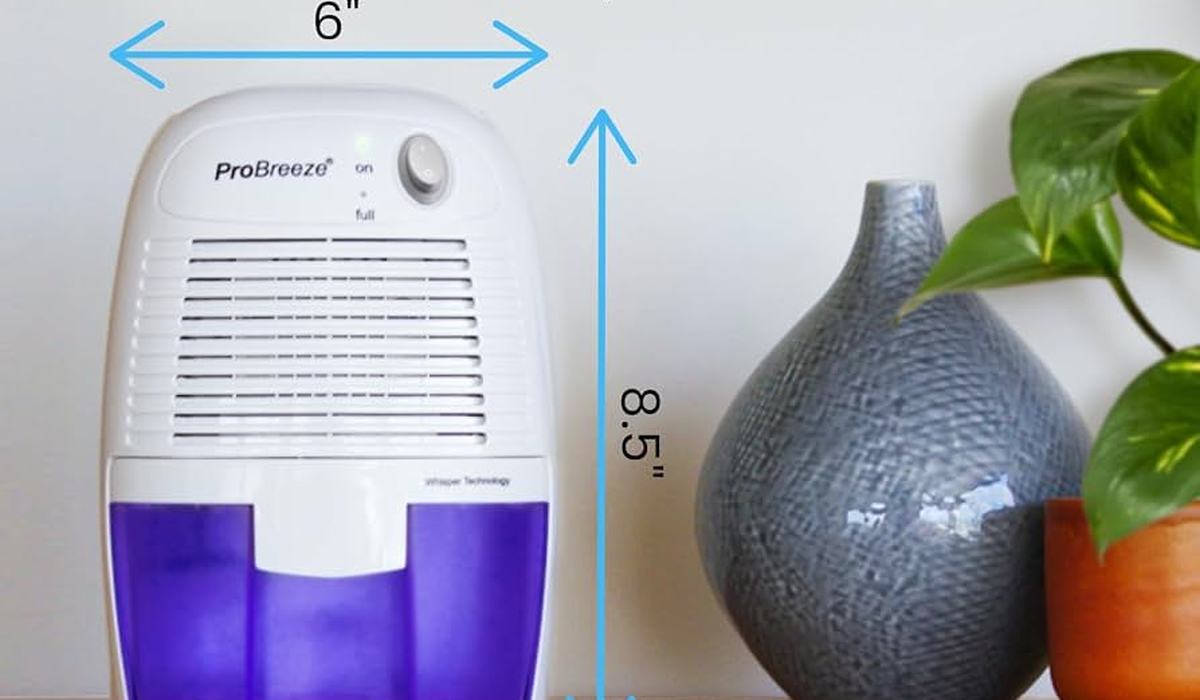
Dehumidifier for a Ductless Bathroom
The only renter-friendly device that removes moisture from a sealed room. No duct needed.
Check Price on Amazon →Add a squeegee and a door-gap fan, and you have a complete no-duct ventilation system for under $150.
Frequently asked questions
Can you vent a bathroom with no outside wall?
Does a ductless fan remove moisture?
How do I stop mould in a bathroom with no window or fan?
Can I use a fan to push air into another room?
Is a bathroom with no ventilation the landlord's problem?
Related guides
No Window in the Bathroom? How to Vent It
Renter-friendly ways to dry a sealed bathroom without drilling.
Portable Bathroom Ventilation: 6 Renter Options
No wiring, no drilling — compare the portable options.
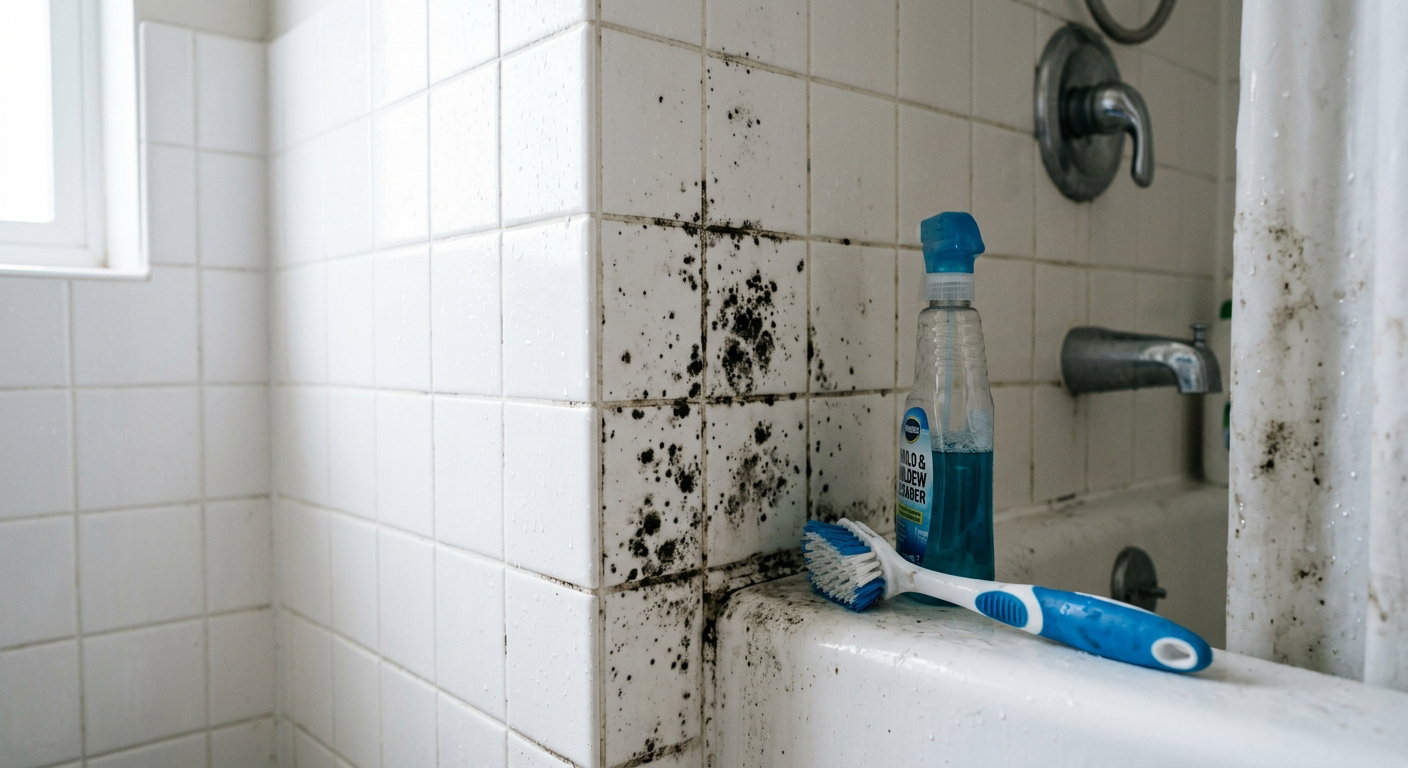
No Exhaust Fan in the Bathroom? 7 Solutions That Work
A ranked list of solutions by how much moisture each removes.