On this page
How these are ranked
Every solution below is scored on one thing: how much water it removes from the air of the room. Comfort features, looks and noise matter, but they are secondary. A solution that does not remove water is not a ventilation solution.
| Rank | Solution | Moisture removed | Cost |
|---|---|---|---|
| 1 | Portable dehumidifier | High | $60–$200 |
| 2 | Window or portable fan | Medium | $20–$60 |
| 3 | Squeegee discipline | Medium | $5–$12 |
| 4 | Moisture absorber | Low–medium | $10–$25 |
| 5 | Ductless recirculating fan | Low | $40–$120 |
| 6 | Door-open airflow | Low | $0 |
| 7 | Landlord-installed fan | High | $0 to you |
1. Portable dehumidifier
This is the only renter-friendly option that removes a meaningful volume of water from a sealed room. A small unit pulls 0.5–1 litre per day in a typical bathroom, which is roughly what a daily shower adds. Run it for 20–30 minutes after each shower with the door closed.
Choose a unit with an auto shut-off so it stops when the tank is full, and a tank you can actually carry. In a bathroom, a 1–2 litre tank is the sweet spot — big enough to matter, small enough to empty easily.
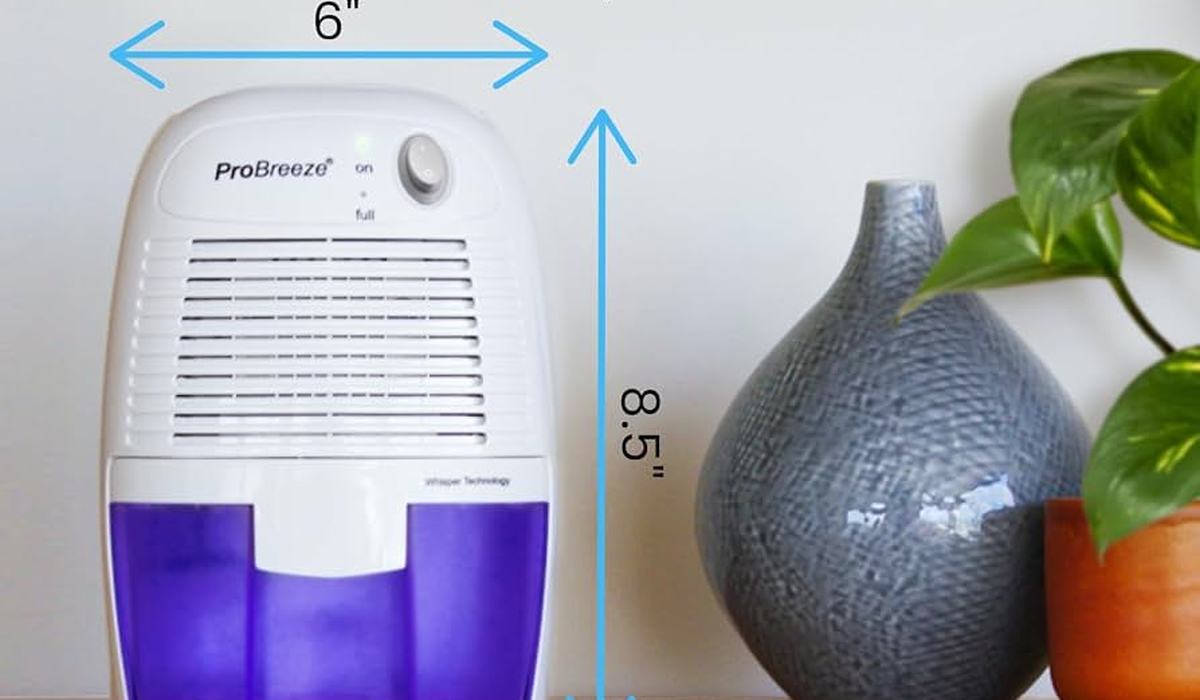
Portable Dehumidifier for Bathrooms
Compact, quiet, and sized for a single bathroom. Auto shut-off protects against overflow, and the tank lifts out for easy emptying.
Check Price on Amazon →2. Window or portable fan
If the bathroom has any window, a fan in that window is the cheapest way to move damp air outside. Set it to exhaust so it pulls air out of the room, and leave the door slightly ajar so replacement air can come in. Without that air path, the fan just stirs the damp air.
A portable floor or desk fan works the same way if you aim it at an open window or doorway. It is less effective than a window-mounted fan but costs less and stores away.
3. Squeegee discipline
This is the highest-value habit in the whole list. Water on the wall cannot become humidity if you remove it first. Thirty seconds with a squeegee after every shower removes most of the moisture before it ever reaches the air.
Pair it with a dedicated floor towel or mop. The floor holds a surprising amount of water, and it evaporates slowly if you leave it.
4. Moisture absorber
A refillable absorber uses calcium chloride to pull water out of the air passively. It is silent, needs no power, and works well in a small en-suite or a cupboard. It cannot keep up with a daily shower on its own, but as a backup it keeps the baseline humidity down between showers.
Check the tub weekly and refill or replace the crystals when they have dissolved into the collection chamber.
5. Ductless recirculating fan
A ductless fan filters and circulates air but does not remove moisture. It is worth mentioning because it is often sold as a solution to exactly this problem, and it is not one. Buy it for odour and air movement, not for damp.
6. Door-open airflow
Free, immediate, and better than nothing. After a shower, open the door and let the room equalise with the rest of the flat. The catch is that the moisture moves into the bedroom or hallway, so only do this after you have squeegeed and run a dehumidifier. Otherwise you are just relocating the problem.
7. Landlord-installed fan
The real fix, and the one you should ask for in writing. A properly ducted extractor fan removes moisture at the source and is the only permanent solution. It costs you nothing if the landlord agrees, and in many places the housing code requires it.
The combination that works
No single solution is enough. The combination that reliably keeps a fanless bathroom dry is:
- Squeegee the walls and glass after every shower.
- Dry the floor with a dedicated towel.
- Run a dehumidifier for 20–30 minutes with the door closed.
- Keep a moisture absorber in the room as a baseline.
- Report the missing fan to your landlord in writing.
That routine costs under $150 to set up and removes the moisture that causes mould, damp smell and deposit deductions.
How to measure whether a solution is working
Every solution in this list can be checked with one cheap tool: a hygrometer. Take a reading 30 minutes after a shower, before running anything, then again 30 minutes after your routine. The drop is your evidence.
| Before | After 30 min | Verdict |
|---|---|---|
| 75% | 55% | Working well |
| 75% | 65% | Working, but slowly — run longer |
| 75% | 72% | Not working — add or change the solution |
What each solution costs over a year
Purchase price is only part of the story. Running cost and replacement parts matter too.
| Solution | Upfront | Yearly running | 3-year total |
|---|---|---|---|
| Dehumidifier | $60–$200 | $20–$60 electricity | $120–$380 |
| Window fan | $20–$60 | $5–$15 electricity | $35–$105 |
| Squeegee | $5–$12 | $0 | $5–$12 |
| Moisture absorber | $10–$25 | $20–$40 refills | $70–$145 |
| Ductless fan | $40–$120 | $5–$15 electricity | $55–$165 |
The squeegee is the cheapest and the most effective per dollar. The dehumidifier is the most expensive and the only one that solves a sealed room.
Three myths worth ignoring
- "A bowl of salt works as well as a dehumidifier." It removes a fraction of the water, far too slowly to matter after a shower.
- "Leaving the door open dries the bathroom." It moves the moisture into the rest of the flat, where it is harder to remove.
- "A ductless fan is a ventilation fix." It filters and circulates, but it does not remove water.
The order to try solutions in
If you are starting from nothing, work down this list. Each step costs more than the last, so stop as soon as the room stays dry.
- Squeegee after every shower. Free, and it removes most of the water before it becomes vapour.
- Dry the floor with a dedicated towel. A wet floor is a slow-release moisture source.
- Open a window and run a fan on exhaust if you have one. Ten minutes is enough.
- Add a moisture absorber for the baseline between showers.
- Buy a dehumidifier if the room is still above 60% after a shower.
- Report the missing fan to your landlord and ask for a ducted unit.
Most renters stop at step three and find the room stays dry. Only sealed, windowless bathrooms need step five.
Asking your landlord for a real fan
In many jurisdictions a bathroom without mechanical ventilation is a repair issue, not a preference. If you want to escalate, do it in writing and keep it factual:
- State the problem: "the bathroom has no exhaust fan and no openable window".
- State the consequence: "the room stays above 60% humidity after showers and mould is recurring".
- State what you have done: "I squeegee and ventilate daily, and I run a dehumidifier".
- Ask for a specific remedy: "please install an exhaust fan ducted to the outside".
- Give a reasonable deadline and keep a copy.
A written record is what turns a complaint into an obligation. Keep it short, keep it polite, and keep the date.
Frequently asked questions
What is the best solution for a bathroom with no fan?
Do ductless bathroom fans remove moisture?
How much does it cost to fix a fanless bathroom?
Is a moisture absorber enough on its own?
Can I just open a window instead?
Related guides
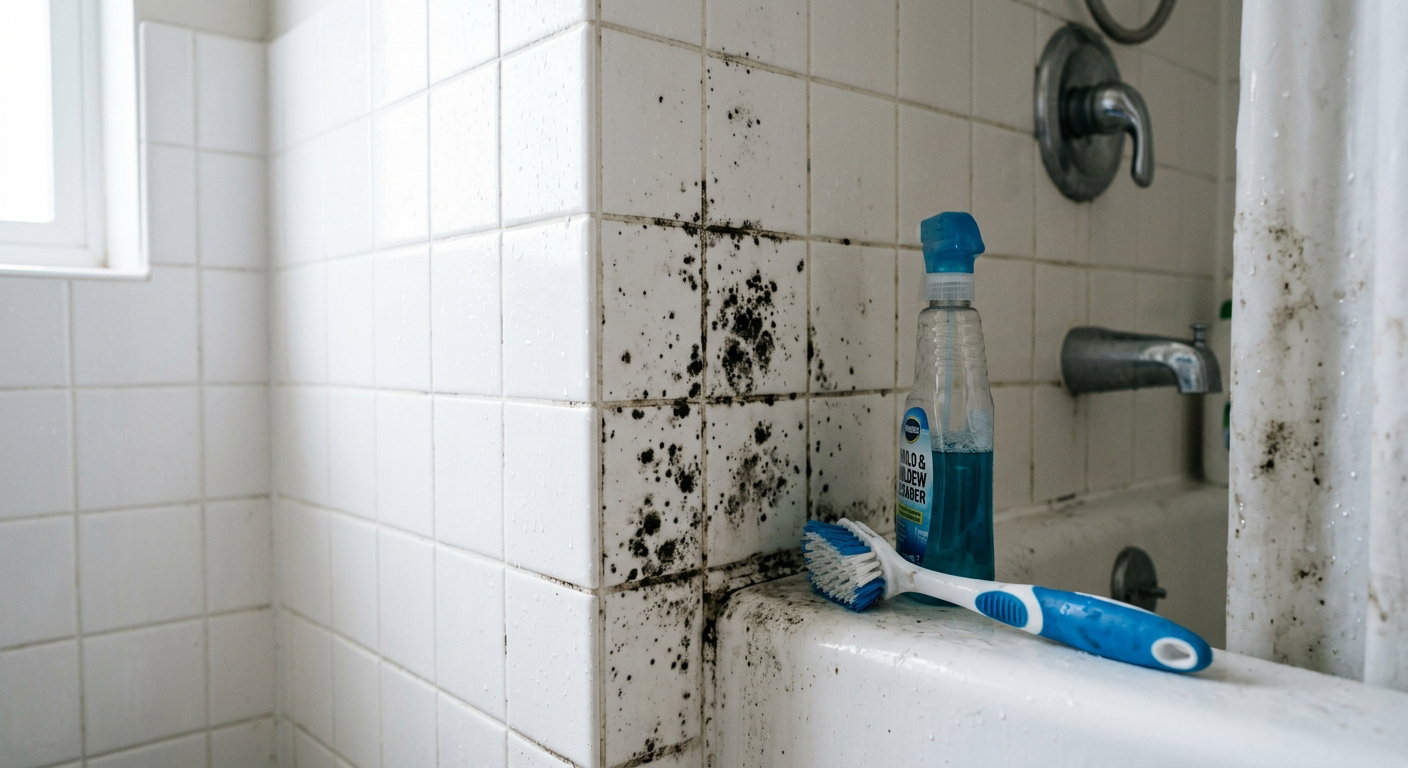
No Exhaust Fan in Your Bathroom? What to Do
The complete renter guide to a bathroom with no ventilation.
Dehumidifier for a Bathroom Without a Vent
How to size and choose one for a sealed bathroom.
Moisture Absorbers for Bathrooms: Do They Work?
What they remove, what they cannot, and how to use them.