On this page
What 'portable ventilation' really means
Portable ventilation is a loose term, so let us be precise. It means any device that improves bathroom air quality and can be plugged in, moved, and removed without modifying the property. No wiring, no drilling, no duct, no landlord permission. That rules out a hardwired exhaust fan and rules in a small set of devices that actually work.
The key distinction is between devices that remove moisture and devices that move air. A dehumidifier removes water from the air. A fan moves air from one place to another. Both are useful, but they solve different halves of the problem, and a good setup uses both.
The 6 portable options compared
| Option | Type | Moisture removed | Cost | Noise |
|---|---|---|---|---|
| Portable dehumidifier | Removes water | High | $60–$200 | Low–medium |
| Window fan | Moves air | Medium (if windowed) | $20–$60 | Medium |
| Door-gap cross-flow fan | Moves air | Low | $15–$40 | Low |
| Ductless recirculating fan | Filters air | None | $40–$120 | Low |
| Moisture absorber | Removes water | Low–medium | $10–$25 | Silent |
| Squeegee + towel | Removes water | Medium | $5–$12 | Silent |
Notice that the cheapest option — the squeegee — removes more moisture than several of the expensive ones. That is because it removes water while it is still liquid, before it ever becomes humidity. Do not skip it.
Window fan vs dehumidifier: which first
This is the question renters ask most, and the answer depends on one thing: do you have a window that opens?
- If you have a window: a window fan is the cheapest effective option. It pushes humid air straight outside. Add a dehumidifier for humid months when the window is closed.
- If you have no window: a dehumidifier is the only option that removes water from a sealed room. A fan has nowhere to push the air, so it just stirs it.
If you have a window but it is small, high, or hard to reach, treat the bathroom as windowless and lead with the dehumidifier.
How to size a portable unit
For a dehumidifier, size by the room and the moisture load. A small bathroom (under 100 sq ft) with a daily shower needs a unit rated around 10–20 pints per day. A larger bathroom or one with two showers a day needs 20–30 pints. Pint ratings are tested at 80°F and 60% humidity, so a cool bathroom will collect less than the label suggests — size up rather than down.
For a window fan, size by airflow. A standard bathroom needs roughly 50 CFM of exhaust, so a twin window fan rated at 100–200 CFM gives you headroom to run it on low and keep the noise down.
Noise, power and storage in a rental
Three practical constraints matter in an apartment.
- Noise. A dehumidifier runs at roughly 40–50 dB, about the level of a quiet conversation. A window fan on high can hit 55 dB. If the bathroom shares a wall with a bedroom, run the noisier device during the day.
- Power. A small dehumidifier draws 200–400 watts, so running it 30 minutes a day costs only a few cents. A window fan draws under 100 watts.
- Storage. A portable dehumidifier is roughly the size of a small suitcase. In a tiny flat, look for a unit with a carry handle and a compact footprint so it can live in a closet between uses.
Placement that actually moves air
Placement decides whether a portable device works or wastes its effort.
- Dehumidifier: put it in the middle of the room, not in a corner, with at least 6 inches of clearance on all sides. Close the door so it works on the bathroom air, not the whole flat.
- Window fan: set it to exhaust (blowing out), not intake, so it pulls humid air out rather than pushing outside air in.
- Door-gap fan: place it on the floor at the doorway, angled to push air out toward a room with a window.
What it costs
| Item | Typical cost | Running cost | Lifespan |
|---|---|---|---|
| Portable dehumidifier (small) | $60–$120 | ~$2–$4/month | 3–5 years |
| Window fan | $20–$60 | ~$1–$2/month | 2–4 years |
| Door-gap fan | $15–$40 | Under $1/month | 2–4 years |
| Moisture absorber | $10–$25 | Refills $5–$10 | Refills every 1–2 months |
| Squeegee | $5–$12 | $0 | Years |
Under $150 buys a complete portable system, and the running cost is a few dollars a month. That is far less than a mould-remediation deduction from a deposit.
What to buy first
If you have no window, buy the dehumidifier first. If you have a window, buy the window fan first and add a dehumidifier for the humid months.
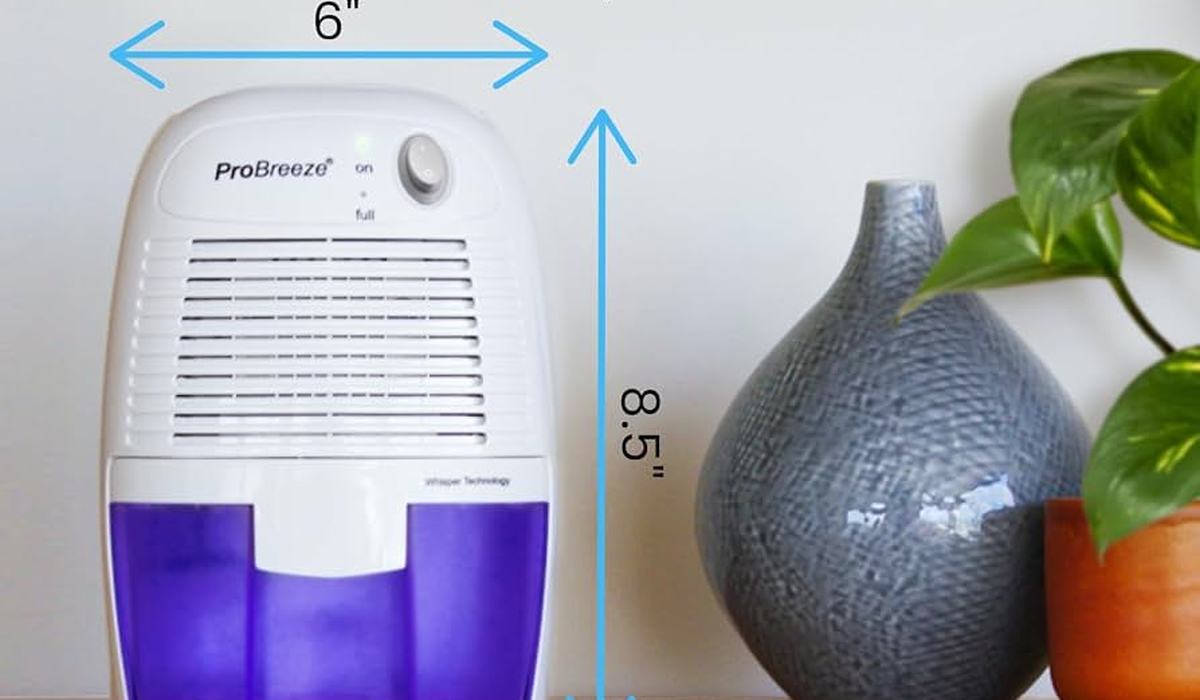
Portable Dehumidifier for Bathrooms
Compact, quiet, and no installation. The core of any portable bathroom ventilation setup.
Check Price on Amazon →Add a squeegee and a moisture absorber, and you have a complete portable system for under $150 that moves with you when the lease ends.
Frequently asked questions
What is the best portable bathroom ventilation?
Do portable dehumidifiers really work in a bathroom?
How big a dehumidifier do I need for a small bathroom?
Is a window fan or a dehumidifier better?
How much does portable bathroom ventilation cost to run?
Related guides
How to Vent a Bathroom With No Outside Access
No duct, no roof access, no drilling — how to dry it anyway.
Window Fan for a Bathroom: How to Vent Without a Fan
How to choose, place, and run one in a rental.
Bathroom Ventilation Without Drilling
Deposit-friendly fixes that need no permanent changes.