A persistent fridge smell is one of the most frustrating appliance problems, because the obvious fix — throwing out old food — rarely solves it. The real source is usually hidden: in the drain pan, behind the crisper drawers, or in a water filter that has gone bad.
This guide walks through the hidden sources in order, then the cleaning method that actually removes the smell rather than masking it.
- Most common hidden source: the defrost drain pan under the fridge, which collects stagnant water.
- Second: a spent water filter, which can grow bacteria and smell like sulphur.
- Third: spilled liquid that ran under the crisper drawers and dried.
- Fast fix: baking soda or activated charcoal absorbs odour while you find the source.
- Do not just mask it with a scented box — find and remove the source.
On this page
The hidden sources
| Source | Smell | How to check |
|---|---|---|
| Defrost drain pan | Musty, sour | Pull the fridge out, look underneath |
| Water filter | Sulphur, rotten eggs | Replace it and see if the smell goes |
| Under crisper drawers | Rotten, sour | Lift the drawers out |
| Door gasket folds | Mildew | Wipe inside the gasket folds |
| Ice maker / water line | Stale, musty | Run the dispenser, check the line |
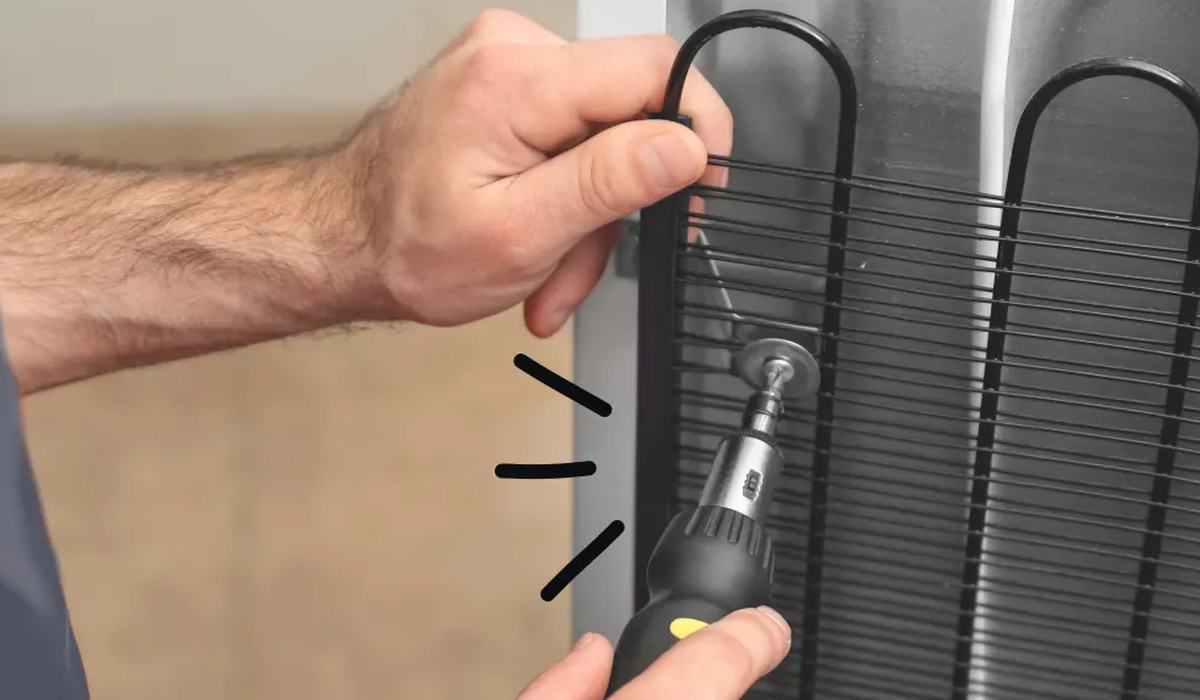
| Condenser coils | Dusty, burning | Vacuum the coils at the back |
The drain pan is the number-one culprit and the one most people never check. Every fridge produces condensation that drains to a pan underneath, where it evaporates. If the pan is dirty or the drain is slow, that water stagnates and the whole fridge smells.
How to find the source
Work from the outside in. First, pull the fridge away from the wall and look at the drain pan underneath — it is usually a shallow tray at the bottom rear. If it holds standing water or has a film of slime, you have found the source.
- Empty the fridge completely and inspect every shelf and drawer.
- Lift out the crisper drawers and look at the floor beneath them — spills pool there.
- Check the door gaskets by peeling back the folds; mildew hides in the creases.
- Sniff the water filter if you have one, and replace it if it smells.
- Check the ice maker and the water line for stale water.
- Vacuum the condenser coils at the back or bottom — dust there can smell scorched.
How to clean it properly
Once you have found the source, clean it thoroughly. Masking the smell with a scented box will not work if the source is still there.
- Unplug the fridge and remove all food.
- Wash the interior with a solution of two tablespoons of baking soda in a quart of warm water. Do not use bleach inside a fridge.
- Clean the drain pan with hot soapy water, then rinse and dry it.
- Flush the defrost drain with warm water to clear any blockage.
- Wipe the gaskets with a mild vinegar solution and dry them.
- Replace the water filter if it is more than six months old.
- Leave the doors open for a few hours to air out, then place a fresh box of baking soda inside.
Bleach fumes can be absorbed by food and plastic, and can damage seals. Baking soda or a mild vinegar solution cleans just as well and leaves no residue.
Preventing the smell
- Keep a box of baking soda in the fridge and replace it every three months.
- Cover strong-smelling food. Onions, fish and leftovers should be in sealed containers.
- Clean the drain pan twice a year. It is the source most people forget.
- Replace the water filter every six months. A spent filter is a bacterial breeding ground.
- Wipe spills immediately, especially under the drawers where they pool.
- Vacuum the condenser coils every six months to prevent dust odour.
A fridge smell is almost always hidden — the drain pan, a spent water filter, or a spill under the drawers. Find the source, clean it with baking soda, and keep a fresh box of baking soda inside. Masking the smell never works.
Find the source: 6 places to check
A fridge smell is almost never the food. It is one of six places, and they are worth checking in this order.
| Place | Sign | Fix |
|---|---|---|
| Defrost drain | Smell strongest at the back | Flush the drain tube |
| Drip pan | Smell under the fridge | Clean or replace the pan |
| Door gasket | Smell at the door edge | Wipe the folds with vinegar |
| Crisper drawers | Smell in the drawers | Wash and dry completely |
| Ice maker | Smell in the ice | Clean the ice maker and line |
| Old food | Localised smell | Find and remove it |
The defrost drain and the drip pan are the two most overlooked sources, and they are the two that cause a smell that returns no matter how often you clean the shelves. Both hold stagnant water, and stagnant water grows bacteria.
The defrost drain and drip pan
Every defrost cycle sends meltwater down the drain tube to the pan under the fridge. Food particles collect in the tube, and the pan holds a shallow layer of water that evaporates slowly. Both are ideal places for bacteria to grow.
- Unplug the fridge and pull it out.
- Find the drain hole at the back of the freezer and flush it with warm water.
- Remove the drip pan from under the fridge and wash it with hot soapy water.
- Dry both completely before reassembling.
- Add a fridge deodoriser to keep the air fresh.
If the smell is strongest at the back of the fridge, or if it returns within a week of cleaning, the drain is the source. Flushing it is a ten-minute job and it fixes the smell that cleaning the shelves cannot.
Cleaning the interior properly
Once the source is fixed, clean the interior to remove the odour that has settled on the surfaces.
- Remove everything and discard anything spoiled.
- Wash the shelves and drawers in hot soapy water and dry them fully.
- Wipe the interior with a baking-soda solution, then with clean water.
- Wipe the door gasket folds with vinegar — this is where odour hides.
- Leave the doors open for an hour to dry before restocking.
The door gasket folds are the part people miss. Grease and food collect in the creases, and a gasket that smells will make the whole fridge smell even when the interior is spotless.
Odour absorbers that actually work
| Absorber | Effectiveness | Notes |
|---|---|---|
| Activated charcoal | High | Replace every 2–3 months |
| Baking soda (open box) | Medium | Replace monthly |
| Coffee grounds | Low | Masking, not absorbing |
| Commercial fridge deodoriser | Medium–high | Follow the label |
| Vinegar bowl | Low | Temporary |
Activated charcoal is the most effective, because it adsorbs odour molecules rather than masking them. Baking soda works but it saturates quickly and needs replacing monthly. Coffee grounds and vinegar mask the smell without removing it.
When the smell means a bigger problem
A smell that returns within days of a full clean, or a smell that is strongest when the fridge has just run a defrost cycle, points to the drain or the pan. A smell that comes with a warm fridge points to a cooling fault, and food spoiling is the symptom rather than the cause. And a chemical or burning smell means unplug the fridge and stop — that is an electrical fault, not a cleaning problem.
Parts that fix a fridge smell

Refrigerator Deodoriser
An activated-charcoal deodoriser adsorbs odour instead of masking it. Replace every two to three months.
Check Price on Amazon →Fridge Drain Cleaning Brush
A long flexible brush clears the drain tube that causes the smell most people cannot find.
Check Price on Amazon →Check charcoal deodoriser price →
Frequently asked questions
Air filters
A fresh air filter removes odours the fridge cannot clear.