A refrigerator compressor cannot start on its own. It needs a start relay: a small device that briefly energises the start winding so the motor can build enough torque to begin turning, then drops out of the circuit. When the relay fails, the compressor cannot start — it hums for a second, the overload protector trips, and the cycle repeats.
The symptom is distinctive: a click, a hum of two to five seconds, a second click, then silence for a few minutes, repeating. It is also one of the cheapest repairs in refrigeration, at $20–$40 for the part.
- Click — the relay trying to start the compressor.
- Hum for 2–5 seconds — the compressor attempting to turn.
- Second click — the overload protector tripping.
- Silence for minutes — the overload resetting.
- The cycle repeats. The fridge never gets cold.
On this page
What the relay does
- The compressor motor has a run winding and a start winding; the relay energises the start winding briefly.
- Two types are common: a PTC (solid-state) relay and a current/induction relay.
- PTC relays contain a thermistor that goes high-resistance as it heats, dropping the start winding out.
- The overload protector is a separate device clipped nearby; it trips on excess current or heat.
- When the relay fails it typically goes open, so the start winding never energises and the compressor cannot turn.
- A failed relay can also stay engaged and damage the compressor, which is why a clicking fridge should not be left running for weeks.
Symptoms of failure
| Symptom | Meaning |
|---|---|
| Click, hum, click, silence, repeat | Classic failed start relay |
| Clicking with no hum at all | Overload protector tripping or no power |
| Fridge cold sometimes, warm others | Intermittent relay or overload |
| Compressor very hot | Overload tripping repeatedly |
| Fridge stopped after a power cut | Relay failed during restart |
| No sound at all | Check power, thermostat and the overload first |
Testing the relay
- Unplug the refrigerator and pull it out so you can reach the back.
- Remove the rear access panel covering the compressor.
- Locate the relay — a small plastic device clipped to the side of the compressor, with a two-wire connector.
- Photograph the wiring before disconnecting anything.
- Pull the relay off the compressor terminals and disconnect its wires.
- Shake the relay. A rattling sound means the internal parts have broken up — definite failure.
- Test continuity across the relay's input and output with a multimeter. A PTC relay will show low resistance cold.
- Look and smell for burning — a brown, scorched or burnt-smelling relay has failed.
- Check the compressor terminals while you are there (see below).
Ruling out the compressor
Before buying a relay, confirm the compressor itself is sound. If the compressor has failed, a new relay will not help.
| Test | Good result | Bad result |
|---|---|---|
| Resistance common-to-run | Low, per spec | Open or zero |
| Resistance common-to-start | Low, per spec | Open or zero |
| Resistance start-to-run | Sum of the two | Open |
| Each pin to casing | Infinite | Any continuity — grounded winding |
| Relay rattle | Silent inside | Rattles — failed relay |
Every failed start attempt stresses the compressor windings and the overload protector. A fridge clicking repeatedly for weeks can turn a $30 relay repair into a $600 compressor replacement. Diagnose it promptly.
Replacing the relay
- Order the exact relay for your model — relays are matched to the compressor, not universal.
- Unplug the fridge and photograph the wiring one more time.
- Pull the new relay from its packaging and check it matches the old one in shape and terminal layout.
- Push the new relay firmly onto the compressor terminals until it seats fully.
- If your model includes an overload protector, fit it at the same time — it is cheap and it is the other half of the starting circuit.
- Reconnect the wires in the documented order.
- Refit the rear panel.
- Plug in and listen. A healthy start is a hum that continues and a compressor that runs steadily, with no second click.
After replacement
- Listen through a full cycle. There should be no second click and no repeated cycling.
- Feel the compressor. It should run warm, not scalding, and should not feel like it is tripping.
- Give it four to six hours and check compartment temperature with a thermometer.
- If it still clicks, stop. The compressor or the overload is the fault, and further attempts risk damage.
- If it runs but does not cool, the fault is elsewhere — a sealed-system issue, a thermistor, or a defrost fault.
- Replace the overload protector proactively if it is original and the fridge is old.

Refrigerator start relay — order the exact model part
The cheap part behind the classic click-hum-click symptom. Order by fridge model number, and replace the overload protector at the same time.
Check Price on Amazon →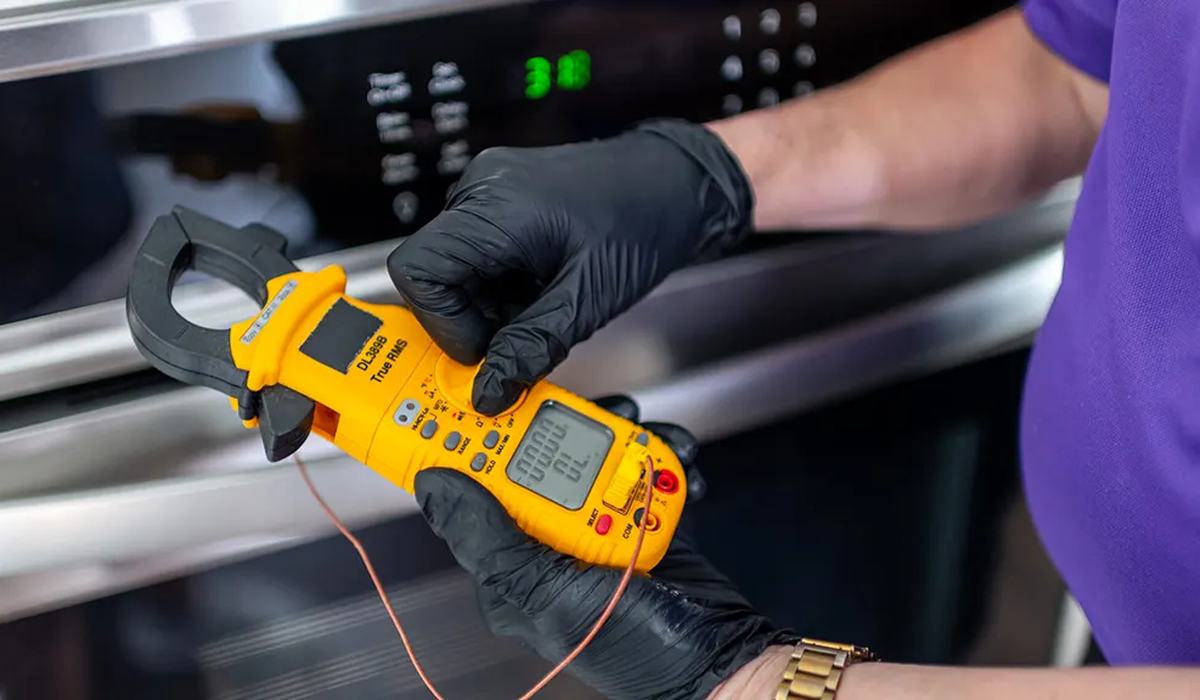
A multimeter — to rule out the compressor first
Before spending on a relay, spend five minutes measuring the compressor windings. An open or grounded winding means the relay was never the problem.
Check Price on Amazon →A fridge that clicks, hums briefly and clicks again is usually a failed start relay — a $20–$40 part. Test the compressor windings first with a multimeter, then fit the exact relay for your model, and replace the overload protector at the same time.
Frequently asked questions
PTC versus current relay
| Relay type | How it works | Failure sign |
|---|---|---|
| PTC (solid state) | Thermistor goes high-resistance as it heats | Rattles when shaken; open circuit |
| Current / induction | Coil pulls a plunger as current rises | Burnt smell; contacts pitted |
| Combined relay + overload | One assembly | Either function can fail |
| Electronic start device | Board-controlled | No visible damage; needs substitution testing |
The PTC relay is the most common type on modern domestic refrigerators because it has no moving parts and costs very little. It works by heating a ceramic element that rises sharply in resistance, which drops the start winding out of the circuit once the compressor is running. When it fails, it usually fails open, and shaking it produces a distinct rattle as the broken internal parts move.
A current relay is older technology and uses the compressor's own current draw to pull a plunger. These can usually be inspected visually: burnt contacts, a scorched body or a smell of hot plastic all indicate failure, and they are often replaced together with the overload protector as a set.