If your refrigerator has a water dispenser, it almost certainly has a filter. If it does not, you are choosing between bottled water, a pitcher, or a tap-mounted filter. The question is which gives you the best water for the least money and hassle.
This guide compares the two honestly, including the cost per gallon that most comparisons skip.
The comparison at a glance
| Factor | Refrigerator filter | Pitcher filter |
|---|---|---|
| Convenience | Excellent — on tap | Good — must refill |
| Cost per gallon | Higher | Lower |
| Filtration | Often better (NSF 53) | Varies by model |
| Cold water | Yes, from the fridge | Only if refrigerated |
| Portability | None | Take it when you move |
| Maintenance | Change every 6 months | Change every 2 months |
Cost per gallon
This is where the two diverge, and where the marketing gets vague. Let us do the arithmetic.
- Refrigerator filter: a certified cartridge costs roughly $30–50 and treats about 200–300 gallons. That is about $0.12–0.25 per gallon.
- Pitcher filter: a cartridge costs roughly $8–15 and treats about 40–60 gallons. That is about $0.15–0.30 per gallon.
- Bottled water: roughly $1–2 per gallon. Both filters beat it by a wide margin.
The two are closer than most people assume. The fridge filter is not automatically more expensive per gallon — it depends on the cartridge price and how much water you actually drink.
Filtration
Filtration quality depends on certification, not on the type of device. A certified fridge filter and a certified pitcher filter both reduce the contaminants they claim to.
- NSF/ANSI 42 covers taste and odour — both types usually meet this.
- NSF/ANSI 53 covers health contaminants such as lead and cysts — more common on fridge filters, but some pitchers have it too.
- Check the specific certification on the model you are considering, not the category.
One practical difference: a fridge filter is sealed in the water line, so there is no chance of unfiltered water bypassing it. A pitcher relies on gravity and a good seal between the cartridge and the reservoir — a poor seal means unfiltered water leaks past.
Which should you choose?
- Choose the refrigerator filter if: your fridge already has one, you drink a lot of water, and you value cold water on tap without refilling.
- Choose a pitcher if: your fridge has no dispenser, you rent and want to take it with you, or you drink less water and do not want to pay for unused capacity.
- Consider a tap-mounted filter if: you want filtered water for cooking as well as drinking, without a pitcher on the counter.
Taste and temperature
Filtration is only part of the experience. Taste and temperature are what make you actually drink more water, and the two options differ here.
- Refrigerator filter. Water comes out cold, straight from the dispenser. Cold water tastes better to most people, and the convenience means you drink more.
- Pitcher filter. Water is filtered at room temperature unless you keep the pitcher in the fridge. A pitcher that lives on the counter gives you lukewarm water, which many people find less appealing.
- Chlorine taste. Both remove it if they carry NSF/ANSI 42. If your water tastes strongly of chlorine, either will fix it.
- Metallic taste. This usually means lead or iron, which needs NSF/ANSI 53. Check the certification before assuming a filter will fix it.
If taste is your main complaint, the fridge dispenser has the edge simply because the water is cold. If you do not have a dispenser, keep the pitcher in the fridge rather than on the counter.
Maintenance and waste
Both options need regular filter changes, and both produce plastic waste. The difference is how much, and how easy it is to forget.
- Refrigerator filter. One cartridge every six months. The purifier usually has an indicator light, so it is hard to forget. Cartridges are bulky plastic.
- Pitcher filter. One cartridge every two months — six a year. No indicator, so it is easy to forget. Cartridges are smaller but more frequent.
- Recycling. Some brands run cartridge take-back schemes. Check before you buy if waste matters to you.
- Cost of forgetting. A filter left too long stops filtering and can start releasing what it captured. Set a reminder either way.
Over a year, the fridge filter produces two cartridges and the pitcher produces six. The fridge filter wins on waste, and its indicator light means you are less likely to forget it.
Filters that help
A certified refrigerator filter or a pitcher filter — both reduce chlorine taste and, with NSF/ANSI 53, health contaminants.
Frequently asked questions
Is a refrigerator water filter better than a pitcher?
Which is cheaper, a fridge filter or a pitcher filter?
Do pitcher filters remove lead?
Can I use a pitcher filter if my fridge has no dispenser?
How often do I change each type of filter?
Related guides
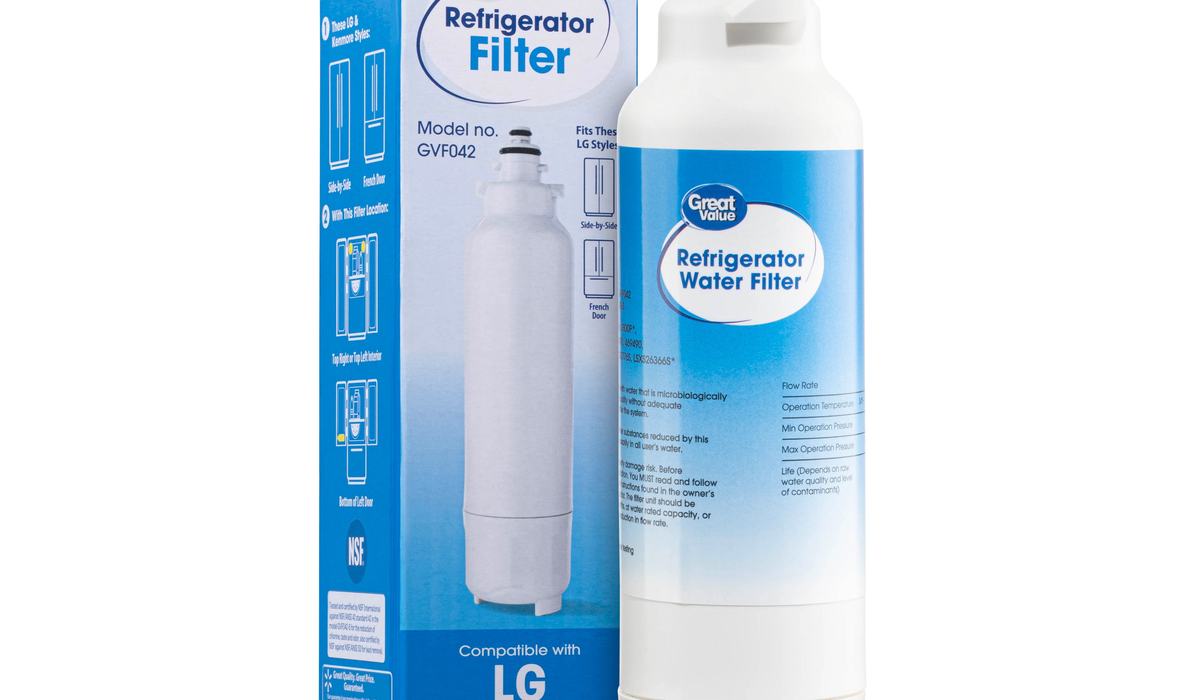
Best Refrigerator Water Filter Replacement
OEM versus aftermarket, and what certification means.