Dehumidifiers are one of the few appliance categories where a renter can solve a building problem without touching the building. There is no wiring, no plumbing and no mounting.
But “technically allowed” is not the same as “well suited”. A 50-pint compressor unit is heavier, louder and hungrier than most rental rooms need, and its footprint becomes a problem in a studio. This guide covers what actually matters in a rental.
On this page
The four renter constraints
Every rental decision about a dehumidifier comes back to four things you cannot change.
- No permanent fixtures. No drilling, no wall mounting, no modifying the space.
- No plumbing changes. You cannot add a drain line. Whatever you do has to work with the fixtures that exist.
- Shared walls. A compressor hum that carries into a neighbour's bedroom is a real problem, and one that gets reported.
- Limited space and storage. A large unit needs a permanent corner and a place to live between seasons.
None of these rules out a dehumidifier. They do rule out the biggest, noisiest and heaviest models for most apartments.
What to look for
| Feature | What to look for | Why it matters in a rental |
|---|---|---|
| Capacity | 20–30 pints for most rooms | Smaller units are lighter, quieter and cheaper to run |
| Humidistat | Digital, adjustable target | Lets the unit idle instead of running non-stop |
| Drain | Removable tank plus a drain outlet | Gives you both options without plumbing changes |
| Weight | Under 30 lb | You will move it between rooms and to storage |
| Noise | Under 45 dB | Shared walls turn a hum into a complaint |
| Footprint | Fits your floor plan | Studios have no spare corner |
| Power draw | Under 400 W | Safer on an old shared circuit |
Two labels do the homework for you. An Energy Star rating confirms the unit was tested for water removed per kilowatt-hour, and the EPA humidity guidance of 30–50% tells you what to set the humidistat to.
Noise and shared walls
A compressor dehumidifier produces two noise sources: the fan, and a low-frequency pulse from the compressor. The pulse is what travels through walls, and it is what neighbours complain about.
| Sound level | Comparable to | Bedroom use |
|---|---|---|
| Under 35 dB | A quiet library | Fine overnight |
| 35–40 dB | A soft conversation | Acceptable on low fan |
| 40–45 dB | A refrigerator hum at close range | Noticeable at night |
| 45–50 dB | A normal conversation | Disruptive in a bedroom |
| Over 50 dB | A busy office | Not for sleeping areas |
Three tactics cut the noise without touching the building. Put the unit on a foam or cork pad to break the floor coupling. Keep it off the shared wall — the decibel difference against a party wall versus an exterior wall is significant. And use a low fan setting at night; most units remove nearly as much water on low, just more slowly.
Power and shared circuits
Older apartments often have few outlets per circuit. A dehumidifier drawing 300 to 400 W is not heavy on its own, but it is enough to tip a circuit that is already carrying a space heater or a hair dryer.
- Check the breaker. If the unit trips a breaker, move it to a different circuit before concluding it is faulty.
- Avoid daisy-chaining. Plug directly into a wall outlet, not into an extension cord or a power strip shared with other loads.
- Watch the cord. Route it where nobody will step on it or shut a door on it.
- Plug-in timers help. A simple mechanical timer between the outlet and the unit gives you scheduling with no wiring.
Drainage without plumbing
You cannot add a drain, but most apartments already have somewhere water can go.
| Option | Needs drilling? | Best for |
|---|---|---|
| Empty the tank manually | No | Small rooms, once-a-day output |
| Gravity hose to a floor drain | No | Bathrooms, older and basement units |
| Gravity hose to a shower tray | No | Vent-free bathrooms |
| Gravity hose to a laundry pan | No | Kitchen or utility areas |
| Gravity hose to a bucket | No | Anywhere, but check it daily |
| Pump hose to a sink | No | Rooms with no floor drain |
| Hose out of a window | No, but check the lease | Last resort on a pump unit |
Not one of these needs permission or a modification, and every one leaves no trace when you move out.
Storage and moving
A dehumidifier is seasonal in many apartments, so it has to store, and eventually it has to move.
- Clean and dry it fully before storage, or it will smell when you take it out.
- Empty and dry the tank, and remove the drain hose and let it drain clear.
- Store upright if possible. A compressor unit laid on its side must stand upright for several hours before use so the oil settles back.
- Keep the manual and the drain fittings in a bag taped to the unit. Losing the drain adapter is the most common moving problem.
- Measure the doorway before buying a 50-pint unit. Some are too bulky for older apartment corridors.
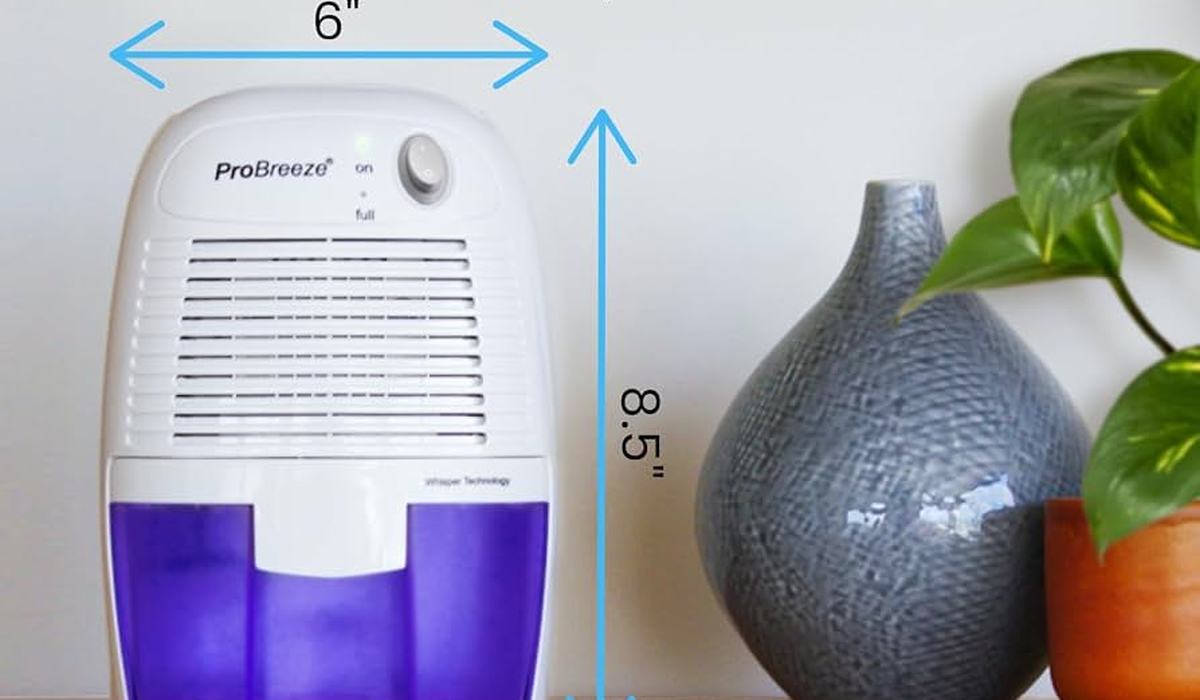
Compact Rental Dehumidifier, 20–30 Pint
The renter combination: a digital humidistat, a drain outlet, an accessible filter and a weight you can carry between rooms and into storage.
Check Price on Amazon →The renter's checklist
- Room area measured, capacity chosen from the size chart.
- Unit weighs under 30 lb so it can be moved and stored.
- Digital humidistat present, so it can be set to 50%.
- Drain outlet present, plus a removable tank as a fallback.
- Noise level under 45 dB for a bedroom or shared-wall placement.
- Filter accessible without tools for monthly cleaning.
- A drain destination identified: floor drain, shower, laundry pan or bucket.
- A foam pad and a leak alarm added to the basket.
- Lease checked if a window discharge is the only option.
Landlord and lease notes
A portable dehumidifier is normal household equipment, in the same category as a fan or a heater. It does not need permission in most leases.
- Read the lease for appliance rules. Some leases list what may be plugged in, and a few ban unattended appliances when the unit is vacant.
- Document existing moisture damage. Photograph any pre-existing mould or water staining before you set up, so a later report is not attributed to you.
- Report building-level damp. If a room reads above 60% with the dehumidifier running, the source is likely the building, and that is a maintenance request rather than a tenant problem.
- Do not install or modify anything. No window vent kits, no through-wall ports, no permanent hoses under a door threshold.
Frequently asked questions
Is a dehumidifier renter-friendly?
Can I run a dehumidifier in an apartment without permission?
What size dehumidifier for a rental apartment?
How do I drain a dehumidifier in a rental?
Is a noisy dehumidifier a problem in an apartment?
Related guides