Almost every vacuum that “stopped working” has not stopped working. It has a blockage, a full bin, or a filter that has not been cleaned since it was bought. Work through these six checks in order and you will fix the large majority of cases without spending anything.
- Bin full or bag full — the most obvious and most common.
- Filter clogged or missing — the most under-diagnosed.
- Hose or wand blockage — a hidden plug of debris.
- Brush bar jammed or stalled — hair wrapped around the roller.
- Seals and gaskets — a leak kills suction silently.
- Battery in a cordless unit — declining with age, not with charge.
On this page
1. Bin or bag — check this first
A vacuum with a full bin or bag loses suction progressively, so you may not notice until it is barely working. On bagless units, the “max fill” line is genuinely a limit — cyclone performance collapses when the bin is full.
- Bagless: empty at the line, not when it is overflowing. Also tap the bin to release the fine dust caked on the inner wall.
- Bagged: replace at three-quarters full, not when it is packed solid. Bags are cheap; motors are not.
- Check the cyclone or pre-separator for hair and debris packed around the cone.
- Look for a full-bin sensor on premium units that may be showing an error.
2. Filters — the most under-diagnosed cause
Filters are the single most common cause of gradual suction loss, and the one almost nobody checks. There are usually two or three: a foam pre-motor filter, a pleated main filter, and possibly a HEPA exhaust filter.
- Locate all filters — check the manual, because they hide behind the bin and under the exhaust grille.
- Tap them out over a bin, outdoors. You will be surprised how much dust is in them.
- Wash foam and washable pleated filters in warm water until the water runs clear.
- Dry fully for 24 hours. A damp filter restricts airflow and grows mould.
- Replace HEPA media on schedule — typically every 6–12 months, and never wash it aggressively.
Running a vacuum with a missing or removed filter lets fine dust straight into the motor and out the exhaust into your room. It is one of the fastest ways to kill a vacuum and one of the worst things you can do for indoor air.
3. Hose and wand blockage
A blockage in the hose or wand can be invisible from outside and cut suction dramatically. Common culprits: a wad of hair, a sock, a piece of plastic bag, or a compacted plug of fine dust.
- Disconnect the hose from both ends and look through it against a light.
- Drop a coin through it — if it does not fall out the other end, you have found the blockage.
- Push it out with a broom handle from the clear end. Never use wire, which can puncture the hose.
- Check the wand and any telescopic sections; these are common trap points.
- Check the inlet port on the body and the brush head's internal channel.
4. Brush bar jammed or stalled
On an upright or a stick vacuum, the brush bar does a large share of the work. If it stalls, the vacuum sucks but does not clean.
- Turn the vacuum off and inspect the roller. Hair wrapped around the ends is the classic cause.
- Cut the hair off with scissors along the length of the roller, then pull it free. Do not cut into the bristles.
- Check for a stalled motor: if the brush turns slowly or stops under load, the belt on a belt-driven model may have failed.
- Check the end caps and bearings for seized bearings — a common failure on cheaper models.
- Reset the overload: many vacuums have a brush-reset button for when the bar jams.
5. Seals and gaskets
Suction is about airtightness as much as motor power, and a leaking seal is invisible. This is why a vacuum can seem weak even after cleaning everything.
- Check the bin seal — the rubber ring where the bin meets the body. A missing or perished seal leaks badly.
- Check the bin is seated fully. A bin not clicked into place leaks at the joint.
- Inspect the hose cuffs for cracks and splits.
- Check the filter cover seal. If it does not seal, air bypasses the filter entirely.
- Look for a cracked body around the intake or the exhaust.
6. Battery on a cordless unit
If your cordless vacuum runs for less time, or seems weak even on maximum, the battery is declining. This is a wear item, not a fault.
- Symptoms: short runtime, weak performance even on boost, or a rapid drop from full to empty.
- Test: does it perform normally in the first minute after a full charge, then fade? That is the battery.
- Replacement: typically $30–$80 depending on the brand, and it is usually a DIY swap.
- Note: aftermarket batteries vary hugely in quality and often claim far higher capacity than they deliver.
Diagnosis table
| Symptom | Most likely cause | Fix |
|---|---|---|
| Gradual suction loss over weeks | Filter clogged | Wash or replace the filter |
| Sudden total loss of suction | Hose or wand blockage | Clear the blockage |
| Weak but working, bin near full | Full bin breaking the cyclone | Empty the bin |
| Sucks but does not clean floors | Brush bar stalled or worn | Clear hair; check the belt |
| Weak even with a clean filter | Leaking seal or gasket | Check bin seal and hose cuffs |
| Fades a minute after full charge | Battery declining | Replace the battery |
| Burning smell | Belt slipping or motor failing | Stop using it; inspect the belt |
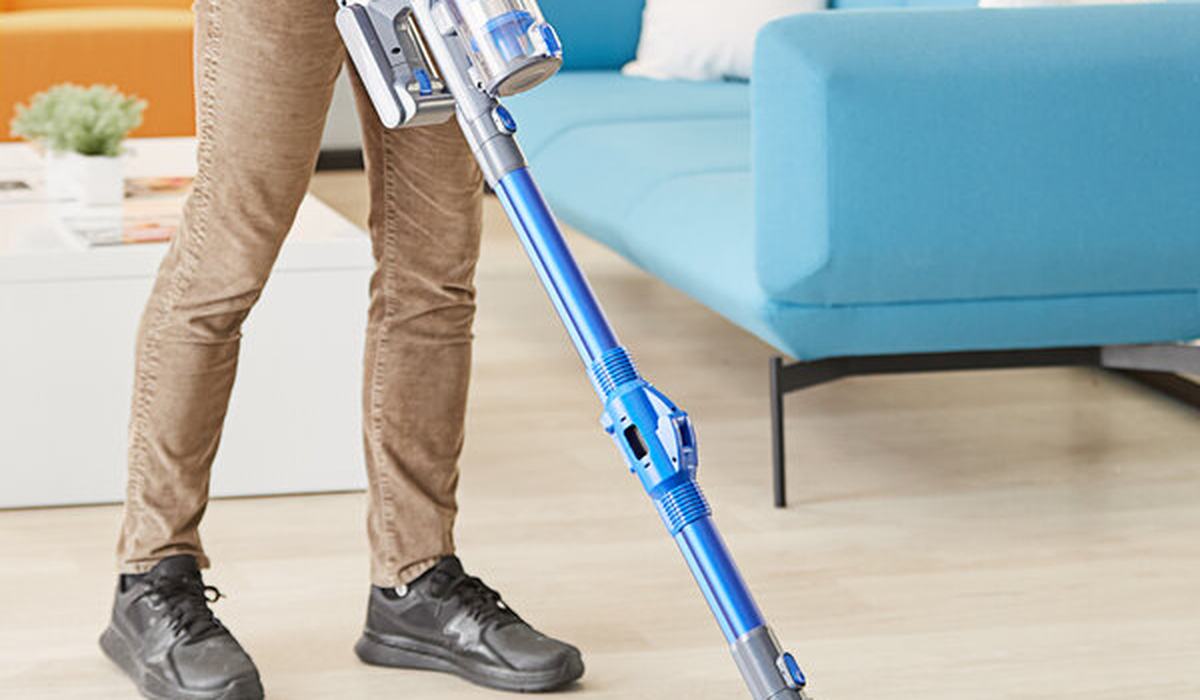
Replacement vacuum filters — the cheap fix people skip
If your filters are more than a year old, replace them rather than cleaning them again. Filter media degrades and no amount of washing restores it.
Check Price on Amazon →Empty the bin, wash the filters and dry them fully, clear the hose, cut the hair off the brush bar, check the bin seal, and test the battery. That sequence fixes the large majority of weak vacs for free — and if it does not, the diagnosis table tells you what part to buy.