On this page
The gauge range you need
Appliance wiring is not the same as house wiring. You need a stripper that covers the small stranded gauges appliances use.
| Wire use | Gauge | Notes |
|---|---|---|
| Control board / sensor wiring | 22–18 AWG | Small stranded wire |
| Appliance power leads | 18–14 AWG | Most common |
| Heavy appliance / dryer | 12–10 AWG | Solid or stranded |
| House wiring (not appliances) | 14–12 AWG | Solid |
A stripper that only covers 14–12 AWG solid wire — the common house-wiring tool — will not handle the 18–22 AWG stranded wire inside an appliance. Check the range before you buy.
Our picks
Best overall: Klein Tools 11055
The Klein 11055 is the standard appliance-repair stripper. It covers 20–10 AWG, has a built-in cutter and screw-shearing holes, and the spring-loaded action makes repeated strips easy. It is the tool most appliance techs reach for.
Klein Tools 11055 Wire Stripper
Covers 20–10 AWG with a built-in cutter and screw shear. The standard appliance-repair stripper.
Check Price on Amazon →Best self-adjusting: Knipex 12 62 180
The Knipex self-adjusting stripper grips and strips in one motion, with no gauge selection. It is faster and more consistent than a manual stripper, and it does not nick the strands. It costs more, but it is the tool to buy if you strip wire often.
Knipex 12 62 180 Self-Adjusting Stripper
Self-adjusting, no gauge selection, no nicked strands. The premium choice for frequent stripping.
Check Price on Amazon →Best value: IRWIN Vise-Grip Wire Stripper
The IRWIN Vise-Grip is the budget pick. It covers the common gauges, has a cutter and crimper, and costs a fraction of the premium tools. For occasional appliance work, it is plenty.
IRWIN Vise-Grip Wire Stripper
A multi-function stripper, cutter and crimper at a value price. Good for occasional appliance repairs.
Check Price on Amazon →Comparison table
| Model | Gauge range | Type | Crimper | Best for |
|---|---|---|---|---|
| Klein 11055 | 20–10 AWG | Manual | Screw shear | Best overall |
| Knipex 12 62 180 | 24–10 AWG | Self-adjusting | No | Frequent use |
| IRWIN Vise-Grip | 22–10 AWG | Manual | Yes | Value |
| Klein 1011 | 18–10 AWG | Manual | Yes | Compact kit |
Stripping without nicking the wire
A nicked strand is a weak point that can break later and cause an intermittent fault — the hardest kind to diagnose. Strip cleanly:
- Match the stripper gauge to the wire gauge. Do not use a larger notch and hope.
- Close the stripper gently and rotate it a quarter turn around the wire.
- Pull the insulation off with a firm, straight pull — do not twist.
- Inspect the strands. If any are cut, snip the wire and start again.
- Twist the strands lightly and insert them fully into the terminal.
Four wire-stripping mistakes
- Using the wrong gauge notch. A notch that is too large slips; one that is too small nicks the strands. Match the notch to the wire.
- Twisting instead of pulling. Twisting breaks strands. Close the stripper, rotate a quarter turn, then pull straight.
- Using house-wiring strippers. They are sized for 14–12 AWG solid wire and will not handle the 18–22 AWG stranded wire inside appliances.
- Stripping a live wire. Unplug the appliance and discharge any capacitors before you cut or strip anything.
Stripping and crimping
Many appliance repairs need a crimp as well as a strip. A good multi-function tool covers both, but the crimp quality varies.
| Tool type | Strip | Crimp | Best for |
|---|---|---|---|
| Self-adjusting stripper | Excellent | None | Frequent stripping |
| Multi-function stripper | Good | Basic | Occasional repairs |
| Dedicated crimper | None | Excellent | Connector work |
| Ratcheting crimper | None | Best | Reliable connections |
For a reliable connection, a ratcheting crimper is worth having separately. A basic crimp on a multi-function tool can pull loose, and a loose crimp is an intermittent fault that is very hard to find later.
Types of wire stripper
There are four kinds, and the right one depends on how often you strip wire and what gauge you work with.
| Type | Gauge range | Best for |
|---|---|---|
| Self-adjusting | 10–24 AWG | Frequent stripping, mixed gauges |
| Multi-function | 10–22 AWG | Occasional repairs, strip + crimp |
| Manual notch | Specific gauges | Precision on one gauge |
| Ratcheting crimper | N/A (crimp only) | Reliable connectors |
For appliance repair, a self-adjusting stripper is the best first buy. It handles the 18–22 AWG stranded wire inside appliances without nicking the strands, and it needs no gauge selection. A manual notch stripper is faster once you know your gauge, but it is unforgiving if you pick the wrong notch.
Stripping without nicking
Nicked strands are the most common cause of a wire that fails later. The technique matters:
- Match the notch to the wire — too large slips, too small nicks.
- Close the stripper and rotate a quarter turn.
- Pull straight — do not twist, which breaks strands.
- Inspect the strands — if any are cut, trim and redo.
A quarter turn scores the insulation so it separates cleanly. Twisting instead of pulling is what breaks strands, and a broken strand is an intermittent fault that is very hard to find later.
Crimping a reliable connection
A crimp is only as good as the tool. A basic crimp on a multi-function tool can pull loose; a ratcheting crimper applies consistent force and will not release until the crimp is complete. After crimping, tug gently on the wire — if it moves, cut it off and redo it. A crimp that passes a firm pull will not fail in service.
What to look for
For appliance repair, the right stripper handles small stranded wire without nicking it.
- A self-adjusting mechanism for 18–22 AWG stranded wire.
- Comfortable grips — you will use it more than you think.
- A built-in cutter for trimming wire.
- A separate ratcheting crimper for reliable connectors.
The self-adjusting mechanism is the key feature. Appliance wire is small and stranded, and a manual notch stripper sized for house wiring will either slip or cut the strands. A self-adjusting tool handles the range without gauge selection.
Keeping them sharp
Wire strippers dull with use, and a dull stripper nicks strands. Keep them dry, do not use them to cut screws or hard wire, and replace them when they start tearing insulation instead of cutting it cleanly. A $20 stripper that lasts two years is cheaper than a $5 one that ruins a repair.
Frequently asked questions
What wire stripper do I need for appliance repair?
What gauge wire is used in appliances?
Is a self-adjusting wire stripper worth it?
Why do my stripped wires keep breaking?
Can I use house-wiring strippers on appliance wire?
Related guides
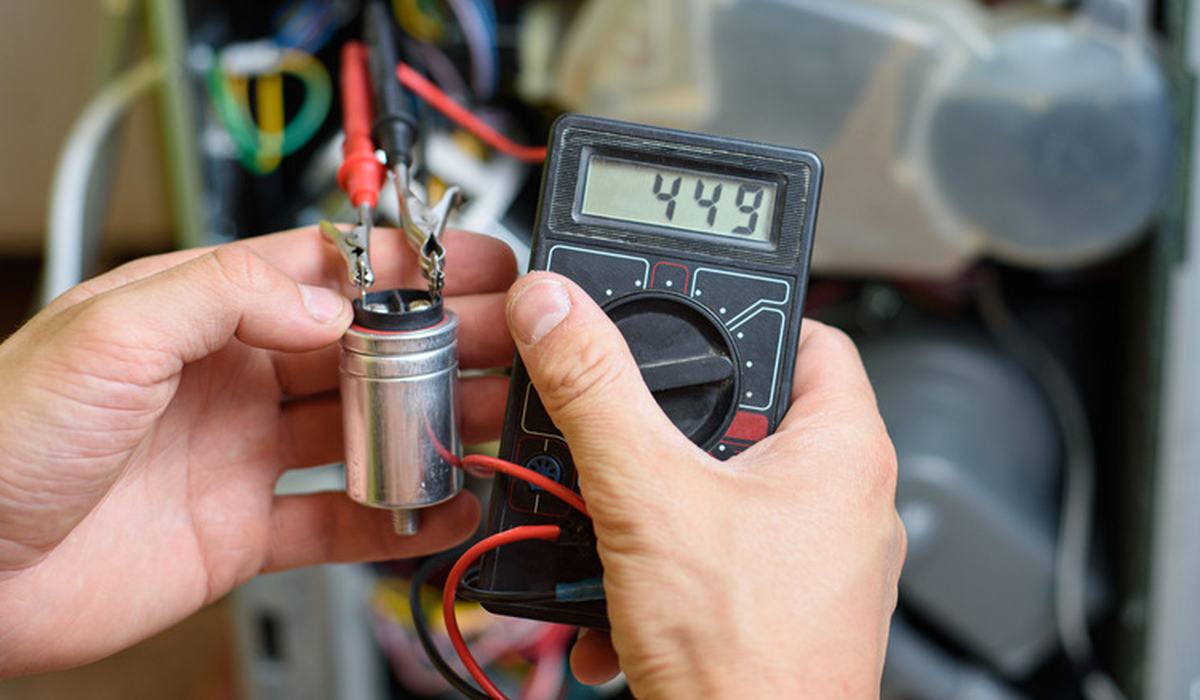
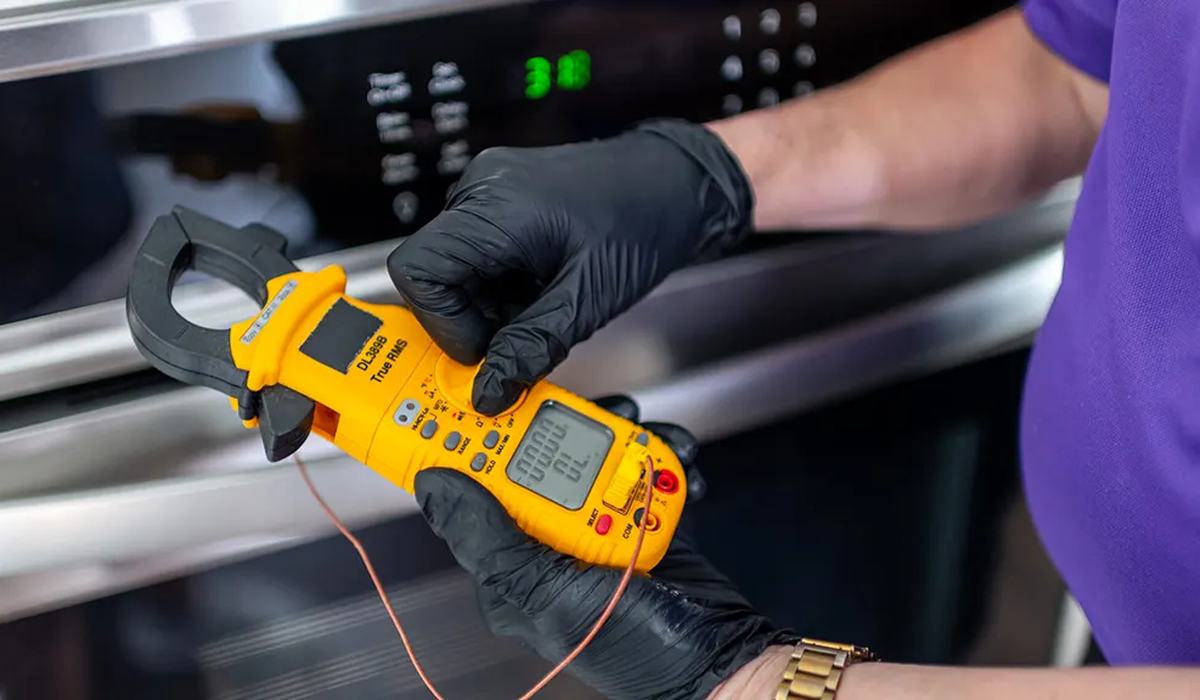
How to Test Continuity With a Multimeter
The one skill behind every electrical diagnosis.