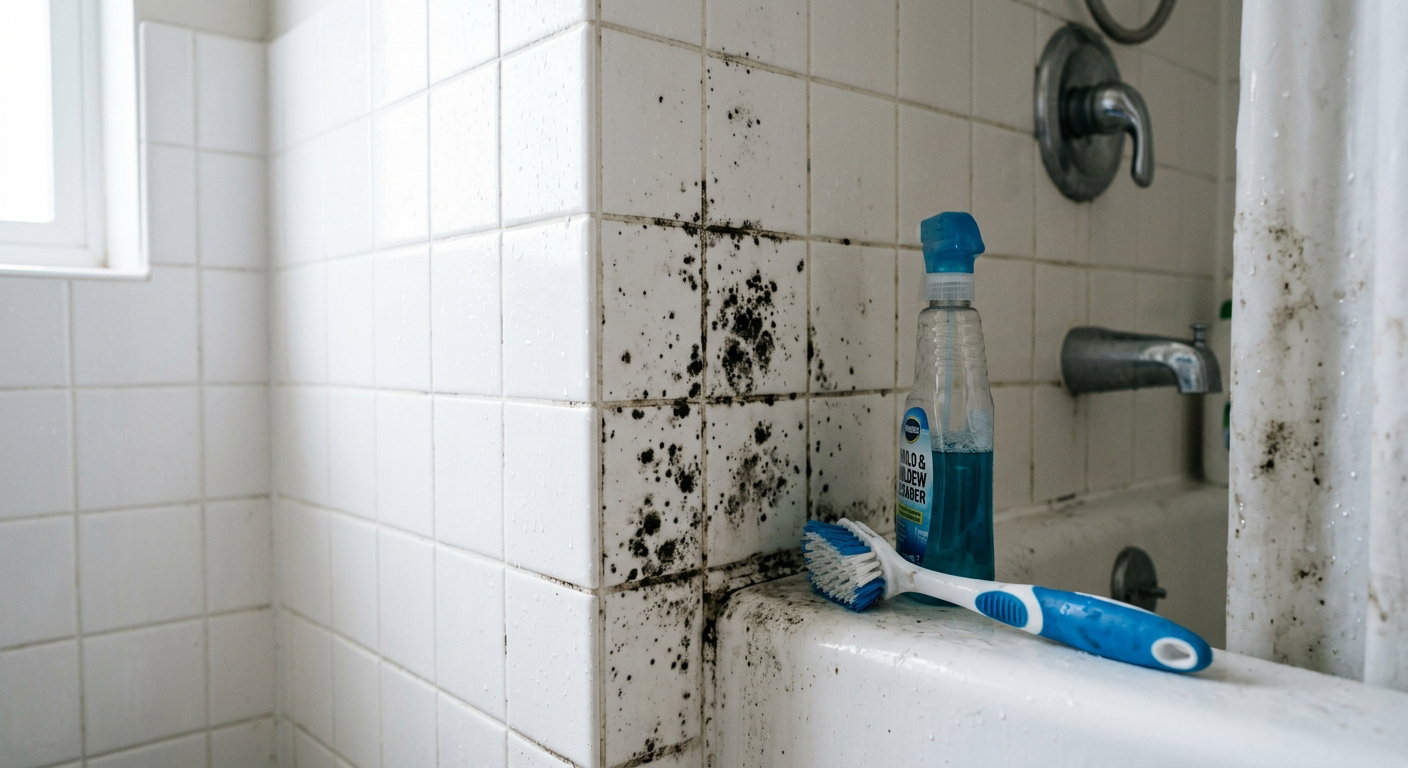
On this page
The short answer
Yes. Running a dehumidifier for 20–30 minutes after a shower is the single most effective thing you can do to keep a bathroom dry, especially one with no fan or window. The moisture is at its highest immediately after you shower, so that is when removal is easiest.
Why the first 30 minutes matter
A shower adds roughly half a litre of water to the air. In the first few minutes that water is still airborne, which means it is easy to remove. After 30–60 minutes it has condensed onto the coldest surfaces — the mirror, the grout, the window frame, the outside wall — and from there it soaks into the plaster.
Once moisture is in the wall, a dehumidifier cannot reach it. That is why timing matters more than capacity: catching the water while it is still in the air is far easier than drying it out of a wall later.
How to run it
- Squeegee the walls and glass while the room is still steamy.
- Dry the floor with a dedicated towel.
- Close the door and switch the dehumidifier on.
- Run for 20–30 minutes.
- Empty the tank and open the door to let the room equalise.
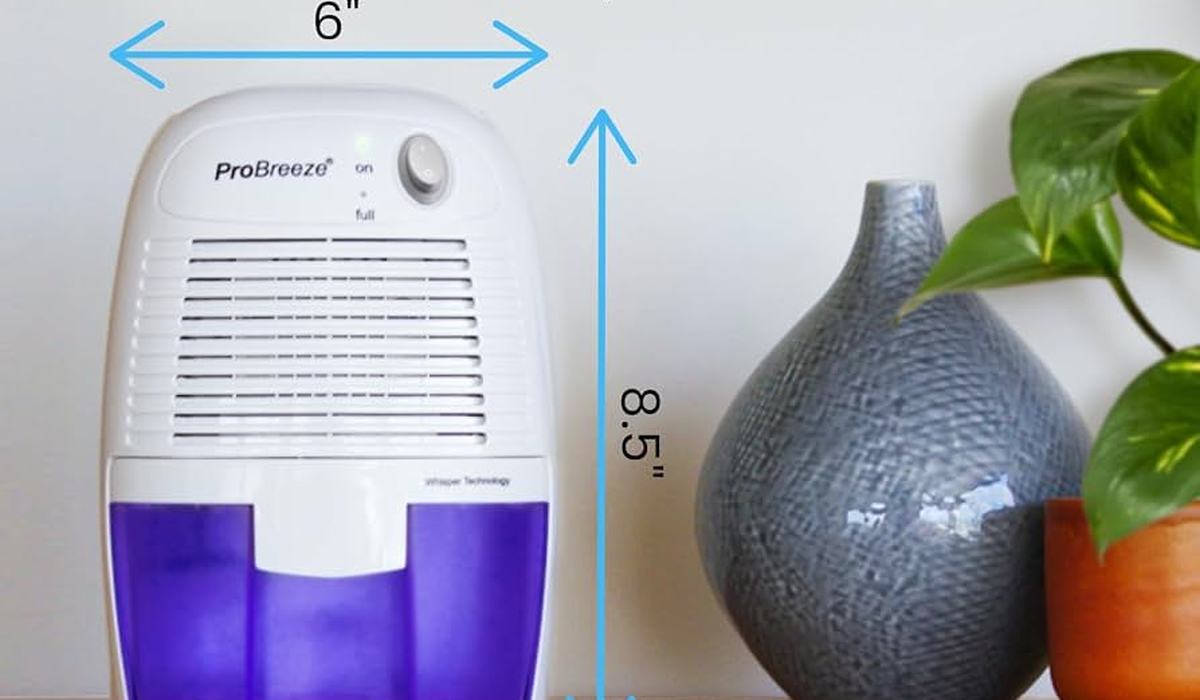
Bathroom Dehumidifier (After-Shower Use)
Quiet enough to run while you get ready, with auto shut-off and a lift-out tank. Sized for a single bathroom.
Check Price on Amazon →What setting to use
Set the target humidity to 40–50%. That is comfortable for a bathroom and safely below the 60% threshold where mould grows. Setting it lower wastes power without any real benefit.
If your unit has no humidity setting, run it on a timer for 20–30 minutes instead. A plug-in timer is a cheap way to automate it.
Dehumidifier vs leaving the door open
| Method | Removes moisture? | Where the moisture goes | Cost |
|---|---|---|---|
| Dehumidifier (door closed) | Yes | Into a tank | $60–$200 |
| Door open | No | Into the bedroom/hallway | $0 |
| Window open | Partly | Outside (slowly) | $0 |
| Fan on exhaust | Yes | Outside | $20–$70 |
Leaving the door open does not remove moisture — it relocates it. That is fine if the rest of the flat is well ventilated, but in a sealed apartment it just moves the damp problem into the bedroom.
Common mistakes
- Running it with the door open. It will try to dry the whole flat and never reach the target.
- Starting it an hour later. By then the water has condensed onto surfaces.
- Not squeegeeing first. The walls hold a surprising amount of water.
- Leaving a wet towel in the room. It releases the water straight back into the air.
- Forgetting to empty the tank. A full tank means the unit stops working.
Why timing beats capacity
A dehumidifier removes water from the air. Once that water has condensed onto a wall, it is no longer in the air, and the unit cannot reach it. That is why starting within a few minutes of the shower matters more than buying a bigger unit.
| When you start | Water still airborne | Result |
|---|---|---|
| Immediately | Most of it | Room dries in 20–30 min |
| After 30 minutes | About half | Room dries in 45–60 min |
| After 2 hours | Little | Walls stay damp; mould risk |
Running cost
Thirty minutes a day on a 20–30 pint unit costs under $1 a month. That is far less than the cost of mould remediation or a deposit deduction, which is the real comparison.
Maintenance
- Empty and rinse the tank after each use.
- Clean the pre-filter monthly.
- Deep clean the tank monthly to stop biofilm.
- Check the coils monthly for dust and frost.
What to do if you do not have a dehumidifier
- Squeegee the walls and glass — removes most of the water before it evaporates.
- Dry the floor with a dedicated towel.
- Open a window if you have one, and run a fan on exhaust.
- Leave the door open only after the room has been squeegeed, so you are not moving damp air into the bedroom.
Sizing and run time
| Bathroom | Capacity | Run time after a shower |
|---|---|---|
| Small en-suite, under 40 sq ft | 10–20 pints | 20–30 min |
| Standard bathroom, 40–80 sq ft | 20–30 pints | 30–45 min |
| Large bathroom, 80–120 sq ft | 30–50 pints | 45–60 min |
Placement
- On the floor, near the shower. Moist air sinks as it cools.
- Door closed. Otherwise you dry the whole flat.
- Clear of the walls by 10–15 cm.
- Not in the shower. Keep it away from spray.
- On a level surface so the tank sensor works.
Features that make the routine easy
- Humidity target — set 50% and let it switch itself off.
- Auto shut-off — essential in a wet room.
- Washable pre-filter — saves money over time.
- Quiet operation — under 45 dB, so it does not disturb the flat.
- Compact footprint — bathrooms are small.
The verdict
Start the dehumidifier within a few minutes of the shower, close the door, and let it run for 30 minutes. That single habit keeps a windowless bathroom dry and costs under $1 a month. Timing matters more than capacity.
The routine, step by step
- Squeegee the walls and glass while the shower is still running.
- Dry the floor with a dedicated towel.
- Start the dehumidifier within a few minutes, door closed.
- Let it run 30 minutes, or until the humidity target is reached.
- Empty and rinse the tank so it does not grow biofilm.
- Leave the door ajar once the room is dry.
Common mistakes
- Running it with the door open. You dry the whole flat instead.
- Starting it an hour later. The water has already condensed onto the walls.
- Never cleaning the tank. It will smell worse than the damp did.
- Buying by capacity alone. Timing matters more than capacity.
- Ignoring the pre-filter. A clogged filter is the top cause of poor performance.
Frequently asked questions
Should I run a dehumidifier after every shower?
How long after a shower should I run a dehumidifier?
What humidity should I set it to after a shower?
Is it better to leave the door open or run a dehumidifier?
Can I run a dehumidifier while I am in the shower?
Related guides