A dehumidifier is a small appliance with a surprisingly large appetite. Its compressor runs continuously while it is on, so the cost scales with hours, not with how damp the room is.
This guide gives you the wattage for each size class, the arithmetic to convert that to a monthly figure at your own electricity price, and the controls that cut the bill most.
On this page
The arithmetic in three steps
Every running-cost estimate comes from the same three numbers: the unit's wattage, the hours it runs, and your electricity price.
- Watts ÷ 1000 = kilowatts. A 290 W unit is 0.29 kW.
- Kilowatts × hours = kilowatt-hours. Running 2 hours is 0.58 kWh.
- Kilowatt-hours × your price = cost. At 17 cents, 0.58 kWh is about 10 cents for those two hours.
Over 30 days at two hours a day that is 17.4 kWh, or about $3.00 a month. The same unit running continuously is 209 kWh, or about $35.50 a month.
Wattage by size
Wattage scales with pint rating, and desiccant units draw more than compressor units of the same rating because they run a heater.
| Size class | Compressor draw | Desiccant draw | Approx annual kWh, 2 h/day |
|---|---|---|---|
| 10–20 pint | 180–250 W | 300–450 W | 130–180 kWh |
| 20–25 pint | 250–320 W | 450–600 W | 180–230 kWh |
| 30–35 pint | 320–400 W | 600–800 W | 230–290 kWh |
| 45–50 pint | 450–600 W | 800–1,100 W | 330–440 kWh |
| 70 pint | 650–850 W | — | 470–620 kWh |
These are running figures, not peak. A compressor unit draws a brief surge at start-up that can be two to three times the running wattage, which is worth knowing if you are running it off a shared circuit in an old apartment.
Monthly cost table
At 17 cents per kWh, for a 22-pint compressor unit drawing 290 W:
| Hours per day | kWh per month | Cost per month | Typical use case |
|---|---|---|---|
| 1 h | 8.7 kWh | $1.48 | One shower a day, bathroom unit |
| 2 h | 17.4 kWh | $2.96 | Morning and evening runs |
| 4 h | 34.8 kWh | $5.92 | Laundry day drying |
| 8 h | 69.6 kWh | $11.83 | Overnight plus daytime |
| 12 h | 104.4 kWh | $17.75 | Half-day schedule |
| 24 h | 208.8 kWh | $35.50 | Left on continuously |
The jump from two hours to twenty-four is the whole story. Most renters run a dehumidifier far longer than they need to because the tank keeps filling and the unit keeps running — which leads directly to the next section.
Duty cycle is what matters
A dehumidifier with a humidistat does not run its compressor continuously. You set a target humidity, and once the room reaches it the unit idles. That is the single biggest lever on your bill.
A unit with no humidistat, or one set to continuous mode, runs its compressor every minute it is switched on. A unit set to 50% in a room that reaches 50% will idle most of the time and cost a fraction as much.
A timer is the second lever. Running the unit for two hours after a shower and switching it off costs a tenth of running it continuously, and in a vent-free bathroom that schedule is usually enough.
How to cut the bill
- Set a target humidity, not continuous. 50% is the sweet spot for comfort and mould prevention.
- Use a timer. Two hours after showering or laundry beats all-day running.
- Fix the source first. A running toilet or a leaking pipe makes the dehumidifier work every hour of the day.
- Keep doors and windows shut while it runs, or you are drying the neighbourhood.
- Place it centrally so the humidistat reads the room, not a cold corner.
- Clear the airflow — a blocked intake makes the compressor run longer for less water.
- Choose Energy Star so the efficiency claim has been tested to a standard.
Energy Star and the energy factor
The Energy Star program rates dehumidifiers on an integrated energy factor: litres of water removed per kilowatt-hour. A unit with a higher energy factor removes more water for the same electricity.
Two units with the same pint rating can differ by 30% or more on this figure. The label is on the box and in the product listing. If two units are close in price, the one with the better energy factor will cost less over a year than the price difference.
For scale: replacing a 10-year-old dehumidifier with a current Energy Star model can cut running cost by a third, because the efficiency standards have tightened twice since then.
The apartment angle
Renters often pay for electricity directly, and in some buildings the bill is allocated by square footage rather than metered per unit. Either way, a dehumidifier running continuously is one of the few appliances you can actually measure and control.
- Old wiring, shared circuits. A 600 W unit plus a hair dryer on the same circuit will trip a breaker. Run the dehumidifier when the heavy appliances are not on.
- No permanent install. A plug-in timer between the outlet and the unit gives you the schedule control of a built-in timer without touching the wiring.
- Watch the cost creep. A unit left on “continuous” through a whole summer can add $100 or more to your bill. Set the humidistat and forget it.
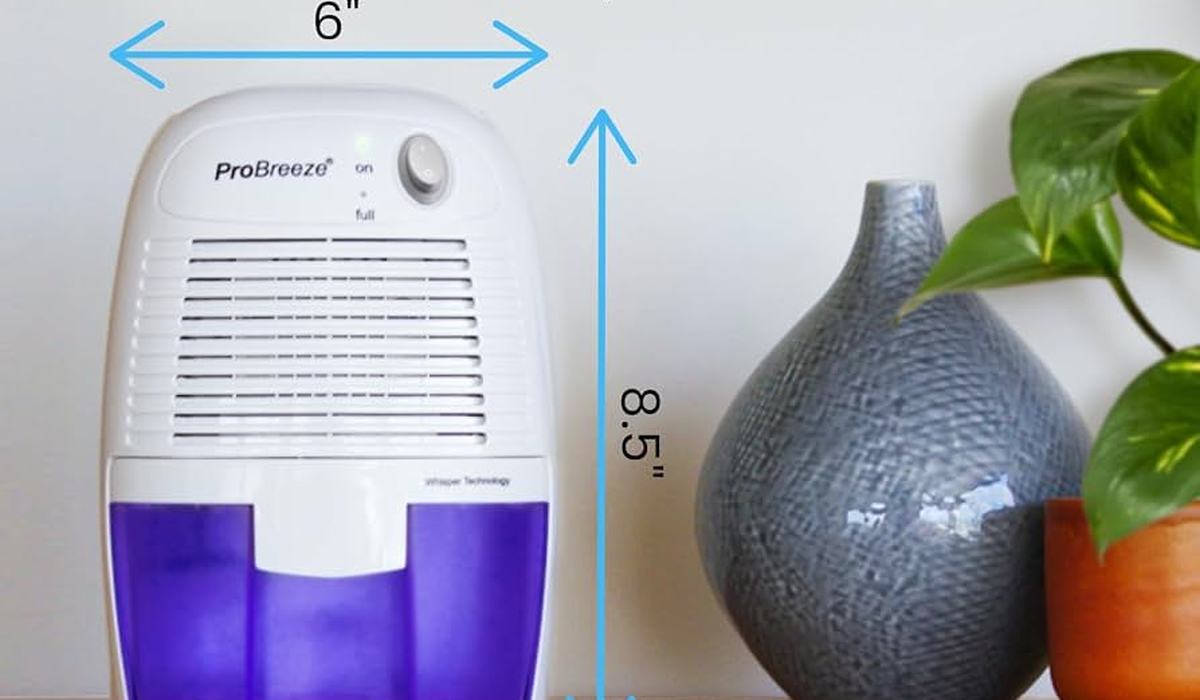
Dehumidifier With Digital Humidistat and Timer
A humidistat is the cheapest way to cut running cost. Set 50% and the unit idles instead of running the compressor non-stop.
Check Price on Amazon →Frequently asked questions
How much does it cost to run a dehumidifier for 24 hours?
Do dehumidifiers use a lot of electricity?
Does a dehumidifier use more electricity than an air conditioner?
Does a desiccant dehumidifier cost more to run?
How do I reduce my dehumidifier's running cost?
Related guides
What Humidity Should a Dehumidifier Be Set To?
The setting that lets the unit idle instead of running flat out.