Dehumidifiers are in a small group of household appliances that have been recalled in the hundreds of thousands for fire and burn hazards. The typical fault is in the power cord, the plug or the compressor circuit.
That does not make dehumidifiers unsafe. It makes them an appliance worth checking, especially a second-hand one, and a category where a few operating habits materially reduce the risk.
On this page
How to check for a recall
Recall checks take two minutes and are the single most effective safety step.
- Find the model and serial number. Usually on a label on the back or the base, and sometimes inside the tank compartment.
- Go to CPSC.gov/Recalls and search the brand and model number. The Consumer Product Safety Commission maintains the authoritative US recall list.
- Check the manufacturer's own recall page in addition, because some recalls are announced only there.
- Register the product when you buy new, so you are contacted directly if a recall happens later.
- If it is recalled, stop using it and follow the manufacturer's remedy — usually a refund or a replacement, not a repair.
| Check | Where | What you need |
|---|---|---|
| Model number | Label on back or base | Letters and digits |
| Serial number | Same label | For recall confirmation |
| Purchase date | Receipt or order email | Some recalls are date-limited |
| CPSC listing | CPSC.gov/Recalls | Two minutes |
The three real hazards
The risks that appear in recall notices and incident reports fall into three groups.
- Cord and plug overheating. The most common recall fault. The plug or the cord near the plug overheats, chars and can ignite. It is often caused by a poor connection at the outlet or by using an undersized extension cord.
- Compressor circuit faults. A failing start component or a short in the compressor circuit can overheat the unit and, in the worst cases, ignite internal materials.
- Water and electricity. A leaking tank, a blocked drain hose or a unit knocked over can put water where the electrics are. This is a shock risk rather than a fire risk, and it is entirely avoidable with placement and a leak alarm.
Notice that none of these are about the dehumidifier's normal operation. Each is a fault condition, and each has a warning sign you can look for.
Warning signs to act on
| Sign | What it suggests | Action |
|---|---|---|
| Burning or hot-plastic smell | Cord, plug or internal overheating | Unplug immediately, do not reuse |
| Plug hot to the touch | Poor connection, undersized cord | Unplug; check outlet; replace if it recurs |
| Scorched or discoloured plug | Overheating at the connection | Unplug and stop using the unit |
| Cord warm along its length | Cord damage or overload | Unplug; do not use an extension cord |
| Frequent breaker trips | Electrical fault or circuit overload | Try another circuit; if it persists, stop |
| Unit very hot on the casing | Restricted airflow or compressor fault | Clear airflow; if it stays hot, stop |
| Buzzing that changes pitch | Compressor or fan fault | Have it checked or replace it |
Safe placement
- On a hard, level, dry surface. Not on carpet, which blocks airflow and traps heat, and not on a surface that can tip.
- At least 12 inches of clearance on every side with an air intake or exhaust.
- Never in a closed cabinet or sealed closet. A powered unit needs air exchange or it overheats.
- Away from curtains, bedding and stored fabric, which can be drawn into the intake.
- Away from water sources. Not directly beside a shower, a bathtub or a sink.
- Somewhere you can see it. A unit running behind furniture gets neither cleaned nor noticed.
Safe power use
More dehumidifier incidents involve the power connection than the machine itself. The rules are short.
- Plug directly into a wall outlet. Not into an extension cord, not into a power strip, not into an adapter.
- Use a dedicated circuit where possible, or at least avoid sharing with a heater, a hair dryer or a microwave.
- Never run the cord under a rug or across a doorway where it can be pinched or walked on.
- Check the plug monthly for warmth, discolouration or a loose fit. A plug that wobbles in the outlet is a fire risk regardless of the appliance.
- Unplug before cleaning or emptying, every time.
- Do not use a damaged cord. A cord repair on a dehumidifier is not a DIY job; replace the unit or the cord assembly.
Buying second-hand safely
A cheap second-hand dehumidifier is a reasonable buy, with three checks.
- Check the model for a recall before you pay. A recalled unit is worth nothing — in some programmes the remedy is a refund to the original purchaser, not a repair.
- Inspect the cord and plug closely. Look for any discolouration, a stiff or cracked cord, or a plug that has been replaced.
- Ask how it was stored. A unit stored on its side or in a damp garage is more likely to have a compressor or corrosion problem.
- Run it before you buy. Listen for a compressor that starts with a struggle or a fan that scrapes.
- Check the tank and the drain port for cracks and missing caps. Missing drain fittings are hard to source later.
A monthly safety check
- Look at the plug for warmth, discolouration or a loose fit.
- Run a hand along the cord for stiffness, cracks or warm spots.
- Confirm the unit is on a hard surface with clearance on all sides.
- Check the tank and drain hose for leaks.
- Vacuum the intake filter so the compressor is not working harder than it should.
- Listen for a change in the sound — a new rattle or a struggling start.
- Confirm the unit is not somewhere it can be knocked over or splashed.
The apartment angle
Renters carry extra risk because the building is not theirs, the wiring may be old, and a fire affects neighbours.
- Old wiring. Loose outlets and undersized circuits are more common in older buildings. If a plug is warm in a particular outlet, stop using that outlet and report it.
- Shared circuits. A dehumidifier shared with a neighbour's load on the same circuit is more likely to trip or overheat. Run it when other heavy appliances are off.
- Never leave it unattended in a sealed space. A closet, a cupboard or a closed room with no airflow is the highest-risk placement.
- Renters' insurance. Check what your policy covers, and tell the insurer if you run a dehumidifier continuously. It is inexpensive and it covers the neighbour's property too.
- Report building faults. Repeated breaker trips on one circuit with nothing unusual plugged in is a maintenance issue, not a tenant problem.
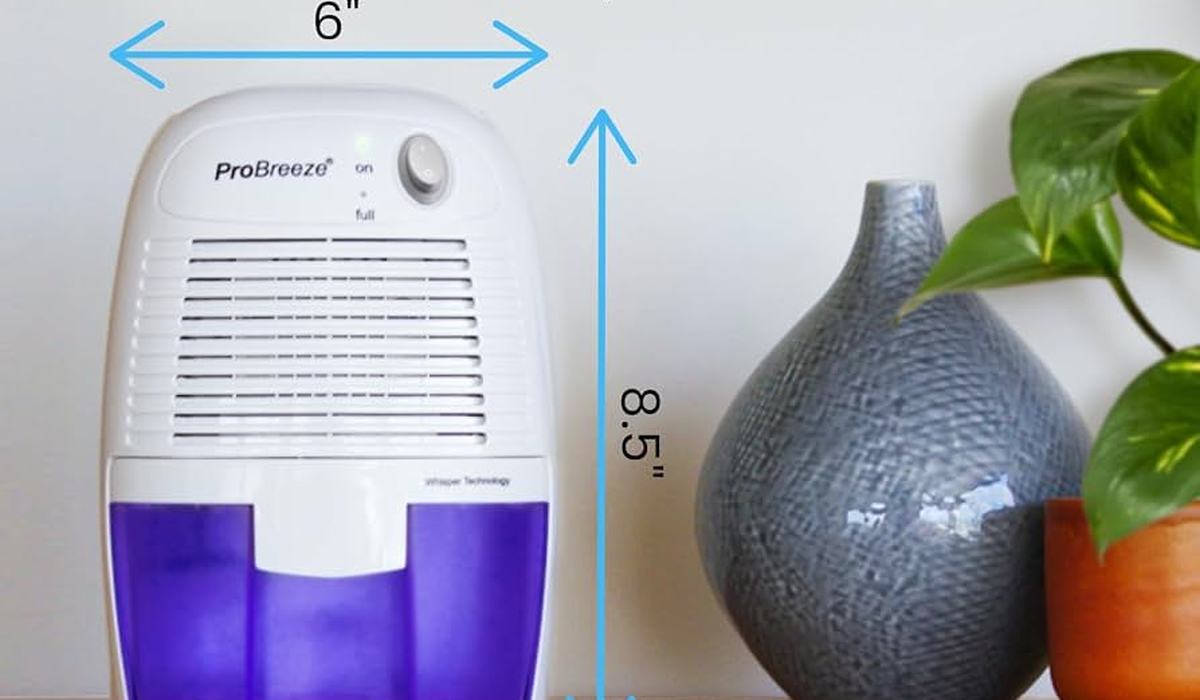
Dehumidifier With Auto Shut-Off and Overheat Protection
A full-tank auto shut-off and thermal cut-out are the two safety features worth paying for, along with a cord you can inspect easily.
Check Price on Amazon →Frequently asked questions
How do I know if my dehumidifier is recalled?
Are dehumidifiers a fire risk?
Is it safe to leave a dehumidifier running overnight?
Can I use an extension cord with a dehumidifier?
What should I do if my dehumidifier smells like burning?
Related guides
What Humidity Should a Dehumidifier Be Set To?
The setting that keeps the unit from overworking.