Every dehumidifier sold in the United States is one of two designs, and the label rarely makes it obvious. A compressor unit uses the same refrigeration cycle as your fridge. A desiccant unit uses a rotating wheel of silica gel and a heater.
The difference matters because the two designs fail at opposite ends of the temperature range. Buy the wrong one for your room and it will either ice up or cost twice as much to run as it should.
On this page
The two designs in plain terms
A compressor dehumidifier pulls air across a cold coil. Moisture condenses on the coil, drips into the tank, and the dried air passes over a warm coil and returns to the room. It is a refrigerator with the door open and a fan behind it.
A desiccant dehumidifier pulls air through a honeycomb wheel coated in silica gel. The gel absorbs moisture. A heater then bakes the moisture back out of the wheel and exhausts it as damp air, and the wheel rotates back to the start of the cycle.
Both do the same job. The difference is that the compressor design depends on a temperature difference between the coil and the air, while the desiccant design does not. That single fact drives every practical trade-off below.
Why the labels are confusing
Manufacturers describe desiccant units with words like “ionic”, “thermo-electric” or “continuous”, and compressor units with “condensing” or nothing at all. If a specification sheet lists a refrigerant (R134a, R410a) it is a compressor unit. If it lists a desiccant wheel or a heater element, it is a desiccant unit.
Why temperature decides it
A compressor dehumidifier stops collecting water efficiently once the room drops below roughly 65 °F. The cold coil falls close to freezing, frost builds on the fins, and the unit spends its time defrosting rather than drying.
A desiccant dehumidifier has no cold coil to freeze, so it keeps collecting water down to near freezing. It also exhausts slightly warmed air, which gently raises the room temperature — helpful in a cold basement, less welcome in a hot bedroom.
For a heated apartment, this is usually a non-issue. A bathroom, kitchen or living room you actually live in sits between 68 and 75 °F. A compressor unit is at its best there. A basement apartment, an unheated storage room, or a garage in winter is where the desiccant design earns its premium.
| Room condition | Typical winter temperature | Best design |
|---|---|---|
| Heated living space | 68–75 °F | Compressor |
| Bathroom after a shower | 70–78 °F | Compressor |
| Basement, unheated | 50–62 °F | Desiccant or compressor with auto-defrost |
| Garage or crawl space | 35–55 °F | Desiccant |
| Closet against an outside wall | 55–68 °F | Desiccant if it dips below 65 °F |
Running cost compared
This is where the compressor design wins, and it is not close. Pints removed per watt is roughly twice as good on a compressor unit at normal room temperature.
A typical 22-pint compressor dehumidifier draws about 290 W. A desiccant unit removing a similar amount of water draws about 550 W because it is running a heater as well as a fan. At an average US electricity price of about 17 cents per kWh, that is the difference between roughly 5 cents and 9 cents per hour of operation.
The Energy Star program tests dehumidifiers on an integrated energy factor that measures litres of water removed per kilowatt-hour. Any unit with an Energy Star label has been tested to that standard, whatever its design. If running cost is your main worry, buy the smallest Energy Star compressor unit that covers your room.
Bear in mind the largest driver of cost is not the design at all. It is how long you run it. A unit left on 24/7 costs several times more than one run for two hours after a shower, regardless of type.
Noise and weight
A compressor dehumidifier makes two sounds: the fan, and the compressor itself. The compressor gives off a low, pulsing hum that carries through walls. A desiccant unit has no compressor, so its noise is mostly fan and airflow — smoother, and often a few decibels quieter, though the heater can introduce a faint hum of its own.
In an apartment with shared walls, the pulsing compressor hum is the sound that gets complaints. If the unit will sit against a shared wall in a bedroom or nursery, a desiccant unit or a compressor unit placed on a foam pad and away from the wall is the better choice.
Weight is the other practical difference. Compressor units are heavy because of the compressor and refrigerant — a 22-pint unit weighs around 30 lb. Desiccant units are lighter, often 15 to 20 lb, which matters if you are lifting it onto a shelf or carrying it between rooms.
Head-to-head comparison
| Feature | Compressor | Desiccant |
|---|---|---|
| Best room temperature | Above 65 °F | Any, down to near freezing |
| Water removed per watt | Higher (roughly 2x) | Lower |
| Typical draw, 20–22 pint | ~290 W | ~550 W |
| Approx monthly cost, 2 h/day | ~$3.00 | ~$5.60 |
| Noise character | Pulsing compressor hum | Steady fan, quieter |
| Weight | Heavy (~30 lb) | Light (~15–20 lb) |
| Exhausts warm air | Slightly | Noticeably |
| Price for same pint rating | Lower | Higher |
| Best for | Heated apartment rooms | Basements, garages, cold rooms |
The apartment angle
Renters have three constraints that push the decision one way or the other.
- You cannot add ventilation. Without a vent fan or a window you can open, the dehumidifier is your only moisture control. Pick the design that works in the room's actual temperature, not the one on sale.
- Shared walls carry the compressor hum. If the unit sits against a bedroom or neighbour wall, a desiccant unit's smoother noise profile is worth the extra running cost.
- Storage is tight. A 30 lb compressor unit is a pain to lug to a closet between seasons. The lighter desiccant unit is easier to stow.
There is also a landlord dimension. Neither design needs wiring or drilling, so both are renter-safe. Neither should be left running unattended for days, and neither should be drained into a sink you cannot monitor — a continuous drain hose that pops off can flood a floor you are responsible for.
Which one should you buy
- Measure your room temperature in winter. If it stays above 65 °F, buy a compressor. If it drops below, you need desiccant or an auto-defrost compressor.
- Size the unit to the room. A 20-pint unit suits a damp bathroom; a 30-pint unit suits a 500 sq ft apartment. Oversizing wastes money.
- Check for a pump or a drain outlet if you want continuous operation, and read our guide on setting up a drain hose before you buy.
- Prefer an Energy Star rating so the running cost is tested, not claimed.
- Put it on a foam pad away from shared walls to cut the noise complaint risk.
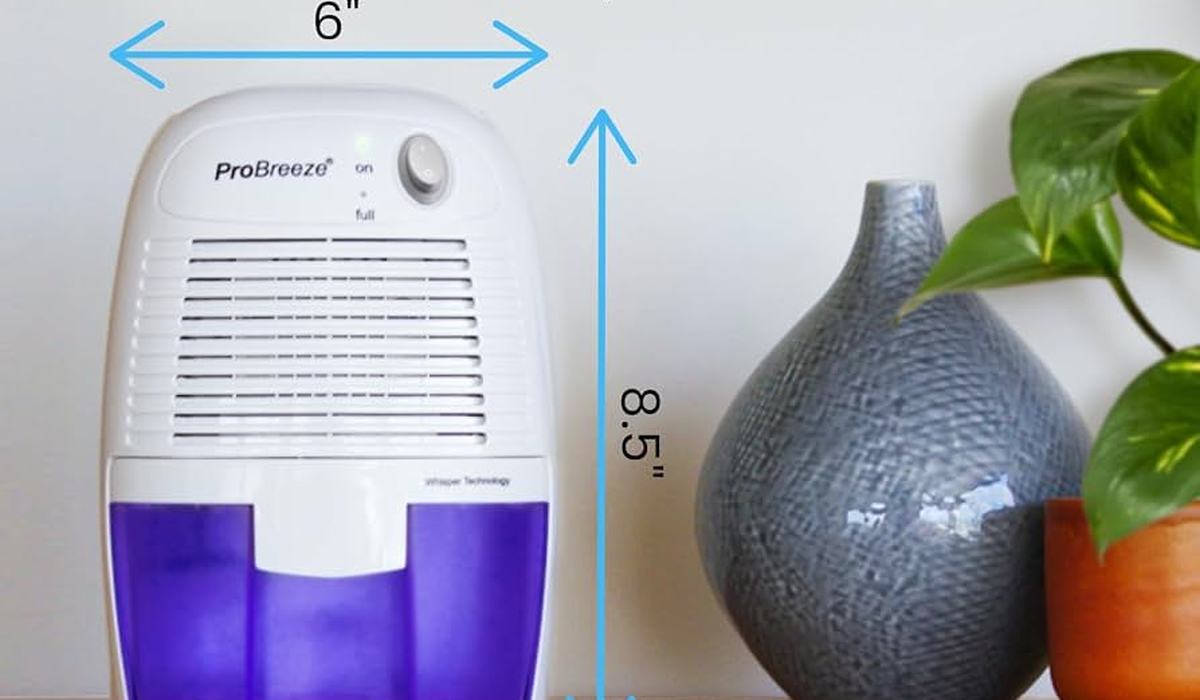
Compact Compressor Dehumidifier, 20–22 Pint
The right choice for a heated apartment room: low running cost, an adjustable humidistat and a tank you can empty without lifting the unit.
Check Price on Amazon →Frequently asked questions
Is a desiccant dehumidifier better than a compressor?
Why does my compressor dehumidifier stop collecting water in winter?
Does a desiccant dehumidifier heat the room?
Which type is quieter for a bedroom?
Can I use either type in a rental apartment?
Related guides

Dehumidifier for a Bathroom Without a Vent
What actually works when there is no fan and no window.
What Humidity Should a Dehumidifier Be Set To?
The number to set, and how to measure it.