On this page
How a dehumidifier removes water
A compressor dehumidifier works exactly like a fridge. A fan draws room air across a cold evaporator coil. Water vapour condenses on the coil, drips into a tray, and runs into the tank. The now-dry air passes over a warm condenser coil and is blown back into the room — slightly warmer than it arrived.
That last detail is worth knowing. A compressor unit adds a small amount of heat to the room, typically 1–2 °C. In a bathroom that is usually welcome, because warmer air holds more moisture before it condenses on cold walls. A desiccant unit works differently — it uses a rotating wheel coated in silica gel, with a heater driving the water off — and it also warms the room slightly, but it keeps working at low temperatures where a compressor cannot.
The real numbers
Manufacturers quote tank capacity in pints per day, measured at 80 °F and 60% relative humidity. Real bathroom conditions are usually cooler and damper, so actual performance differs from the label. These are the ranges you should expect from a correctly sized unit in a real apartment.
That 80 °F / 60% RH figure is not marketing invention — it is the standard test condition set by the Association of Home Appliance Manufacturers (AHAM) dehumidifier certification programme, which is what the pint rating on the box actually means. It is a useful benchmark precisely because it is measured every time, in the same conditions, so the numbers are comparable between brands. The same AHAM guidance on home humidity recommends keeping indoor air between 30% and 50% under normal conditions, which is a good target to aim your unit at.
| Condition | Water per hour | Water per 30-min run |
|---|---|---|
| Warm bathroom, 75 °F, 70% RH | 1.5–2 pints | 0.75–1 pint |
| Typical bathroom, 68 °F, 65% RH | 1–1.5 pints | 0.5–0.75 pint |
| Cool bathroom, 60 °F, 60% RH | 0.6–1 pint | 0.3–0.5 pint |
| Cold bathroom, 50 °F (compressor) | 0.1–0.3 pints | Barely any |
| Cold bathroom, 50 °F (desiccant) | 0.8–1.2 pints | 0.4–0.6 pint |
Notice the message in that table. The same machine pulls five to ten times more water in a warm room than a cold one. This is why people in cold climates try a compressor dehumidifier, see an empty tank, and conclude that dehumidifiers do not work. They work. The machine was in the wrong temperature range.
What actually happens during a run
Relative humidity does not fall in a straight line even if the machine removes water at a constant rate, because wet surfaces keep releasing moisture into the air. A typical 30-minute run in a small bathroom looks like this:
| Time | Typical RH | What is happening |
|---|---|---|
| 0 min, door closed | 85–95% | Air is saturated; walls are still wet |
| 5 min | 75–85% | Unit is removing free vapour fast |
| 10 min | 65–75% | Surface water starts evaporating, slowing the fall |
| 20 min | 55–65% | The plateau — vapour and surfaces are balancing |
| 30 min | 48–58% | Surfaces mostly dry; the run has paid for itself |
| 60 min | 45–52% | Diminishing returns; another 30 min adds little |
The shape of that curve is why the 20–30 minute recommendation exists. Most of the useful work happens early. Running for three hours is not harmful, but it is not three times better either.
When they do not work
There are exactly four situations where a bathroom dehumidifier will genuinely fail to keep up, and all four are diagnosable.
- The unit is undersized. A 10-pint unit in a 60 sq ft bathroom with a family showering twice a day will lose. Size to the room, then add a step.
- The room is too cold. Compressor units lose most of their capacity below about 60 °F and are close to useless below 50 °F. Switch to desiccant.
- There is an active water source. A dripping pipe, a failed grout line or a leaking shower tray feeds water in faster than any domestic unit can take it out. Fix the leak first.
- The door is open or the unit is boxed in. A unit starved of airflow or working on four rooms at once will not hit the target no matter how long it runs.
The cold-room problem
This deserves its own heading because it is the number one reason people give up on dehumidifiers in bathrooms, particularly in rented flats with single-glazed windows and no heating in the bathroom.
A compressor dehumidifier relies on the coil being significantly colder than the incoming air. As the room temperature drops, the coil can no longer get cold enough relative to the air, and the condensation rate collapses. Below about 15 °C (59 °F) most domestic compressor units are at maybe half their rated capacity; below 10 °C they are close to decorative.
A desiccant dehumidifier has no such limit. It uses heat to drive water off a hygroscopic wheel, so it performs consistently down to near freezing. If your bathroom is unheated in winter, buy desiccant and stop wondering why the tank is empty.
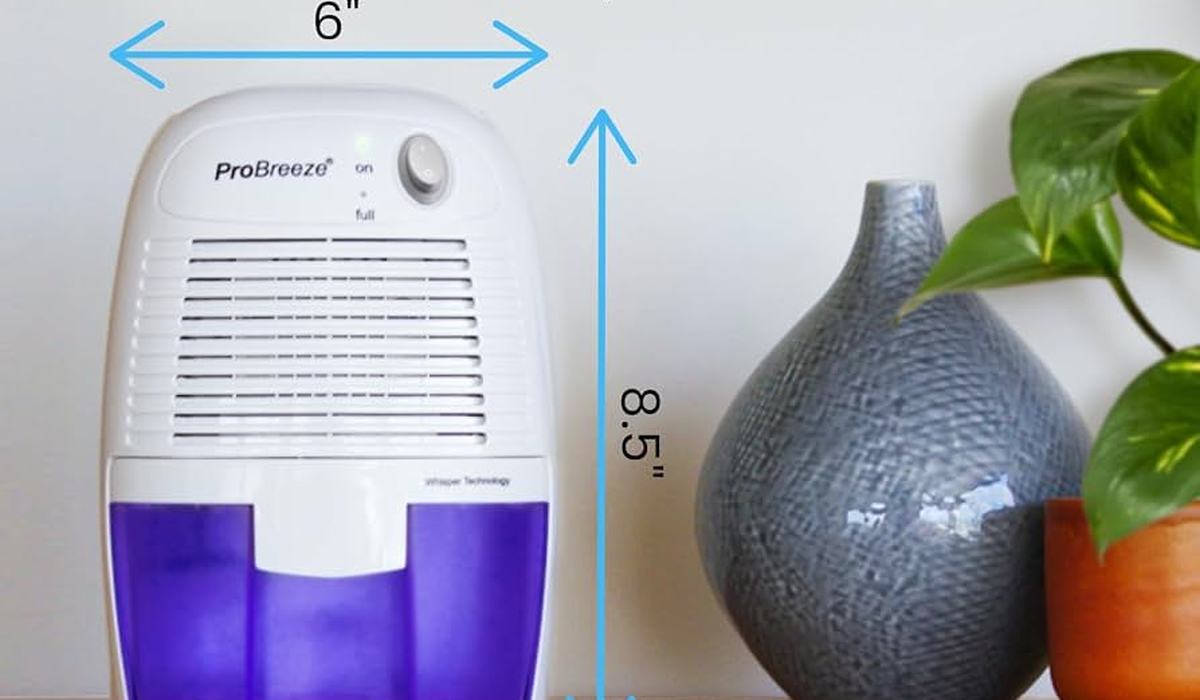
Desiccant Dehumidifier (Cold-Room Safe)
The right choice for an unheated bathroom. Keeps pulling water below 60°F where a compressor unit gives up, at the cost of a slightly higher power draw.
Check Price on Amazon →How to measure whether yours works
Do not guess. A $10 hygrometer turns this question into a number in about a week.
- Put the hygrometer at head height, away from the shower and away from the dehumidifier's outlet.
- Record the reading immediately after a shower, with the door closed.
- Run the dehumidifier for exactly 30 minutes. Record again.
- Record once more an hour later, with the door closed.
| Reading after 30 min | Verdict | Action |
|---|---|---|
| Under 50% | Working well | Keep the routine, no change needed |
| 50–60% | Working, some headroom | Squeegee before each run, keep the door closed |
| 60–70% | Marginal | Undersized, or the room is cold |
| Over 70% | Not keeping up | Check for a leak, then upsize or switch to desiccant |
Mould needs sustained humidity above roughly 70% to establish, so the 60% line is the one that matters. Anything that holds the room under 60% an hour after a shower is doing its job.
Verdict for a bathroom
A dehumidifier works in a bathroom. It is not a gimmick and it is not a replacement for ventilation in a code sense, but for drying a sealed room it is genuinely effective and it is the only option open to a renter who cannot install a fan.
Buy the right type for your climate (compressor for warm, desiccant for cold), size it to the room, squeegee before you run it, keep the door closed, and give it 20–30 minutes. Do those five things and the mould problem goes away.
Frequently asked questions
Do dehumidifiers actually work in bathrooms?
How long should I run a dehumidifier in a bathroom?
Why is my dehumidifier not collecting water in the bathroom?
Do I need a desiccant or compressor dehumidifier for a bathroom?
Can a dehumidifier stop bathroom mould?
Does a bathroom dehumidifier raise the room temperature?
Related guides
Can I Use a Dehumidifier Instead of a Bathroom Fan?
Where the two devices overlap and where they do not.
Where to Put a Dehumidifier in a Bathroom
Three placements that work and the clearance numbers.
Dehumidifier for a Windowless Bathroom: 5 Best Picks
What to buy when there is no window and no duct.