On this page
Why a duct matters
An exhaust fan works by moving air from inside to outside. Without a duct — a path to the outdoors — there is nowhere for the air to go. A fan mounted on a wall with no duct behind it simply pushes air into the wall cavity, which is worse than useless: it drives moisture into the structure.
So the question is not "which fan is best" but "which option can actually move air outside, or remove the moisture another way". There are six answers.
The 6 options compared
| Option | Removes moisture? | Needs a duct? | Renter-friendly? | Cost |
|---|---|---|---|---|
| Window-mounted exhaust fan | Yes | No — uses the window | Yes | $25–$70 |
| Ductless recirculating fan | No | No | Yes | $40–$120 |
| Through-wall fan | Yes | Yes (through the wall) | No | $80–$250 + install |
| Ceiling fan with duct | Yes | Yes (to roof/soffit) | No | $150–$400 + install |
| Portable dehumidifier | Yes | No | Yes | $60–$200 |
| Portable fan + open door | Partly | No | Yes | $20–$40 |
Window-mounted exhaust fan
If the bathroom has any window, this is the best true-exhaust option for a renter. A twin window fan set to exhaust pulls damp air out and can be removed in seconds. Leave the door slightly ajar so replacement air can enter, otherwise the fan has nothing to pull.
Look for a model with reversible airflow so you can also use it to bring fresh air in during hot weather.
Ductless recirculating fan
These are sold as "bathroom fans" but they are really air circulators with a filter. They remove odour and move air, but they do not remove moisture. If your problem is a damp room, this will not solve it. If your problem is a stuffy room with no window, it helps a little.
Through-wall fan (needs permission)
A through-wall fan is the proper fix for a windowless bathroom: a small unit that exhausts directly through an exterior wall. It needs a core hole, an electrician, and your landlord's permission. In a flat you own, it is the right answer. In a rental, it is a request to make in writing, not a DIY job.
Dehumidifier instead of a fan
If you cannot exhaust air, remove the water instead. A portable dehumidifier pulls moisture out of the air and collects it in a tank, which you empty. It is the only renter-friendly option that genuinely solves a damp windowless bathroom.
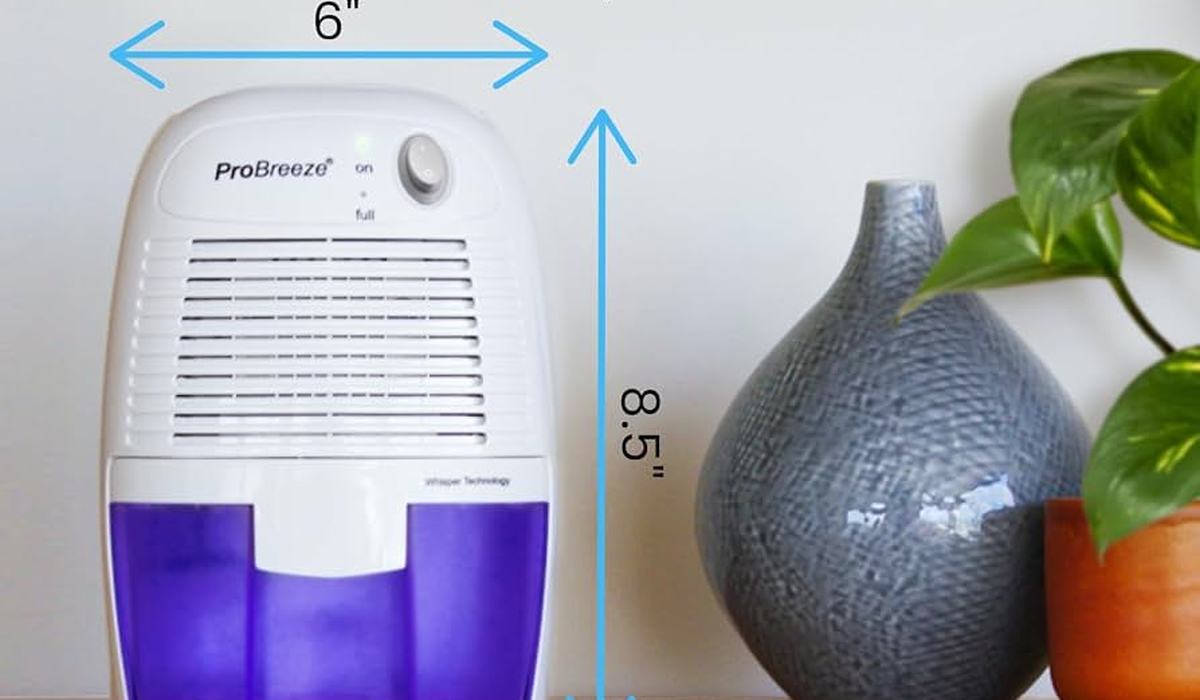
Portable Dehumidifier (Fan Alternative)
Removes moisture from a sealed bathroom where a ducted fan is impossible. Auto shut-off and a lift-out tank.
Check Price on Amazon →How to choose
- Have a window? Window-mounted exhaust fan, plus a squeegee.
- No window, renting? Portable dehumidifier.
- No window, own the flat? Through-wall or ceiling fan with a duct.
- Problem is odour, not damp? Ductless recirculating fan is fine.
- Problem is damp? Never a ductless fan — always a dehumidifier.
Match the tool to the problem. Odour and moisture are different problems with different fixes.
How much airflow you actually need
If you do end up installing a fan, size it correctly. ASHRAE guidance is roughly 1 CFM per square foot of bathroom, with a minimum of 50 CFM.
| Bathroom size | Minimum CFM | With a shower |
|---|---|---|
| 40 sq ft | 50 CFM | 50–60 CFM |
| 60 sq ft | 60 CFM | 70–80 CFM |
| 80 sq ft | 80 CFM | 90–110 CFM |
| 100 sq ft | 100 CFM | 110–130 CFM |
An undersized fan runs constantly and still leaves the room damp. Oversized fans are noisy and pull more heated air out than necessary.
Noise ratings explained
Fan noise is measured in sones. Lower is quieter.
- Under 1.0 sone: barely audible — good for a bathroom next to a bedroom.
- 1.0–2.0 sones: noticeable but not intrusive.
- Over 3.0 sones: loud; you will avoid running it, which defeats the purpose.
Window fans as a duct-free alternative
If a ducted fan is impossible, a window fan is the next best thing. It uses the window as its exhaust path, needs no installation, and can be removed in seconds. Set it to exhaust and leave the door ajar so replacement air can enter.
It is not as effective as a ducted fan, but it is the only true-exhaust option available to a renter.
Ductless options when there is no vent
If there is genuinely no duct and no window, a ducted fan is not an option. That leaves three realistic paths:
| Option | How it works | Best for |
|---|---|---|
| Window fan | Uses the window as the exhaust path | Bathrooms with any window |
| Through-wall fan | Cores a hole to the outside | Owners, not renters |
| Dehumidifier | Removes water without moving air | Sealed, windowless rooms |
For a renter with no window, the dehumidifier is the only option that works. A fan of any kind needs somewhere for the air to go.
What installation involves
A ducted fan needs a hole in the wall or ceiling, a duct to the outside, and an electrical connection. In a rental that is a landlord decision, not a tenant one. If you own the property, budget for the fan, the duct, the external vent and an electrician.
Why a timer or humidity sensor matters
A fan that runs only while the light is on stops too early. Moisture keeps evaporating from the walls for 20–30 minutes after you leave. A timer that runs the fan for 20 minutes after the light goes off, or a humidity sensor that runs it until the room is dry, is what makes a fan actually work.
What to do instead of a ducted fan
If a ducted fan is not possible, you are not out of options. Ranked by how well they actually remove moisture:
- Window fan on exhaust. The only renter-friendly option that genuinely moves air outside. Best if you have any window at all.
- Dehumidifier. Removes the water without needing an air path. The only option for a sealed, windowless room.
- Portable fan aimed at a door. A weak fix, but better than nothing when combined with a dehumidifier.
- Moisture absorber. A baseline tool for closets, not a shower fix.
Notice that only the first two actually solve the problem. The rest are supporting measures.
What a proper installation costs
| Item | Typical cost |
|---|---|
| Ducted exhaust fan | $60–$200 |
| Ducting and external vent | $40–$120 |
| Electrician | $150–$400 |
| Wall or ceiling work | $100–$500 |
| Total | $350–$1,200 |
That is why renters rarely get one. A $100 dehumidifier achieves the same result for a fraction of the cost, and it comes with you when you move.
Frequently asked questions
Can you install an exhaust fan without a duct?
Do ductless bathroom fans work?
What can I use instead of an exhaust fan?
Can I put a fan in the bathroom window?
Will a through-wall fan work in a rental?
Related guides

Best Fan for a Bathroom Without a Vent (2026)
Window fans, portable fans and how to place them.
Dehumidifier for a Bathroom Without a Vent
Sizing and choosing a dehumidifier for a sealed bathroom.