Grounding is the third wire in a modern circuit, and it exists for one reason: to give fault current a safe path to earth instead of through you. When a live wire touches a metal appliance case, the ground wire carries the current and trips the breaker before anyone gets hurt.
In older apartments, grounding is often missing or unreliable. This guide gives you the three-reading test that confirms it, and explains what a failure means for a renter.
On this page
What grounding actually does
A grounded circuit has three conductors: hot (black), neutral (white) and ground (bare or green). The hot carries current to the load, the neutral carries it back, and the ground carries nothing at all — until something goes wrong.
When a fault occurs — a live wire touching a metal case — the ground wire provides a low-resistance path back to the panel. The resulting current surge trips the breaker. Without a ground, the metal case simply sits there energized, waiting for someone to touch it.
Safety first
This test is done live, so the usual rules apply. NFPA 70E and OSHA both treat energized work as hazardous, and the mitigation is simple: one hand, insulated probes, dry hands, safety glasses.
- Use a CAT III meter for receptacle work.
- Keep one hand away from the outlet while probing.
- Do not touch the metal probe tips — only the insulated handles.
- If the outlet is cracked, warm, or discoloured, stop and report it.
The three-reading test
- Set the meter to AC voltage, 200 V or higher.
- Hot to neutral: red probe in the hot slot (shorter), black probe in the neutral slot (taller). Expect about 120 V.
- Hot to ground: red probe in the hot slot, black probe in the round ground slot. Expect about 120 V.
- Neutral to ground: red probe in the neutral slot, black probe in the ground slot. Expect close to 0 V.
The key comparison is between the first two readings. If hot-to-neutral and hot-to-ground are both about 120 V, the ground path is present and working. If hot-to-ground reads zero or something much lower, the outlet is not grounded.
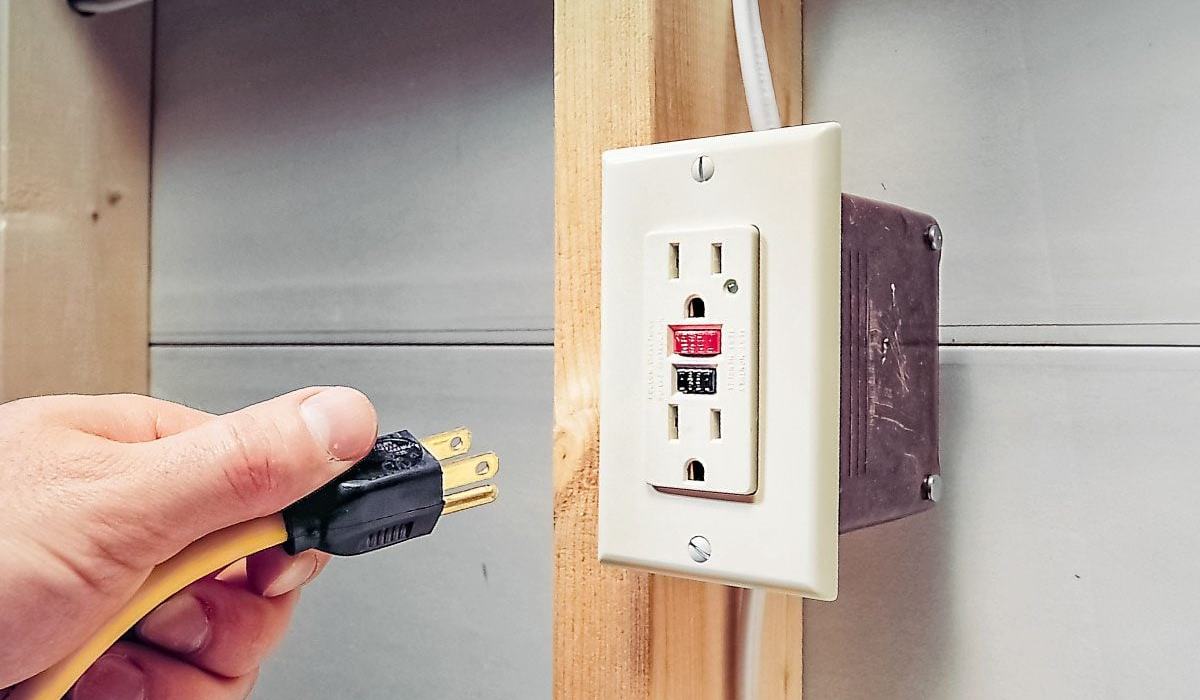
Outlet Tester With GFCI Button
Lights up to show open ground, reversed polarity or an open neutral. The fastest way to survey every outlet in an apartment.
Check Price on Amazon →Reading the results
| Reading | Expected | If it is wrong |
|---|---|---|
| Hot to neutral | ~120 V | No power — check the breaker or a GFCI |
| Hot to ground | ~120 V | 0 V means the outlet is not grounded |
| Neutral to ground | ~0 V | Higher means a wiring fault or a shared neutral |
| Hot to ground lower than hot to neutral | — | Poor ground connection — report it |
| Hot to ground higher than hot to neutral | — | Floating or shared neutral — report it |
A reading that is close but not equal — say 118 V hot-to-neutral and 112 V hot-to-ground — suggests a high-resistance ground connection. It is not a clean fault, but it is not right either, and it is worth reporting.
If the outlet is not grounded
An ungrounded outlet is common in pre-1960s buildings, and it is not something a renter can fix. Here is what it means in practice.
- Two-prong outlets are ungrounded by design. They are not necessarily unsafe, but they offer no ground path.
- Three-prong outlets with no ground are worse, because they look safe and are not. This is a code violation.
- A GFCI can protect an ungrounded outlet. It does not create a ground, but it does protect people from shock. This is the accepted remedy in older wiring.
- Never use a cheater plug to defeat a ground. It removes the protection without solving anything.
The apartment angle
- Old buildings often have partial grounding. Some outlets grounded, some not, depending on when they were added.
- Grounding is a landlord repair. Running a ground conductor is electrical work, not a tenant fix.
- Document it. Photograph the meter reading and note the outlet. A written report with a number gets action.
- Use GFCI protection in the meantime for outlets near water, and avoid using ungrounded outlets for appliances with metal cases.
Mistakes to avoid
- Assuming a three-prong outlet is grounded. Test it. Many are not.
- Using a cheater plug. It defeats the protection without fixing anything.
- Testing with both hands. Keep one hand clear of the outlet.
- Ignoring a low hot-to-ground reading. A poor ground is still a fault.
- Confusing a GFCI with a ground. A GFCI protects people; it does not create a ground path.
GFCI as a grounding remedy
An ungrounded outlet cannot be made grounded without running a new conductor, which is electrical work. But it can be made safer, and the accepted method is a GFCI.
A GFCI does not create a ground path. What it does is monitor the current going out and coming back, and trip when they differ by a few milliamps. That difference is exactly what happens when current flows through a person instead of the circuit. So a GFCI protects people on an ungrounded circuit, even though the circuit still has no ground.
The National Electrical Code recognizes this. NEC 406.4(D)(2) permits a GFCI to be installed on an ungrounded circuit, provided the receptacle is marked “No Equipment Ground.” That marking matters: it tells the next person that the third prong is not actually connected to earth.
| Situation | What it means | What to do |
|---|---|---|
| Two-prong outlet | No ground by design | Use double-insulated appliances; add a portable GFCI near water |
| Three-prong, no ground | Looks grounded, is not — a code violation | Report it; use a portable GFCI in the meantime |
| Three-prong, grounded | Correct | Nothing |
| GFCI on ungrounded circuit | People protected, no ground path | Acceptable, but must be marked |
What you must not do is use a three-to-two prong adapter. It defeats the ground connection on a grounded appliance, which is the opposite of a fix. It is the most common unsafe workaround in old apartments and it is worth being blunt about: do not use one.
Surveying a new apartment
The best time to check grounding is the day you move in, before the furniture is against the walls. It takes about fifteen minutes with a plug-in tester and it tells you exactly which outlets need attention.
- Get a plug-in outlet tester. It lights up to show correct wiring, open ground, reversed polarity or an open neutral.
- Test every outlet and note the result. A phone note with the room and the reading is enough.
- Test the GFCI outlets with the TEST and RESET buttons.
- Photograph anything that fails — a photo with the tester's lights visible is compelling evidence.
- Report the failures in writing to the landlord, with the room and the specific fault.
This matters for two reasons. First, an ungrounded outlet near water is a genuine shock risk. Second, a written report with specific faults creates a record. If a landlord is slow to act, a documented report is what supports a repair-and-deduct claim or a code complaint.
The most common findings in an older apartment are: a bathroom outlet with no GFCI, a kitchen outlet with reversed polarity, and one or two outlets with an open ground. All three are landlord repairs, and all three are worth reporting on day one.
Frequently asked questions
How do I check if an outlet is grounded?
What reading should a grounded outlet show?
Can I ground an outlet myself in a rental?
Is a two-prong outlet safe?
What is a cheater plug and why is it dangerous?
Related guides
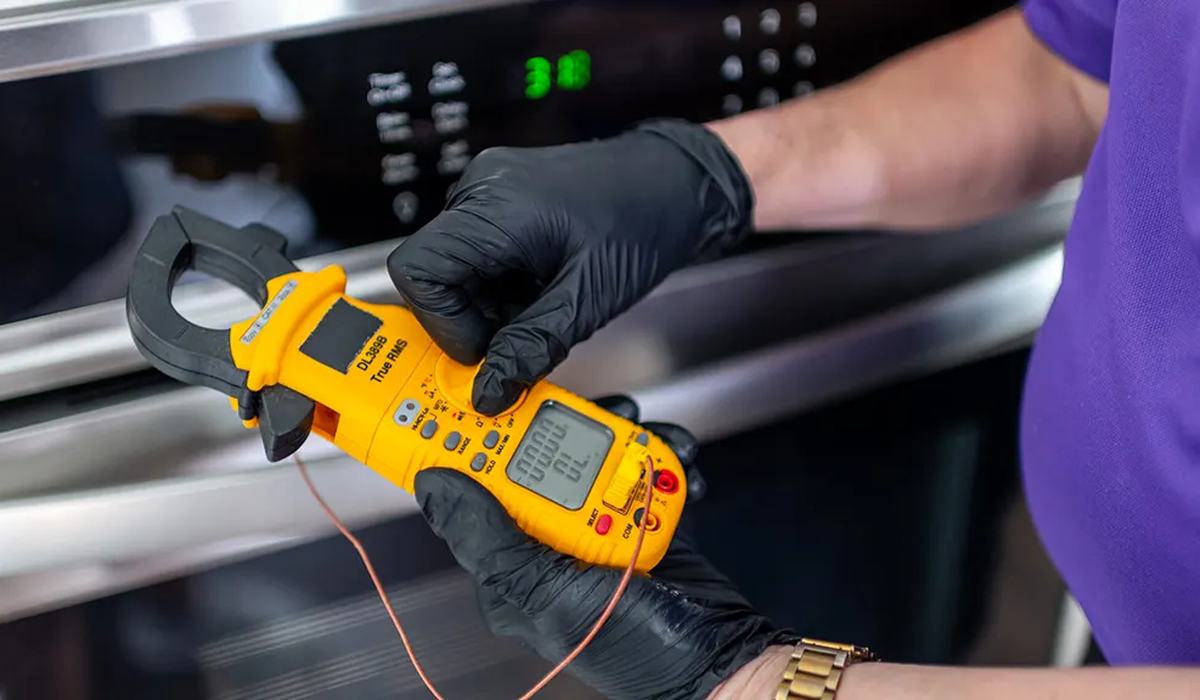
How to Test Continuity With a Multimeter
The 30-second beep test behind every electrical diagnosis.